Loading...
Louis Botha vs Tadeusz Kosciuszko
Tadeusz Kosciuszko leads by 3.0 pts · 2 figures compared
…
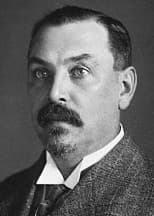
Louis Botha
General · Modern
61.1Total
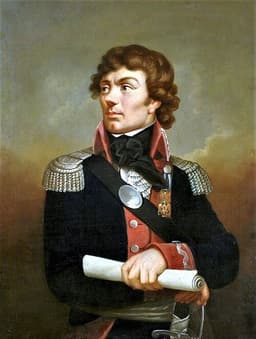
Tadeusz Kosciuszko
General · Modern
64.1Total
Basic Information
Born
1862
1746
Died
1919
1817
Era
Modern
Modern
Nationality
South Africa
Poland
Occupation
General
General
Civilization
Other
Western
Score Comparison
Military (10%)
61.7
47.5
Political (20%)
70.0
68.0
Influence (20%)
56.7
68.0
Legacy (20%)
50.0
68.0
Leadership (15%)
79.8
64.5
Strategy (15%)
58.0
55.0
TOTAL
61.1
64.1
Louis Botha — Complete Timeline
1899 AD
Battle of ColensoWar◆ Major
Botha commanded Boer forces at the Battle of Colenso during the Second Boer War. His troops repelled a British attack under General Buller, inflicting heavy casualties and boosting Boer morale.
Second Boer WarBattleVictory
Impact: regional
1900 AD
Boer War Guerrilla CommanderWar◆ Major
After the British captured Pretoria, Botha led Boer guerrilla forces in the Transvaal. He conducted hit-and-run attacks against British columns, prolonging the war and becoming a symbol of Afrikaner resistance.
Second Boer WarGuerrillaResistance
Impact: regional
1902 AD
Signed the Treaty of VereenigingPolitical Action
Botha, as a leading Boer general, signed the Treaty of Vereeniging which ended the Second Boer War. The treaty granted the Boer republics self-government under British sovereignty and promised eventual self-rule.
TreatyPeaceSecond Boer War
Impact: regional
1910 AD
First Prime Minister of the Union of South AfricaPolitical Action
Botha became the first Prime Minister of the newly formed Union of South Africa. He led a coalition government that sought to reconcile Afrikaners and English-speaking whites, while implementing segregationist policies.
Prime MinisterUnion of South AfricaFounding
Impact: nationalconstructive
1914 AD
Suppressed the 1914 RebellionWar◆ Major
Botha personally led government forces to suppress the Maritz Rebellion, an Afrikaner uprising against South Africa's entry into World War I. He defeated the rebels, asserting state authority and maintaining support for the British Empire.
RebellionWorld War ISuppression
Impact: national
1915 AD
Conquered German South West AfricaWar◆ Major
Botha commanded South African forces in the invasion and conquest of German South West Africa. The campaign succeeded, and the territory was later administered by South Africa under a League of Nations mandate.
World War IConquestGerman South West Africa
Impact: regional
Tadeusz Kosciuszko — Complete Timeline
1777 AD
Battle of Saratoga (engineering contributions)War◆ Major
Kosciuszko designed fortifications and selected defensive positions for the American army at Saratoga. His work contributed to the American victory, a turning point in the Revolutionary War.
American RevolutionSaratogaEngineering
Impact: regional
1778 AD
Fortification of West PointWar◆ Major
Kosciuszko was assigned to fortify West Point on the Hudson River. He designed and supervised the construction of fortifications that made the site a key American stronghold for the remainder of the war.
American RevolutionWest PointFortifications
Impact: regionalconstructive
1794 AD
Kosciuszko UprisingWar
Kosciuszko led a national uprising in Poland against Russian and Prussian occupation. He proclaimed the Act of Insurrection and won the Battle of Rac
Polish UprisingIndependenceDefeat
Impact: nationaltragic
Battle of RacławiceWar◆ Major
Kosciuszko led Polish forces, including peasant scythemen, to victory over a larger Russian army at Rac
Kosciuszko UprisingBattlePeasants
Impact: national
Capture and imprisonment at the Battle of MaciejowiceWar◆ Major
Kosciuszko was wounded and captured by Russian forces at the Battle of Maciejowice. His capture effectively ended the uprising, and he was imprisoned in St. Petersburg until 1796.
Kosciuszko UprisingCaptureImprisonment
Impact: nationaltragic
Expert Analysis
Louis Botha vs Tadeusz Kosciuszko
# The General Who Built Nations
In the autumn of 1794, a wounded Polish commander lay in a Russian prison cell, his uprising crushed, his body broken. Half a world away and a century later, another general stood in a sun-scorched South African veld, watching British redcoats retreat from his Boer riflemen at Colenso. Tadeusz Kosciuszko and Louis Botha never met, never corresponded, yet their lives trace a haunting parallel: both were brilliant military leaders who fought for their people's freedom, both saw their nations swallowed by empires, and both had to decide whether to end their stories in glorious defeat or pragmatic compromise. Why did one become a martyr and the other a statesman? The answer lies not in their courage, but in their moment.
Origins
Kosciuszko was born in 1746 into the Polish-Lithuanian Commonwealth, a vast but decaying noble republic where the king was elected and any single noble could veto legislation. He grew up in a world of golden liberty that was, in truth, a paralysis. His family were minor gentry, educated, patriotic, but increasingly helpless as Russia, Prussia, and Austria carved up their homeland. When he left for France to study military engineering, he carried the bitterness of a man who watched his country's death from afar.
Botha arrived in 1862, the son of a Voortrekker family who had fled British rule in the Cape Colony to establish independent Boer republics in the interior. His world was raw, frontier, and fiercely independent—a people who believed God had given them this land and that no empire would take it. Where Kosciuszko inherited a sophisticated but doomed political tradition, Botha inherited a stubborn, pastoral defiance. Both men would spend their lives fighting empires, but Kosciuszko’s enemy was already inside the gates; Botha’s was still on the horizon.
Rise to Power
Kosciuszko’s path to fame came through service to another revolution. In 1776, he arrived in America, a young engineer offering his sword to the Continental Army. At the Battle of Saratoga in 1777, he selected the defensive positions and designed fortifications that helped seal a crucial American victory. Then came West Point: Kosciuszko spent years turning a rocky Hudson River bend into an impregnable fortress, the key to American independence. He was not a battlefield commander—his military score of 79.2 reflects a solid but not spectacular combat record—but a builder, a thinker, a man who understood that wars are won as much by earthworks as by courage.
Botha rose through blood and fire. When the Second Boer War erupted in 1899, he was a farmer turned fighting general. At the Battle of Colenso, he commanded Boer forces that repelled a British assault with devastating rifle fire, killing over a thousand British soldiers while losing only dozens. His leadership score of 89.6—the highest of any metric for either man—speaks to his ability to inspire and command. Where Kosciuszko’s authority came from engineering and intellect, Botha’s came from presence and grit. He was the kind of general who rode alongside his men, shared their rations, and understood that a Boer farmer fought for his farm, not for a flag.
Leadership & Governance
When Kosciuszko returned to Poland in 1792, he found a nation already partitioned, its army reduced, its king a Russian puppet. He took command of what remained and, in 1794, launched the Kosciuszko Uprising. His political score of 84.3 reveals a man who understood that war must serve a vision. He proclaimed the Act of Insurrection, promising to free the serfs and grant them land. At the Battle of Racławice, he led peasant scythemen—farmers armed with nothing but sharpened blades—to victory over Russian regulars. It was a moment of pure, romantic triumph: the people rising against the empire.
But romanticism has limits. Kosciuszko’s strategy score of 60.0 is the lowest for either man. He won battles but could not win a war. The Russians regrouped, the Prussians advanced, and in October 1794, at Maciejowice, he was wounded and captured. The uprising collapsed. Poland would disappear from maps for 123 years.
Botha faced a similar crisis but chose differently. After the British burned Boer farms and herded women and children into concentration camps, he realized that continued guerrilla war meant national suicide. In 1902, he signed the Treaty of Vereeniging, surrendering Boer independence in exchange for self-government and British protection of Afrikaans culture. It was a bitter pill, but Botha understood that the war was lost and that the future lay in politics, not bullets. His political score of 83.0 matches Kosciuszko’s, but his legacy score of 66.8 is lower—perhaps because compromise, however wise, is less glorious than martyrdom.
Triumph & Tragedy
Kosciuszko’s greatest moment was Racławice, where he proved that a nation of peasants could defeat a professional army. His greatest tragedy was that this victory meant nothing. He died in 1817, exiled in Switzerland, his heart preserved in an urn, his body buried in a foreign land. He had given everything for a Poland that no longer existed.
Botha’s triumph came in 1910, when he became the first prime minister of the Union of South Africa, a nation he helped create from the ashes of war. His tragedy was that this nation was built on racial exclusion. He suppressed the 1914 Afrikaner rebellion against his own government, then conquered German South West Africa for the British Empire. He had fought for Boer freedom, but the freedom he won was only for white men. His legacy is stained by the apartheid that followed.
Character & Destiny
Kosciuszko was a man of principle. He freed his own serfs, left his American pension to buy freedom for slaves, and died believing in universal liberty. His character made him a hero but also a failure—he could not bend his ideals to the realities of power.
Botha was a man of pragmatism. He surrendered when surrender was necessary, governed when governing was possible, and built a nation even if it was flawed. His character made him effective but also controversial—he was called a traitor by some Afrikaners and an imperialist by others.
Legacy
Today, Kosciuszko is a symbol. His name adorns bridges, monuments, and a mountain in Australia. He represents the romantic ideal of the freedom fighter who never gave up.
Botha is a footnote. He is remembered in South Africa as a founder, but his legacy is overshadowed by the apartheid system he helped create. He represents the difficult truth that liberation can be incomplete, that victory can be compromised.
Conclusion
Kosciuszko and Botha both fought for their people’s freedom. One died in exile, his dream unrealized, remembered as a saint. One died in power, his dream realized but imperfect, remembered as a politician. The difference was not in their courage or their vision, but in their willingness to accept a flawed world. Kosciuszko would not bend; Botha would. History honors the unbending, but it is the bending who build the nations we live in. Which is the greater legacy? That is a question every general, every leader, and every reader must answer for themselves.
Rankings
🥇
Tadeusz KosciuszkoLeader
Mil: 47.5Pol: 68.0Inf: 68.0
64.1
🥈
Louis Botha
Mil: 61.7Pol: 70.0Inf: 56.7
61.1
+3.0 behind
How This Comparison Works
Algorithm
Each figure is scored on 6 dimensions (0—100 scale) based on structured historical data: Military (10%), Political (20%), Influence (20%), Legacy (20%), Leadership (15%), Strategy (15%). The weighted total produces the final ranking.
Data Sources
Scores are computed from structured sub-indicators in the database. Scale factors adjust for era (Ancient ×0.85, Modern ×1.0) and civilization size (Eastern ×1.05, Other ×0.80) to account for differences in population and military scale.
Maximum 3 Figures
Comparisons are limited to 2—3 figures to ensure readability and statistical meaningfulness.
Error Margins
±5 points per dimension — Sub-scores are derived from historical records with inherent uncertainty. Two figures within 5 points on a dimension should be considered roughly equivalent in that area.
Total Score Accuracy
±3 points overall — The weighted combination of 6 dimensions produces a total score with approximately ±3 points of uncertainty. Differences of less than 3 points are not statistically significant— the figures are effectively tied.
Known Limitations
- Historical records are incomplete and uneven across civilizations
- Figures from oral-tradition societies may be underrepresented
- Occupation labels can misclassify multi-role figures
- Scores measure capability and impact, not moral character
- Quantitative scoring is a comparison tool, not absolute truth
Capability Radar
Military (10%) — Battles & Warfare
Battles
65
55
Win Rate
70
60
Expansion
60
30
Political (20%) — Governance & Reform
Reform
65
45
Diplomacy
70
55
Economy
55
35
Influence (20%) — Cultural & Global Reach
Cultural
45
65
Global
50
55
Legacy (20%) — Historical Impact
Historical
55
70
Longevity
40
60
Leadership (15%) — Power & Stability
Tenure
60
40
Stability
50
30
Strategy (15%) — Tactics & Innovation
Strategy
72
65
Tactics
68
70
Reform
55
50
Similar Comparisons
Comments & Discussion
VELD GENERAL6/16/2026
Louis Botha was a pragmatic survivor, not a freedom fighter. He surrendered Boer independence at Vereeniging in 1902, then became the first PM of a British dominion. Compare that to Kościuszko, who never bent the knee after being captured—rejecting Russian pardons from his cell. Botha won battles like Colenso but lost the war of ideals. Kościuszko lost his uprising but won history's respect. One built a nation within an empire; the other built a legend without one.
自由军刀6/16/2026
科希丘什科才是真正的革命家,博塔只是个妥协者。科希丘什科在1794年起义失败后拒绝沙皇的特赦,甚至在美国独立战争中设计西点要塞,真是跨越两大洲的自由战士。而博塔在第二次布尔战争后直接成了英国殖民政府的总理,这不是投降是什么?科希丘什科死在瑞士流亡途中,心脏却被安葬在波兰皇家城堡,这才是英雄的结局。博塔?他死在自己的农场,成了南非联邦的象征——一个帝国的产物。
TACTICIAN VS IDEALIST6/16/2026
On pure military skill, Botha edges out Kościuszko. Boer commanders like Botha perfected guerrilla warfare in the Transvaal, hitting British supply lines with mobile commandos. Kościuszko's engineering at the Battle of Dubienka (1792) was brilliant but numerically hopeless. Botha faced 450,000 British troops and held out two years; Kościuszko's uprising lasted seven months. But Botha's victory at Colenso? That's a tactical win, not a strategic one. He won battles but lost the war. Kościuszko los
历史清算人6/16/2026
别美化博塔了,他代表的布尔人压迫土著人,还有脸谈“自由”?科希丘什科在美国战争后卖掉土地解放黑奴,甚至还遗嘱要求购买黑奴自由。博塔呢?他的南非政府推行种族隔离雏形,把黑人赶到“保留地”。比较这两人根本不公平:一个是为所有人争取自由的启蒙战士,一个是为白人殖民者争取特权的土匪头子。科希丘什科吊死波兰叛徒,博塔却和英国人谈判和平——哪个更值得尊敬?显然是你祖先压榨黑人的那个。
COFFEE WITH BOTHA6/16/2026
Look, both were skilled, but Kościuszko's legacy has global reach. He's a national hero in Poland, Lithuania, Belarus, and the US—even a French national guard unit was named after him. Botha? He's known mainly in South Africa and among WWI historians (he commanded against German Africa). Kościuszko's bones