Loading...
Louis IV vs Umar
Umar leads by 27.7 pts · 2 figures compared
…

Louis IV
Emperor · Medieval
46.5Total
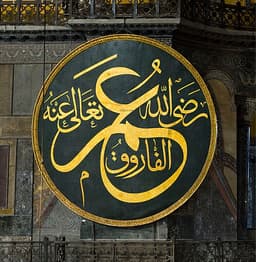
Umar
Emperor · Medieval
74.2Total
Basic Information
Born
1282
584
Died
1347
644
Era
Medieval
Medieval
Nationality
Holy Roman Empire
Rashidun Caliphate
Occupation
Emperor
Emperor
Civilization
Western
Middle Eastern
Score Comparison
Military (10%)
10.0
77.1
Political (20%)
45.1
70.3
Influence (20%)
52.5
67.4
Legacy (20%)
45.8
82.0
Leadership (15%)
65.7
78.0
Strategy (15%)
43.3
69.2
TOTAL
46.5
74.2
Louis IV — Complete Timeline
1314 AD
Elected King of GermanyPolitical Action◆ Major
Louis IV of Bavaria was elected King of Germany by a faction of prince-electors, opposing Frederick the Fair. This election was part of a double election that led to a civil war between the Wittelsbach and Habsburg dynasties.
ElectionWittelsbachDouble Election
Impact: regional
1322 AD
Defeated Frederick the Fair at the Battle of MühldorfWar◆ Major
Louis IV of Bavaria defeated Frederick the Fair at the Battle of M
BattleWittelsbachVictory
Impact: regional
1328 AD
Crowned Holy Roman Emperor by the Roman PeoplePolitical Action
Louis IV of Bavaria was crowned Holy Roman Emperor in Rome by the Roman people, defying Pope John XXII who had excommunicated him. This act asserted imperial authority over the Papacy and led to a prolonged conflict with the Avignon Papacy.
CoronationPapal ConflictImperial Authority
Impact: global
1338 AD
Issued the Declaration of RhensePolitical Action◆ Major
Louis IV of Bavaria issued the Declaration of Rhense, which stated that the German king's election by the prince-electors alone conferred imperial authority without papal approval. This declaration strengthened the independence of the Holy Roman Empire from the Papacy.
DeclarationImperial IndependencePapacy
Impact: regionalconstructive
Umar — Complete Timeline
634 AD
Caliphate of UmarPolitical Action◆ Major
Umar ibn al-Khattab became the second caliph after Abu Bakr's death. His ten-year reign saw the rapid expansion of the Islamic empire, including the conquest of the Sassanid Empire and Byzantine territories in the Levant and Egypt.
CaliphateExpansionRashidun
Impact: global
636 AD
Conquest of the Sassanid EmpireWar
Umar's forces, led by Sa'd ibn Abi Waqqas, defeated the Sassanid army at the Battle of al-Qadisiyyah in 636. This victory led to the Muslim conquest of Iraq and later the fall of the Sassanid capital Ctesiphon, ending Persian imperial rule.
Islamic ConquestSassanid EmpireRashidun
Impact: global
Conquest of Byzantine Syria and EgyptWar◆ Major
Umar's generals, including Khalid ibn al-Walid and Amr ibn al-As, conquered Byzantine Syria after the Battle of Yarmouk (636) and Egypt after the surrender of Babylon Fortress (641). These conquests added vast territories to the caliphate.
Islamic ConquestByzantine EmpireRashidun
Impact: global
638 AD
Establishment of the Islamic CalendarReform◆ Major
Umar instituted the Hijri calendar, dating from the migration (Hijra) of Muhammad to Medina in 622. This calendar became the standard for the Islamic world, used for religious and administrative purposes.
CalendarReformRashidun
Impact: globalconstructive
644 AD
Assassination of UmarPolitical Action◆ Major
Umar was stabbed by a Persian slave named Abu Lu'lu'a while leading prayers in Medina. He died three days later, having appointed a council to elect his successor. His death marked the end of the first phase of rapid expansion.
AssassinationSuccessionRashidun
Impact: globaltragic
Expert Analysis
Origins
Louis IV of Bavaria was born in 1282 into the House of Wittelsbach, a powerful German dynasty. His early life was shaped by the political fragmentation of the Holy Roman Empire, where princely factions vied for influence. He received a typical noble education, focusing on governance and warfare, but lacked the religious training that often accompanied imperial roles. Louis's formative years were marked by the struggle between the Papacy and the Empire, setting the stage for his later defiance.
Umar ibn al-Khattab was born in 584 in Mecca to the Banu Adi clan of the Quraysh tribe. Initially a fierce opponent of Islam, he converted in 616 after a dramatic encounter with the Quran. His early career as a merchant and warrior gave him practical skills in leadership and negotiation. Umar's conversion provided him with a close relationship with Prophet Muhammad, and he became a key advisor, known for his strict adherence to justice and his physical prowess.
Rise to Power
Louis IV's rise began with his election as King of Germany in 1314 by a faction of prince-electors, opposing Frederick the Fair of Austria. This double election plunged the empire into civil war. Louis secured his claim by defeating Frederick at the Battle of Mühldorf in 1322, a decisive victory that ended the war. However, Pope John XXII refused to recognize Louis's election and excommunicated him. In defiance, Louis marched to Rome, where he was crowned Holy Roman Emperor by the Roman people in 1328, an act that asserted imperial independence from papal authority.
Umar became the second caliph in 634 after the death of Abu Bakr, who had designated him as successor. His rise was facilitated by his close association with Muhammad and his reputation for strength and piety. Umar's reign saw the rapid expansion of the Islamic empire through military conquests. He appointed skilled generals like Khalid ibn al-Walid and Sa'd ibn Abi Waqqas, who led campaigns against the Byzantine and Sassanid empires. The Battle of Yarmouk (636) and the Battle of al-Qadisiyyah (636) were turning points that opened Syria and Persia to Muslim rule.
Leadership & Governance
Louis IV's leadership was characterized by his struggle against papal supremacy. He issued the Declaration of Rhense in 1338, asserting that the German king's election by prince-electors alone conferred imperial authority, independent of papal approval. This was a significant political move, but Louis lacked the resources to enforce his claims effectively. His governance focused on consolidating Wittelsbach power in Bavaria and the Empire, but he often relied on alliances and concessions to maintain support. His political score of 45.1 reflects his limited success in institutionalizing his reforms.
Umar's governance was transformative. He established the Diwan (administrative registry), organized the state into provinces with appointed governors, and instituted the Hijri calendar. He was known for his strict accountability, personally inspecting public officials and ensuring justice. Umar's leadership style was hands-on and disciplined; he often patrolled Medina at night to check on his subjects. His military score of 77.1 and leadership score of 78.0 highlight his effectiveness. The conquest of the Sassanid Empire and Byzantine territories doubled the size of the Islamic state, demonstrating his strategic acumen.
Triumph & Tragedy
Louis IV's greatest triumph was his defiance of the Pope and his successful coronation in Rome, which set a precedent for imperial independence. His victory at Mühldorf secured his throne. However, his greatest failure was his inability to sustain his gains. After his death in 1347, the Wittelsbach dynasty lost the imperial crown, and his reforms were largely overturned. His legacy score of 45.8 reflects the ephemeral nature of his achievements.
Umar's triumphs were immense: the conquest of the Sassanid Empire and Byzantine Syria and Egypt, expanding Islam's reach beyond Arabia. He established the foundations of the Islamic state's administration. His tragedy came with his assassination in 644 by a Persian slave, cutting short his reign. Despite this, his legacy endured. His influence score of 67.4 and legacy score of 82.0 indicate his lasting impact on Islamic civilization.
Character & Destiny
Louis IV was determined and defiant, but his character lacked the diplomatic finesse needed to navigate the complex politics of the Empire. His decision to defy the Pope alienated him from the Church and many German princes, limiting his support. His destiny was to be a symbol of imperial resistance rather than a builder of lasting institutions.
Umar was known for his austerity, justice, and strong will. He was called "Al-Farooq" (the one who distinguishes truth from falsehood). His character inspired loyalty and fear in equal measure. His destiny was to shape the early Islamic empire's structure and ethos, and his assassination, while tragic, solidified his status as a martyr and a model ruler.
Legacy
Louis IV's legacy is primarily symbolic. The Declaration of Rhense influenced later concepts of imperial autonomy, but his immediate impact was limited. He scored 45.8 in legacy, reflecting his minor long-term influence compared to other medieval emperors.
Umar's legacy is profound. He is remembered as one of the greatest caliphs, with his administrative reforms and conquests forming the backbone of the Islamic empire. The Hijri calendar is still used by Muslims worldwide. He scored 82.0 in legacy, among the highest of early Islamic leaders. His name is revered in Islamic history, and his policies influenced subsequent caliphates.
Conclusion
Umar had a far greater impact than Louis IV. With a total score of 74.2 compared to Louis's 46.5, Umar's achievements in military expansion, political organization, and lasting influence dwarf those of the Bavarian emperor. Louis's defiance of the Pope was notable but ultimately inconsequential for the Holy Roman Empire's long-term development. Umar's conquests and administrative innovations shaped the course of Islamic history and continue to resonate. The data supports a clear conclusion: Umar was the more consequential leader.
Rankings
🥇
UmarLeader
Mil: 77.1Pol: 70.3Inf: 67.4
74.2
🥈
Louis IV
Mil: 10.0Pol: 45.1Inf: 52.5
46.5
+27.7 behind
How This Comparison Works
Algorithm
Each figure is scored on 6 dimensions (0—100 scale) based on structured historical data: Military (10%), Political (20%), Influence (20%), Legacy (20%), Leadership (15%), Strategy (15%). The weighted total produces the final ranking.
Data Sources
Scores are computed from structured sub-indicators in the database. Scale factors adjust for era (Ancient ×0.85, Modern ×1.0) and civilization size (Eastern ×1.05, Other ×0.80) to account for differences in population and military scale.
Maximum 3 Figures
Comparisons are limited to 2—3 figures to ensure readability and statistical meaningfulness.
Error Margins
±5 points per dimension — Sub-scores are derived from historical records with inherent uncertainty. Two figures within 5 points on a dimension should be considered roughly equivalent in that area.
Total Score Accuracy
±3 points overall — The weighted combination of 6 dimensions produces a total score with approximately ±3 points of uncertainty. Differences of less than 3 points are not statistically significant— the figures are effectively tied.
Known Limitations
- Historical records are incomplete and uneven across civilizations
- Figures from oral-tradition societies may be underrepresented
- Occupation labels can misclassify multi-role figures
- Scores measure capability and impact, not moral character
- Quantitative scoring is a comparison tool, not absolute truth
Capability Radar
Military (10%) — Battles & Warfare
Battles
45
85
Win Rate
40
90
Expansion
35
92
Political (20%) — Governance & Reform
Reform
40
90
Diplomacy
50
80
Economy
35
85
Influence (20%) — Cultural & Global Reach
Cultural
30
85
Global
25
88
Legacy (20%) — Historical Impact
Historical
45
90
Longevity
30
95
Leadership (15%) — Power & Stability
Tenure
55
85
Stability
30
82
Strategy (15%) — Tactics & Innovation
Strategy
40
88
Tactics
35
80
Reform
30
85
Similar Comparisons
Comments & Discussion
No comments yet. Be the first to share your thoughts!