Loading...
Louis Philippe I vs Nizam-ul-Mulk Asaf Jah I
Nizam-ul-Mulk Asaf Jah I leads by 11.8 pts · 2 figures compared
…

Louis Philippe I
Emperor · Modern
49.9Total
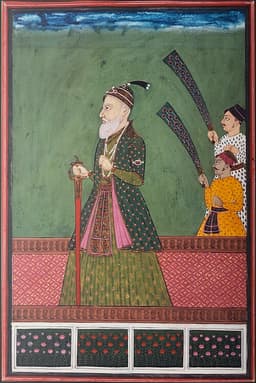
Nizam-ul-Mulk Asaf Jah I
Emperor · Modern
61.7Total
Basic Information
Born
1773
1671
Died
1850
1748
Era
Modern
Modern
Nationality
France
India
Occupation
Emperor
Emperor
Civilization
Western
Indian
Score Comparison
Military (10%)
25.9
61.7
Political (20%)
72.0
72.0
Influence (20%)
54.1
55.0
Legacy (20%)
43.3
55.0
Leadership (15%)
53.2
78.0
Strategy (15%)
42.3
55.0
TOTAL
49.9
61.7
Louis Philippe I — Complete Timeline
1830 AD
French Conquest of AlgeriaWar◆ Major
Louis Philippe continued and expanded the French conquest of Algeria, begun under Charles X. French forces faced prolonged resistance from Abd al-Qadir and other leaders. The conquest was brutal and lasted until 1847, establishing Algeria as a major French colony.
Colonial WarAlgeriaImperialism
Impact: globaldestructive
July Revolution (1830) and AccessionPolitical Action
After the overthrow of Charles X, Louis Philippe, Duke of Orl
RevolutionAccessionJuly Monarchy
Impact: nationalconstructive
Reign of the July MonarchyPolitical Action◆ Major
Louis Philippe's reign, known as the July Monarchy, was characterized by a constitutional framework, a property-based suffrage, and a pro-business policy. The regime favored the bourgeoisie, leading to growing discontent among workers and republicans. It was marked by political corruption and social unrest.
Constitutional MonarchyBourgeoisieJuly Monarchy
Impact: national
1848 AD
French Revolution of 1848Political Action
A wave of revolutions across Europe in February 1848 reached Paris. Louis Philippe's government banned a political banquet, sparking protests that escalated into a full uprising. On February 24, 1848, Louis Philippe abdicated in favor of his grandson and fled to England, ending the July Monarchy.
RevolutionAbdication1848
Impact: globaldestructive
Exile and Death in EnglandOther
After abdicating, Louis Philippe fled to England under the assumed name 'Mr. Smith.' He lived in exile at Claremont House in Surrey until his death on August 26, 1850. His death marked the end of the Orl
ExileDeathOrléanist
Impact: nationaltragic
Nizam-ul-Mulk Asaf Jah I — Complete Timeline
1722 AD
Appointed Grand Vizier of the Mughal EmpirePolitical Action◆ Major
Nizam-ul-Mulk Asaf Jah I was appointed Grand Vizier (Prime Minister) of the Mughal Empire under Emperor Muhammad Shah. He attempted to reform the empire's administration and finances but faced opposition from court factions.
Mughal EmpireGrand VizierAdministration
Impact: national
1724 AD
Battle of Shakar KhedaWar◆ Major
Nizam-ul-Mulk Asaf Jah I defeated the Mughal imperial forces led by Mubariz Khan at the Battle of Shakar Kheda. This victory solidified his control over the Deccan and effectively established his independent rule.
BattleDeccanMughal Empire
Impact: regional
Founded the Asaf Jahi dynasty and the state of HyderabadPolitical Action
After resigning as Grand Vizier, Nizam-ul-Mulk Asaf Jah I established an independent principality in the Deccan, founding the Asaf Jahi dynasty. He made Hyderabad his capital and created a stable state that would last for over two centuries.
HyderabadDynastyDeccanIndependence
Impact: regionalconstructive
1725 AD
Implemented administrative reforms in the DeccanReform◆ Major
Nizam-ul-Mulk Asaf Jah I introduced a system of revenue administration and governance in the Deccan that balanced local autonomy with central authority. His reforms provided stability and prosperity to the region for decades.
AdministrationRevenueDeccan
Impact: regionalconstructive
Expert Analysis
Origins
Louis Philippe I was born on October 6, 1773, in Paris, France, into the House of Orléans, a cadet branch of the Bourbon dynasty. His father, Philippe Égalité, supported the French Revolution, which influenced Louis Philippe's early liberal leanings. He received education from tutors and later at the College of Juilly, developing a bourgeois sensibility. In contrast, Nizam-ul-Mulk Asaf Jah I was born as Mir Qamar-ud-din Khan on August 20, 1671, in Agra, Mughal India, into a noble family of Turkic origin. His father, Ghazi ud-Din Khan, served as a high-ranking official under Aurangzeb. The younger Nizam received military training and administrative experience from a young age, serving as a commander in the Mughal campaigns.
Rise to Power
Louis Philippe's rise began with his father's fall during the Revolution; he fled France in 1793 and lived in exile for 21 years, traveling through Europe and America. After the Bourbon Restoration, he returned and positioned himself as a liberal alternative to the ultra-royalists. In the July Revolution of 1830, after the overthrow of Charles X, he was proclaimed King of the French on August 9, 1830, accepting the title 'King of the French' to emphasize popular sovereignty. Nizam-ul-Mulk rose through the Mughal bureaucracy, becoming a trusted general and administrator. In 1722, he was appointed Grand Vizier of the Mughal Empire under Emperor Muhammad Shah. However, court intrigues led him to resign and retreat to the Deccan. There, he consolidated power, defeating Mughal forces at the Battle of Shakar Kheda in 1724, which established his control over the region. He then founded the Asaf Jahi dynasty and the state of Hyderabad, becoming its first Nizam.
Leadership & Governance
Louis Philippe's July Monarchy was a constitutional regime with a property-based suffrage that limited voting to about 0.5% of the population. He pursued pro-business policies, supporting the bourgeoisie, and oversaw industrial expansion. His foreign policy included the French conquest of Algeria, which expanded colonial holdings. However, his government became increasingly conservative and resistant to reform. Nizam-ul-Mulk implemented administrative reforms in the Deccan, creating a system of revenue administration that balanced local autonomy with central authority. He appointed loyal nobles to key positions and maintained stability through a decentralized feudal structure. His governance scored 72.0 in political skill, matching Louis Philippe's political score, but his leadership score of 78.0 significantly exceeded Louis Philippe's 53.2.
Triumph & Tragedy
Louis Philippe's triumph was his peaceful accession and initial stabilization of France after the 1830 revolution. He also expanded French influence in North Africa. However, his greatest failure was the 1848 Revolution, which forced his abdication and exile. His refusal to extend suffrage and address social inequalities led to widespread discontent. Nizam-ul-Mulk's triumph was founding a dynasty that lasted until 1948, creating a stable state in the Deccan. He successfully navigated Mughal decline and Maratha expansion. His tragedy was that his state remained a feudal principality, unable to modernize fully, and his successors struggled with internal challenges. His military score of 61.7 reflects his battlefield success, while Louis Philippe's military score of 25.9 indicates his lack of martial prowess.
Character & Destiny
Louis Philippe was pragmatic and cautious, earning the nickname 'Citizen King' for his bourgeois lifestyle. He sought to avoid the extremes of republicanism and absolutism, but his indecisiveness and resistance to change led to his downfall. Historians note his lack of charisma and failure to inspire loyalty. Nizam-ul-Mulk was ambitious and strategic, with a talent for administration and diplomacy. He understood the limits of Mughal power and carved out his own domain. His character was marked by patience and calculation, which allowed him to build a lasting legacy. The strategic score of 55.0 for Nizam-ul-Mulk versus 42.3 for Louis Philippe highlights his superior planning.
Legacy
Louis Philippe's legacy is mixed: he is remembered as the last king of France, and his reign is often seen as a failed attempt at constitutional monarchy. The July Monarchy's institutions influenced later French governments, but his overthrow demonstrated the fragility of liberal monarchism. Nizam-ul-Mulk's legacy is more enduring: the Asaf Jahi dynasty ruled Hyderabad for over two centuries, and his administrative reforms laid the foundation for a princely state that became a major power in India. His influence score of 55.0 slightly exceeds Louis Philippe's 54.1, and his legacy score of 55.0 surpasses Louis Philippe's 43.3.
Conclusion
While Louis Philippe played a role in France's political evolution, his impact was limited by his short reign and ultimate failure. Nizam-ul-Mulk Asaf Jah I, with a total score of 61.7 compared to Louis Philippe's 49.9, had a more significant and lasting impact. He founded a dynasty that shaped the Deccan for centuries, demonstrating superior leadership and strategic acumen. The data supports that Nizam-ul-Mulk's contributions to state-building and governance outweigh Louis Philippe's constitutional experiments. Therefore, Nizam-ul-Mulk Asaf Jah I had greater historical impact.
Rankings
🥇
Nizam-ul-Mulk Asaf Jah ILeader
Mil: 61.7Pol: 72.0Inf: 55.0
61.7
🥈
Louis Philippe I
Mil: 25.9Pol: 72.0Inf: 54.1
49.9
+11.8 behind
How This Comparison Works
Algorithm
Each figure is scored on 6 dimensions (0—100 scale) based on structured historical data: Military (10%), Political (20%), Influence (20%), Legacy (20%), Leadership (15%), Strategy (15%). The weighted total produces the final ranking.
Data Sources
Scores are computed from structured sub-indicators in the database. Scale factors adjust for era (Ancient ×0.85, Modern ×1.0) and civilization size (Eastern ×1.05, Other ×0.80) to account for differences in population and military scale.
Maximum 3 Figures
Comparisons are limited to 2—3 figures to ensure readability and statistical meaningfulness.
Error Margins
±5 points per dimension — Sub-scores are derived from historical records with inherent uncertainty. Two figures within 5 points on a dimension should be considered roughly equivalent in that area.
Total Score Accuracy
±3 points overall — The weighted combination of 6 dimensions produces a total score with approximately ±3 points of uncertainty. Differences of less than 3 points are not statistically significant— the figures are effectively tied.
Known Limitations
- Historical records are incomplete and uneven across civilizations
- Figures from oral-tradition societies may be underrepresented
- Occupation labels can misclassify multi-role figures
- Scores measure capability and impact, not moral character
- Quantitative scoring is a comparison tool, not absolute truth
Capability Radar
Military (10%) — Battles & Warfare
Battles
15
65
Win Rate
20
70
Expansion
5
70
Political (20%) — Governance & Reform
Reform
55
80
Diplomacy
60
85
Economy
55
80
Influence (20%) — Cultural & Global Reach
Cultural
30
65
Global
35
55
Legacy (20%) — Historical Impact
Historical
40
70
Longevity
30
75
Leadership (15%) — Power & Stability
Tenure
60
85
Stability
40
75
Strategy (15%) — Tactics & Innovation
Strategy
15
80
Tactics
10
75
Reform
10
60
Similar Comparisons
Comments & Discussion
No comments yet. Be the first to share your thoughts!