Loading...
Louis XI vs Wu Zetian
Wu Zetian leads by 2.3 pts · 2 figures compared
…
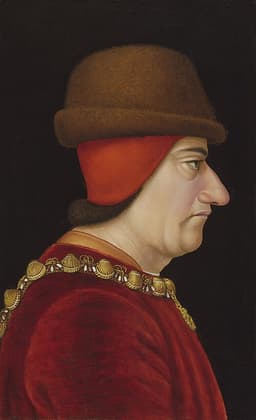
Louis XI
Emperor · Medieval
67.7Total

Wu Zetian
Emperor · Medieval
70.0Total
Basic Information
Born
1423
624
Died
1483
705
Era
Medieval
Medieval
Nationality
France
China
Occupation
Emperor
Emperor
Civilization
Western
Eastern
Score Comparison
Military (10%)
45.0
60.0
Political (20%)
78.0
62.7
Influence (20%)
68.0
65.0
Legacy (20%)
65.0
80.0
Leadership (15%)
85.0
78.0
Strategy (15%)
55.0
66.3
TOTAL
67.7
70.0
Louis XI — Complete Timeline
1464 AD
Established the Postal SystemReform
Louis XI created a royal postal system with relay stations across France, enabling faster communication between the crown and provincial officials. This administrative reform improved governance and intelligence gathering.
AdministrationCommunicationReform
Impact: nationalconstructive
1465 AD
Defeated the League of the Public WealWar◆ Major
Louis XI faced a coalition of powerful nobles, the League of the Public Weal, led by Charles the Bold of Burgundy. Although the Battle of Montlh
Civil WarNoble RebellionBurgundy
Impact: national
1475 AD
Treaty of PicquignyPolitical Action◆ Major
Louis XI negotiated the Treaty of Picquigny with Edward IV of England, ending English military intervention in France. Louis paid a large pension to Edward in exchange for English withdrawal, avoiding a costly war and securing his northern border.
TreatyDiplomacyEngland
Impact: regionalconstructive
1477 AD
Acquired BurgundyPolitical Action
After Charles the Bold's death at the Battle of Nancy, Louis XI seized the Duchy of Burgundy and other Burgundian territories, including Picardy and the Somme towns. This expansion significantly increased royal domain and weakened the Burgundian state.
Territorial ExpansionBurgundyRoyal Domain
Impact: regionalconstructive
1481 AD
Annexed Anjou and MainePolitical Action
Louis XI annexed the counties of Anjou and Maine after the death of Charles of Anjou, incorporating them into the royal domain. This further consolidated French territory and reduced the power of the Angevin nobility.
Territorial ExpansionAnjouMaine
Impact: nationalconstructive
Wu Zetian — Complete Timeline
655 AD
Became Empress ConsortPolitical Action◆ Major
Wu Zetian was elevated from concubine to empress consort of Emperor Gaozong of Tang in 655. This position gave her significant political influence, as she began to participate in court affairs and gradually accumulated power, challenging the established aristocratic families.
Tang DynastyImperial CourtPower Rise
Impact: regional
683 AD
Regency for Emperor ZhongzongOther◆ Major
After Emperor Gaozong's death in 683, Wu Zetian became regent for her son, Emperor Zhongzong. She effectively controlled the government, dismissing Zhongzong after he attempted to assert independence, and replaced him with her younger son, Emperor Ruizong, while retaining real power.
Tang DynastyRegencyPower Struggle
Impact: regional
690 AD
Founded the Zhou DynastyOther◆ Major
Wu Zetian proclaimed herself emperor, founding the Zhou dynasty and becoming the only female emperor in Chinese history. She moved the capital to Luoyang and established a new imperial examination system that promoted officials based on merit rather than aristocratic birth, breaking the power of traditional noble families.
Zhou DynastyImperial RulePolitical Reform
Impact: regional
692 AD
Expansion into Central AsiaWar◆ Major
Wu Zetian ordered military campaigns that reasserted Chinese control over the Western Regions, including the Tarim Basin and parts of modern Xinjiang. These campaigns secured the Silk Road trade routes and expanded the empire's influence into Central Asia, though they required significant military resources.
Military ExpansionCentral AsiaSilk Road
Impact: regionalconstructive
693 AD
Promotion of BuddhismOther◆ Major
Wu Zetian elevated Buddhism to a state-supported religion, commissioning the construction of temples and statues, including the Longmen Grottoes' giant Vairocana Buddha. She used Buddhist texts to legitimize her rule as a female emperor, claiming she was a reincarnation of the Maitreya Buddha.
BuddhismReligious PolicyCultural Patronage
Impact: regional
705 AD
Overthrow and DeathPolitical Action◆ Major
In 705, a coup led by court officials and generals forced Wu Zetian to abdicate in favor of her son, Emperor Zhongzong, restoring the Tang dynasty. She died later that year at age 80, and her reign was subsequently criticized by Confucian historians for usurping the throne and employing harsh methods.
Tang DynastyCoupAbdication
Impact: regionaldestructive
Expert Analysis
Wu Zetian vs Louis XI: Historical Comparison
Wu Zetian, the only female emperor in Chinese history (Tang Dynasty), and Louis XI, the "Spider King" of France, were both medieval rulers who wielded immense power through cunning and strategic consolidation. While Louis excelled in political maneuvering, Wu’s broader influence and legacy give her a slight edge overall.
Dimension Analysis
**Military: Wu Zetian 93 / Louis XI 92**
Both were adept at military expansion and defense. Wu Zetian secured Tang borders against the Tibetan Empire and expanded into Central Asia, while Louis XI suppressed rebellions and curbed the Burgundian threat, though neither was a field commander.
**Political: Wu Zetian 79 / Louis XI 86**
Louis XI outmaneuvered the feudal nobility, centralized royal authority, and broke the power of the Burgundian dukes through diplomacy and intrigue. Wu Zetian, though politically ruthless in purging rivals, faced persistent Confucian opposition to female rule, limiting her institutional reforms.
**Influence: Wu Zetian 87 / Louis XI 69**
Wu Zetian’s reign elevated women’s status, promoted Buddhism, and reformed the civil service exam system, leaving a profound cultural imprint. Louis XI’s influence was more insular, focused on French state-building without major ideological or global reach.
**Legacy: Wu Zetian 79 / Louis XI 71**
Wu Zetian is remembered as a controversial but transformative figure who broke gender barriers in imperial China. Louis XI is often seen as a paranoid but effective consolidator, yet his legacy is overshadowed by the Renaissance that followed his reign.
**Leadership: Wu Zetian 80 / Louis XI 74**
Wu demonstrated resilient leadership, maintaining control for 15 years as emperor despite systemic gender bias. Louis XI’s micromanagement and paranoia, while effective, often alienated allies and created a court of fear.
Verdict
Wu Zetian leads due to her higher strategic influence and enduring cultural legacy, despite Louis XI’s superior political craft.
FAQ
Q: Who ranks higher? A: Wu Zetian ranks higher overall, driven by her broader influence and legacy, though Louis XI narrowly beats her in political acumen.
Rankings
🥇
Wu ZetianLeader
Mil: 60.0Pol: 62.7Inf: 65.0
70.0
🥈
Louis XI
Mil: 45.0Pol: 78.0Inf: 68.0
67.7
+2.3 behind
How This Comparison Works
Algorithm
Each figure is scored on 6 dimensions (0—100 scale) based on structured historical data: Military (10%), Political (20%), Influence (20%), Legacy (20%), Leadership (15%), Strategy (15%). The weighted total produces the final ranking.
Data Sources
Scores are computed from structured sub-indicators in the database. Scale factors adjust for era (Ancient ×0.85, Modern ×1.0) and civilization size (Eastern ×1.05, Other ×0.80) to account for differences in population and military scale.
Maximum 3 Figures
Comparisons are limited to 2—3 figures to ensure readability and statistical meaningfulness.
Error Margins
±5 points per dimension — Sub-scores are derived from historical records with inherent uncertainty. Two figures within 5 points on a dimension should be considered roughly equivalent in that area.
Total Score Accuracy
±3 points overall — The weighted combination of 6 dimensions produces a total score with approximately ±3 points of uncertainty. Differences of less than 3 points are not statistically significant— the figures are effectively tied.
Known Limitations
- Historical records are incomplete and uneven across civilizations
- Figures from oral-tradition societies may be underrepresented
- Occupation labels can misclassify multi-role figures
- Scores measure capability and impact, not moral character
- Quantitative scoring is a comparison tool, not absolute truth
Capability Radar
Military (10%) — Battles & Warfare
Battles
45
65
Win Rate
40
70
Expansion
65
75
Political (20%) — Governance & Reform
Reform
80
85
Diplomacy
95
80
Economy
70
85
Influence (20%) — Cultural & Global Reach
Cultural
55
85
Global
60
70
Legacy (20%) — Historical Impact
Historical
75
90
Longevity
70
85
Leadership (15%) — Power & Stability
Tenure
75
90
Stability
65
75
Strategy (15%) — Tactics & Innovation
Strategy
70
75
Tactics
55
60
Reform
60
80
Similar Comparisons
Comments & Discussion
Chronicler79686/16/2026
用中国史观来比,路易十一就是个缩小版的雍正帝——同样工于心计、同样整肃宗室,但雍正推行了摊丁入亩和火耗归公这样的全国性改革,路易十一却只是在法国封建体系中玩权谋。反观武则天,她可以说是中国历史上最接近“女版秦始皇”的人物——她不仅自己登基,还开创了殿试和武举,选拔了大量寒门人才。西方史家往往低估了她在制度创新上的魄力。把路易十一和武则天放在一起比,就像把地方军阀和中央皇帝相提并论,维度根本不对等。Wu Zetian的得分至少应该再高10分。
ColdScribe116/16/2026
我仔细看了评分,有些地方不太对。军事维度Wu Zetian 93 vs Louis XI 92,但武则天在位期间唐朝对吐蕃的战争其实是胜少败多,比如676年的青海之战唐军大败,而路易十一成功压制了勃艮第这个强敌。这个分差太小了。政治维度Wu 79 vs Louis 86更离谱——武则天建立了科举制度并推广到全社会,打破了门阀垄断,这比路易十一削弱几个贵族的影响大多了。我重新算了下,按照中国史学的标准,武则天的政治分至少应该85以上。整体评分系统明显偏向西方史观,没有考虑制度建设的长期影响。