Loading...
This comparison has not been analyzed yet.
One-time AI generation (~1 minute). Scores and timeline are already available below.
Louis XV of France vs Nawab Wajid Ali Shah
Louis XV of France leads by 8.3 pts · 2 figures compared
…

Louis XV of France
Emperor · Modern
53.0Total
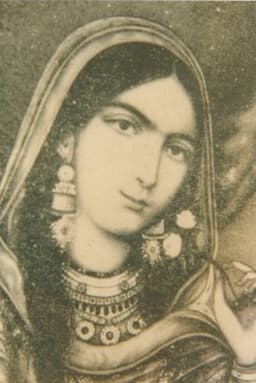
Nawab Wajid Ali Shah
Emperor · Modern
44.7Total
Basic Information
Born
1710
1822
Died
1774
1887
Era
Modern
Modern
Nationality
France
India
Occupation
Emperor
Emperor
Civilization
Western
Indian
Score Comparison
Military (10%)
45.0
20.0
Political (20%)
43.7
33.6
Influence (20%)
61.0
56.4
Legacy (20%)
49.2
43.3
Leadership (15%)
72.0
48.4
Strategy (15%)
35.7
54.3
TOTAL
53.0
44.7
Louis XV of France — Complete Timeline
1745 AD
Madame de Pompadour's InfluencePolitical Action
Louis XV made Jeanne Antoinette Poisson his official mistress, granting her the title Marquise de Pompadour. She became a powerful patron of the arts and influenced court appointments and foreign policy until her death in 1764.
CourtPatronageArts
Impact: national
1748 AD
Treaty of Aix-la-ChapellePolitical Action◆ Major
Louis XV's France signed the Treaty of Aix-la-Chapelle ending the War of the Austrian Succession. France gained little despite military successes, and the treaty was widely seen as a diplomatic failure, contributing to Louis XV's declining popularity.
War of Austrian SuccessionDiplomacyTreaty
Impact: regional
1763 AD
Seven Years' War: Loss of New FranceWar◆ Major
The Treaty of Paris ended the Seven Years' War, ceding New France (Canada) and most French territories in India to Britain. This marked the end of the first French colonial empire and a major defeat for Louis XV's reign.
Seven Years' WarColonial LossTreaty of Paris
Impact: globaltragic
1771 AD
Suppression of the ParlementsPolitical Action◆ Major
Louis XV's chancellor, Ren
ParlementsReformAbsolutism
Impact: nationaldestructive
Nawab Wajid Ali Shah — Complete Timeline
1847 AD
Ascended the throne of AwadhPolitical Action◆ Major
Wajid Ali Shah became the tenth and last Nawab of Awadh upon the death of his father, Amjad Ali Shah. His reign was marked by a focus on cultural pursuits, including poetry, music, and dance, rather than administrative or military affairs.
SuccessionNawabAwadh
Impact: regional
1850 AD
Patronized the development of Kathak and ThumriCultural◆ Major
Wajid Ali Shah was a significant patron of the classical dance form Kathak and the semi-classical music genre Thumri. His court in Lucknow became a center for these arts, and his own compositions contributed to their evolution.
KathakThumriCultural PatronageLucknow
Impact: regionalconstructive
1856 AD
Annexation of Awadh by the British East India CompanyPolitical Action
The British East India Company annexed the kingdom of Awadh under the Doctrine of Lapse, citing misgovernance. Wajid Ali Shah was deposed and exiled to Calcutta, where he lived under British supervision for the rest of his life.
AnnexationDoctrine of LapseBritish Colonialism
Impact: regionaltragic
Exiled to CalcuttaPolitical Action◆ Major
Following the annexation of Awadh, Wajid Ali Shah was exiled to Matiaburj in Calcutta. He spent his remaining years there, continuing his patronage of the arts and establishing a cultural center that influenced Bengali music and theater.
ExileCultural PatronageCalcutta
Impact: regionaltragic
This comparison has not been analyzed yet.
One-time AI generation (~1 minute). Scores and timeline are already available below.
Rankings
🥇
Louis XV of FranceLeader
Mil: 45.0Pol: 43.7Inf: 61.0
53.0
🥈
Nawab Wajid Ali Shah
Mil: 20.0Pol: 33.6Inf: 56.4
44.7
+8.3 behind
How This Comparison Works
Algorithm
Each figure is scored on 6 dimensions (0—100 scale) based on structured historical data: Military (10%), Political (20%), Influence (20%), Legacy (20%), Leadership (15%), Strategy (15%). The weighted total produces the final ranking.
Data Sources
Scores are computed from structured sub-indicators in the database. Scale factors adjust for era (Ancient ×0.85, Modern ×1.0) and civilization size (Eastern ×1.05, Other ×0.80) to account for differences in population and military scale.
Maximum 3 Figures
Comparisons are limited to 2—3 figures to ensure readability and statistical meaningfulness.
Error Margins
±5 points per dimension — Sub-scores are derived from historical records with inherent uncertainty. Two figures within 5 points on a dimension should be considered roughly equivalent in that area.
Total Score Accuracy
±3 points overall — The weighted combination of 6 dimensions produces a total score with approximately ±3 points of uncertainty. Differences of less than 3 points are not statistically significant— the figures are effectively tied.
Known Limitations
- Historical records are incomplete and uneven across civilizations
- Figures from oral-tradition societies may be underrepresented
- Occupation labels can misclassify multi-role figures
- Scores measure capability and impact, not moral character
- Quantitative scoring is a comparison tool, not absolute truth
Capability Radar
Military (10%) — Battles & Warfare
Battles
35
5
Win Rate
30
5
Expansion
10
5
Political (20%) — Governance & Reform
Reform
20
20
Diplomacy
40
15
Economy
30
20
Influence (20%) — Cultural & Global Reach
Cultural
55
60
Global
40
20
Legacy (20%) — Historical Impact
Historical
50
40
Longevity
45
30
Leadership (15%) — Power & Stability
Tenure
85
30
Stability
25
10
Strategy (15%) — Tactics & Innovation
Strategy
25
5
Tactics
20
5
Reform
15
5
Similar Comparisons
Comments & Discussion
No comments yet. Be the first to share your thoughts!