Loading...
Lucius Junius Brutus vs Saddam Hussein
Lucius Junius Brutus leads by 23.0 pts · 2 figures compared
…
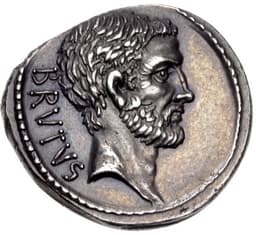
Lucius Junius Brutus
Politician · Ancient
72.7Total
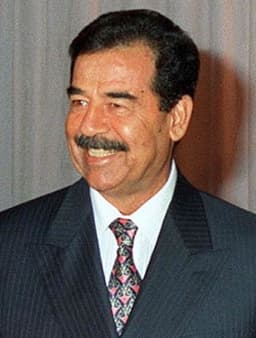
Saddam Hussein
Politician · Modern
49.7Total
Basic Information
Born
-540
1937
Died
-509
—
Era
Ancient
Modern
Nationality
Roman Republic
Iraq
Occupation
Politician
Politician
Civilization
Western
Middle Eastern
Score Comparison
Military (10%)
45.0
52.5
Political (20%)
72.0
43.7
Influence (20%)
75.0
58.0
Legacy (20%)
90.0
47.5
Leadership (15%)
71.0
40.0
Strategy (15%)
54.8
55.0
TOTAL
72.7
49.7
Lucius Junius Brutus — Complete Timeline
509 BC
Battle of Silva ArsiaWar◆ Major
Brutus led the Roman army against the forces of Tarquinius Superbus and his Etruscan allies at Silva Arsia. During the battle, Brutus and Arruns Tarquinius, the king's son, killed each other in single combat, but the Romans ultimately won the battle, securing the Republic's survival.
BattleSingle CombatFounding Myth
Impact: nationaltragic
Expulsion of the TarquinsPolitical Action
Lucius Junius Brutus led a revolt against the Tarquin monarchy after the rape of Lucretia by Sextus Tarquinius. He organized the Senate and the people to expel the royal family, ending the Roman Kingdom and establishing the Roman Republic with himself as one of the first consuls.
RevolutionFounding of RepublicOverthrow of Monarchy
Impact: globalprogressive
Execution of His SonsPolitical Action◆ Major
Brutus discovered that his own sons, Titus and Tiberius, had conspired to restore the Tarquins. As consul, he ordered their arrest, trial, and execution by beheading in the Forum, demonstrating his unwavering commitment to the Republic over family loyalty.
ExecutionConspiracyRepublican Virtue
Impact: nationaltragic
Oath of BrutusPolitical Action◆ Major
After the expulsion of the Tarquins, Brutus made the Roman people swear an oath never to allow a king to rule Rome again. This oath became a foundational principle of the Republic, reinforcing the commitment to liberty and opposition to tyranny.
OathRepublican IdeologyAnti-Monarchy
Impact: nationalprogressive
Saddam Hussein — Complete Timeline
1979 AD
Became President of IraqPolitical Action
Saddam Hussein forced President Ahmed Hassan al-Bakr to resign on July 16, 1979, and assumed the presidency. He immediately purged the Ba'ath Party, executing 68 senior members in a televised purge. This consolidated his absolute control over Iraq's government and security apparatus.
Power ConsolidationPurgeBa'ath Party
Impact: nationaldestructive
1980 AD
Invaded IranWar
Saddam launched a full-scale invasion of Iran on September 22, 1980, aiming to seize the oil-rich Khuzestan province and overthrow the new Islamic regime. The war lasted eight years, resulting in hundreds of thousands of casualties and massive economic destruction for both countries, ending in a stalemate.
Iran-Iraq WarInvasionStalemate
Impact: regionaldestructive
1988 AD
Used chemical weapons against Kurds at HalabjaWar◆ Major
During the Anfal campaign, Iraqi forces under Saddam's orders attacked the Kurdish town of Halabja with mustard gas and nerve agents on March 16, 1988. An estimated 5,000 civilians were killed instantly. The attack is considered one of the worst chemical weapons attacks against a civilian population.
Chemical WeaponsWar CrimeKurds
Impact: nationaldestructive
1990 AD
Invaded KuwaitWar
Saddam ordered the invasion and annexation of Kuwait on August 2, 1990, claiming it was historically part of Iraq. The invasion was condemned internationally and led to the Gulf War. A US-led coalition expelled Iraqi forces in February 1991, and Iraq faced severe UN sanctions.
Gulf WarInvasionSanctions
Impact: globaldestructive
2003 AD
Captured by US forces and executedPolitical Action
After the US-led invasion of Iraq in March 2003, Saddam went into hiding. He was captured by US forces on December 13, 2003, near Tikrit. Tried by the Iraqi Special Tribunal for crimes against humanity, he was sentenced to death and executed by hanging on December 30, 2006.
CaptureTrialExecution
Impact: globaltragic
Expert Analysis
Lucius Junius Brutus vs Saddam Hussein
# The Iron Will and the Iron Law
History remembers two men who crossed lines that most rulers dare not approach: one who killed his own sons for the sake of a republic, and another who destroyed his country for the sake of his own power. Lucius Junius Brutus and Saddam Hussein lived two and a half millennia apart, yet both faced the same fundamental choice between personal loyalty and political necessity. Their answers—and their fates—could not have been more different.
Origins
Lucius Junius Brutus was born around 540 BC into the aristocratic Roman elite, but he lived under the shadow of monarchy. The Tarquin kings ruled Rome with increasing cruelty, and Brutus learned early that power could corrupt absolutely. He watched his own uncle, Tarquinius Superbus, murder his father and brother to consolidate the throne. To survive, Brutus pretended to be a fool—his surname *Brutus* means "dullard" in Latin. This mask of idiocy kept him alive while he waited for the moment to strike.
Saddam Hussein was born in 1937 in the village of Al-Awja, near Tikrit, into a poor Iraqi peasant family. His father died before he was born, his mother remarried a brutal stepfather, and young Saddam was sent to live with an uncle who instilled in him a fierce nationalism and a deep hatred for the British-backed Iraqi monarchy. Where Brutus learned to hide his intelligence, Saddam learned to wield violence as a tool of survival. Both men emerged from worlds where trust was a liability and betrayal was a daily reality.
Rise to Power
Brutus came to power in a single, explosive moment. In 509 BC, the rape of Lucretia by the king’s son Sextus Tarquinius ignited a popular revolt. Brutus threw off his mask of idiocy, led the uprising, and personally expelled the Tarquin family from Rome. He did not seize the throne for himself. Instead, he established the Roman Republic and was elected one of its first two consuls. His authority came not from ambition but from the people’s trust.
Saddam’s rise was slower and more ruthless. He joined the Ba'ath Party in his youth, participated in a failed assassination attempt against Prime Minister Qasim in 1959, and fled into exile. He returned to become a key figure in the 1968 Ba'athist coup, then spent eleven years as the shadow behind President al-Bakr, systematically eliminating rivals. On July 16, 1979, he forced al-Bakr to resign and immediately convened a party meeting where he read the names of sixty-eight "traitors" who were dragged out and executed. He did not inherit power; he carved it out of the bodies of his enemies.
Leadership & Governance
Brutus governed with an iron commitment to law. As consul, he shared power equally with his colleague Collatinus and insisted that the new republic be governed by elected officials, not kings. His most famous act came when his own sons, Titus and Tiberius, conspired with the exiled Tarquins to restore the monarchy. Brutus personally presided over their trial and ordered their execution by beating with rods and beheading. A Roman historian records that the father watched his sons die without a tear, because he believed that the law must apply to everyone—even the lawgiver’s own blood.
Saddam governed with an iron commitment to himself. He built a vast security apparatus, a cult of personality, and a system where loyalty was measured by willingness to kill for the regime. He launched a full-scale invasion of Iran on September 22, 1980, a war that dragged on for eight years and cost hundreds of thousands of lives. During the Anfal campaign of 1988, he ordered chemical weapons used against Kurdish civilians in Halabja, killing an estimated 5,000 people in a single day. Where Brutus sacrificed his sons to uphold the law, Saddam sacrificed entire populations to uphold his rule.
Triumph & Tragedy
Brutus’s greatest moment was also his last. In 509 BC, the deposed Tarquins returned with Etruscan allies, and Brutus led the Roman army to meet them at Silva Arsia. During the battle, he charged directly at the Etruscan commander Arruns, and both men killed each other. The Roman matrons mourned him for a year, and the republic he founded would endure for nearly five centuries. His tragedy was that he died before seeing the republic he had built with his own blood.
Saddam’s greatest moment was the invasion of Kuwait on August 2, 1990, when he appeared to have outmaneuvered the world. He controlled a fifth of the world’s oil reserves and dared the United States to stop him. His tragedy was that he miscalculated everything. The Gulf War destroyed his army, sanctions crippled his economy, and the 2003 US-led invasion ended with his capture on December 13, 2003, hiding in a hole on a farm near Tikrit. He was executed by hanging on December 30, 2006, a death that brought no mourning, only relief.
Character & Destiny
Brutus was a man who believed in something larger than himself. His famous oath, sworn after the expulsion of the Tarquins, bound the Roman people never to allow a king to rule again. He could have taken the crown for himself—his popularity after the revolt was immense—but he chose instead to create institutions that would limit his own power. His destiny was to become a symbol: the father who killed his sons for the republic, the founder who died for his creation.
Saddam believed in nothing larger than himself. He saw power as a zero-sum game where every friend was a potential traitor and every enemy must be destroyed. He could have consolidated his gains after the Iran-Iraq War, but his ambition drove him to invade Kuwait. He could have negotiated after the Gulf War, but his pride kept him in power at the cost of his people. His destiny was to become a warning: the ruler who destroyed his country because he could not imagine a world where he was not in control.
Legacy
Brutus is remembered as the founder of the Roman Republic, one of the most influential political systems in human history. His name became synonymous with republican virtue, and his execution of his sons was retold for centuries as the ultimate example of civic duty over personal loyalty. His total score of 70.3 reflects this—a man whose influence and legacy far exceeded his military achievements.
Saddam’s legacy is more complex. His total score of 62.4 reflects a leader who was influential but ultimately destructive. In the Middle East, he is remembered by some as a strongman who stood up to the West, but by most as a tyrant who brought ruin to Iraq. His name has become a byword for the dangers of unchecked power, a cautionary tale taught in schools and debated in think tanks.
Conclusion
Two men, two thousand years apart, faced the same terrible choice: do you sacrifice your family for your country, or your country for yourself? Brutus chose the republic, and his sons died. Saddam chose himself, and his country died. The difference is not in their circumstances—both faced enemies, both held absolute power, both had to decide what they were willing to lose. The difference is in what they believed they were fighting for. Brutus believed in a law above himself. Saddam believed in nothing above himself. History has rendered its verdict, and it is written not in scores but in the blood of sons and the ashes of nations.
Rankings
🥇
Lucius Junius BrutusLeader
Mil: 45.0Pol: 72.0Inf: 75.0
72.7
🥈
Saddam Hussein
Mil: 52.5Pol: 43.7Inf: 58.0
49.7
+23.0 behind
How This Comparison Works
Algorithm
Each figure is scored on 6 dimensions (0—100 scale) based on structured historical data: Military (10%), Political (20%), Influence (20%), Legacy (20%), Leadership (15%), Strategy (15%). The weighted total produces the final ranking.
Data Sources
Scores are computed from structured sub-indicators in the database. Scale factors adjust for era (Ancient ×0.85, Modern ×1.0) and civilization size (Eastern ×1.05, Other ×0.80) to account for differences in population and military scale.
Maximum 3 Figures
Comparisons are limited to 2—3 figures to ensure readability and statistical meaningfulness.
Error Margins
±5 points per dimension — Sub-scores are derived from historical records with inherent uncertainty. Two figures within 5 points on a dimension should be considered roughly equivalent in that area.
Total Score Accuracy
±3 points overall — The weighted combination of 6 dimensions produces a total score with approximately ±3 points of uncertainty. Differences of less than 3 points are not statistically significant— the figures are effectively tied.
Known Limitations
- Historical records are incomplete and uneven across civilizations
- Figures from oral-tradition societies may be underrepresented
- Occupation labels can misclassify multi-role figures
- Scores measure capability and impact, not moral character
- Quantitative scoring is a comparison tool, not absolute truth
Capability Radar
Military (10%) — Battles & Warfare
Battles
10
65
Win Rate
10
40
Expansion
10
60
Political (20%) — Governance & Reform
Reform
90
40
Diplomacy
40
35
Economy
30
30
Influence (20%) — Cultural & Global Reach
Cultural
70
30
Global
70
50
Legacy (20%) — Historical Impact
Historical
80
55
Longevity
80
20
Leadership (15%) — Power & Stability
Tenure
30
75
Stability
40
20
Strategy (15%) — Tactics & Innovation
Strategy
10
50
Tactics
10
55
Reform
20
45
Similar Comparisons
Comments & Discussion
暴君谱系专家6/16/2026
萨达姆该跟尼禄比,跟布鲁图比什么?布鲁图杀子是为了罗马的自由,萨达姆屠戮是为了权位的苟延。一个是共和之父,一个是暴君标本。我要是历史老师,这种对比题直接打零分——把建城者和强盗放一座天平,你让罗马的幽灵怎么咽得下这口气?
MathAndMyth6/16/2026
The real tragedy here isn't comparing a Roman founder to a modern tyrant—it's that Brutus killed his own sons to save a republic, while Saddam killed hundreds of thousands to save a regime. Brutus stood for something beyond himself; Saddam stood for himself. Context matters—one built, the other destroyed. Empire vs. crime family. Fake "iron will" can't match real iron law.