Loading...
Lucius Junius Brutus vs Yelu Abaoji
Lucius Junius Brutus leads by 10.0 pts · 2 figures compared
…
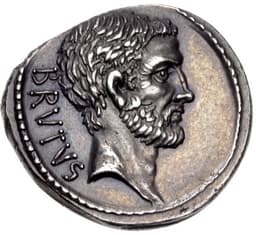
Lucius Junius Brutus
Politician · Ancient
72.7Total
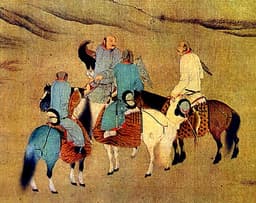
Yelu Abaoji
Emperor · Medieval
62.7Total
Basic Information
Born
-540
872
Died
-509
926
Era
Ancient
Medieval
Nationality
Roman Republic
China
Occupation
Politician
Emperor
Civilization
Western
Eastern
Score Comparison
Military (10%)
45.0
77.2
Political (20%)
72.0
59.6
Influence (20%)
75.0
68.0
Legacy (20%)
90.0
40.0
Leadership (15%)
71.0
80.3
Strategy (15%)
54.8
69.6
TOTAL
72.7
62.7
Lucius Junius Brutus — Complete Timeline
509 BC
Battle of Silva ArsiaWar◆ Major
Brutus led the Roman army against the forces of Tarquinius Superbus and his Etruscan allies at Silva Arsia. During the battle, Brutus and Arruns Tarquinius, the king's son, killed each other in single combat, but the Romans ultimately won the battle, securing the Republic's survival.
BattleSingle CombatFounding Myth
Impact: nationaltragic
Expulsion of the TarquinsPolitical Action
Lucius Junius Brutus led a revolt against the Tarquin monarchy after the rape of Lucretia by Sextus Tarquinius. He organized the Senate and the people to expel the royal family, ending the Roman Kingdom and establishing the Roman Republic with himself as one of the first consuls.
RevolutionFounding of RepublicOverthrow of Monarchy
Impact: globalprogressive
Execution of His SonsPolitical Action◆ Major
Brutus discovered that his own sons, Titus and Tiberius, had conspired to restore the Tarquins. As consul, he ordered their arrest, trial, and execution by beheading in the Forum, demonstrating his unwavering commitment to the Republic over family loyalty.
ExecutionConspiracyRepublican Virtue
Impact: nationaltragic
Oath of BrutusPolitical Action◆ Major
After the expulsion of the Tarquins, Brutus made the Roman people swear an oath never to allow a king to rule Rome again. This oath became a foundational principle of the Republic, reinforcing the commitment to liberty and opposition to tyranny.
OathRepublican IdeologyAnti-Monarchy
Impact: nationalprogressive
Yelu Abaoji — Complete Timeline
907 AD
Unified Khitan tribesPolitical Action◆ Major
Yelu Abaoji was elected khagan of the Khitan tribes, unifying them under his leadership. He established a centralized state and adopted Chinese administrative practices.
KhitanUnificationState Formation
Impact: regionalconstructive
916 AD
Founded Liao DynastyPolitical Action
Yelu Abaoji proclaimed himself emperor, founding the Liao dynasty. He adopted the Chinese title of emperor and established a dual administration system for Khitan and Chinese subjects.
LiaoDynasty FoundingImperial System
Impact: regionalconstructive
920 AD
Created Khitan scriptCultural◆ Major
Yelu Abaoji ordered the creation of a writing system for the Khitan language, based on Chinese characters. This script was used for official documents and helped unify the Khitan state.
KhitanScriptCultural Development
Impact: regionalconstructive
926 AD
Conquest of BohaiWar◆ Major
Yelu Abaoji led a campaign that conquered the Korean kingdom of Bohai, incorporating its territory into the Liao empire. This expanded Liao's influence into Manchuria and Korea.
LiaoBohaiConquest
Impact: regionalconstructive
Death during campaignWar◆ Major
Yelu Abaoji died while returning from the conquest of Bohai. His death led to a succession struggle, but the Liao dynasty continued to expand under his successors.
LiaoDeathSuccession
Impact: regionaltragic
Expert Analysis
Lucius Junius Brutus vs Yelu Abaoji
# The Emperor and the Republican
On a windswept plain in Inner Mongolia in the year 907, a Khitan chieftain named Yelu Abaoji raised his standard and was elected khagan of nine nomadic tribes, setting in motion a dynasty that would rule northern China for two centuries. Half a world away and fourteen centuries earlier, on a Roman hillside in 509 BCE, a stern-faced patrician named Lucius Junius Brutus watched his own sons march to their execution, their blood sealing an oath that would banish kings from Rome forever. One man built an empire; the other built a republic. Both shaped the destiny of civilizations that still echo today. What drove them, and why did their paths diverge so radically?
Origins
Yelu Abaoji was born into a world of horse and sky, where Khitan tribes roamed the steppes between the Gobi Desert and the forests of Manchuria. His father was a minor chieftain, and his early life was a brutal education in tribal warfare—alliances made and broken over sheep and grazing rights, raids that ended in slaughter, and a constant struggle for supremacy among eight rival clans. The Khitan had no written language, no cities, no concept of a state beyond the loyalty a man could command with his sword and his word. Abaoji learned to read men, not books.
Lucius Junius Brutus, by contrast, was born into the twilight of Rome’s monarchy, a world of stone temples, written laws, and Etruscan kings who claimed descent from gods. His father and brother had been murdered by the king’s agents, and Brutus survived by playing the fool—feigning idiocy to avoid the same fate. The name “Brutus” itself meant “dullard,” a mask he wore until the moment was right. Where Abaoji’s path was forged in open combat, Brutus’s was carved in silent cunning.
Rise to Power
Abaoji’s rise was a slow, patient conquest. He did not stumble into power; he engineered it. Over two decades, he outmaneuvered rival chieftains, absorbed defeated tribes into his own, and introduced Chinese-style administration to a nomadic people. When he was elected khagan in 907, it was not by accident—he had already centralized military command, created a personal bodyguard of elite warriors, and married into the powerful Xiao clan to secure alliances. His turning point came in 916, when he abandoned the title of khagan and proclaimed himself emperor, adopting Chinese court rituals and declaring his dynasty the Liao. It was a masterstroke: he claimed legitimacy not just from the steppe, but from the Celestial Empire itself.
Brutus’s rise was a single, explosive moment. The rape of Lucretia by the king’s son ignited a fury that Brutus channeled into revolution. He pulled the dagger from Lucretia’s body, held it dripping before the Roman people, and swore an oath to overthrow the monarchy. Where Abaoji built power brick by brick, Brutus ignited a firestorm. He did not seek election as consul—he was acclaimed by a people desperate for change. His power came not from institutions he created, but from the moral authority of a man who had lost everything to tyranny.
Leadership & Governance
Abaoji ruled as a pragmatist. He understood that the Khitan could not conquer China by force alone—they had to adopt Chinese methods. He established a dual administration: one system for the nomadic tribes, another for the settled Chinese populations. He ordered the creation of a Khitan script in 920, borrowing characters from Chinese but adapting them to his people’s language. He built cities, promoted agriculture, and encouraged trade along the Silk Road. His military campaigns were calculated expansions, not reckless conquests. When he defeated the Korean kingdom of Bohai in 926, he did not destroy it—he absorbed it, incorporating its bureaucracy into his own.
Brutus ruled as a revolutionary. His governance was not about building institutions, but about preventing tyranny. He made the Roman people swear an oath never to allow a king again—an oath that would define Roman politics for five centuries. As consul, he shared power with a colleague, each checking the other, and he established the principle that no man could hold sole authority. When his own sons conspired to restore the monarchy, Brutus did not hesitate. He ordered their execution with his own hand, watching as they were beaten and beheaded. It was an act of terrifying principle: the state came before blood.
Triumph & Tragedy
Abaoji’s greatest triumph was the conquest of Bohai in 926, which doubled the size of his empire and gave him access to Korean resources and ports. But his tragedy came immediately after: he died on the return march, his body giving out at the peak of his power. The succession crisis that followed nearly undid everything he had built, though the Liao dynasty survived.
Brutus’s triumph was the expulsion of the Tarquins, a moment that defined Roman identity for a millennium. His tragedy was the Battle of Silva Arsia later that same year, where he died in single combat against an Etruscan prince. But his death was not a collapse—it was a sacrifice. He fell fighting for the republic he had created, and his body was carried back to Rome in triumph.
Character & Destiny
Abaoji was a builder. He saw the future and constructed the institutions to meet it. His personality was patient, calculating, and adaptive—a steppe chieftain who learned to think like a Chinese emperor. His destiny was to create a hybrid civilization that blended nomadic and sedentary worlds, a model that would be imitated by the Mongols and Manchus centuries later.
Brutus was a destroyer. He saw injustice and tore down the system that allowed it. His personality was rigid, unbending, and absolute—a man who could kill his own sons for the sake of an idea. His destiny was to be remembered not for what he built, but for what he destroyed: monarchy itself. The Roman Republic would endure for 450 years, and Brutus was its founding myth.
Legacy
Abaoji’s legacy is the Liao dynasty, which ruled northern China for two centuries and established a pattern of dual governance that later conquest dynasties would follow. His Khitan script survives in fragments, a testament to his attempt to give his people a written identity. He is remembered as a founder, a unifier, and a pragmatist.
Brutus’s legacy is the Roman Republic and, through it, the Western tradition of republicanism. His oath against kings became a sacred text for later revolutionaries, from the assassins of Julius Caesar to the founders of the United States. He is remembered as a symbol of liberty and of the terrible costs required to sustain it.
Conclusion
One built an empire that lasted two centuries; the other built a republic that lasted half a millennium. Abaoji’s story is about how power is accumulated; Brutus’s is about how power is restrained. The Khitan emperor died on a campaign, his body returning to the steppe that raised him. The Roman consul died on a battlefield, his blood watering the roots of liberty. Both men understood that leadership demands sacrifice—but they defined sacrifice in opposite ways. Abaoji sacrificed others for the state; Brutus sacrificed himself and his own for an idea. In the end, the question is not which was greater, but which world we would rather live in: one built by a man who conquered, or one built by a man who refused to be conquered.
Rankings
🥇
Lucius Junius BrutusLeader
Mil: 45.0Pol: 72.0Inf: 75.0
72.7
🥈
Yelu Abaoji
Mil: 77.2Pol: 59.6Inf: 68.0
62.7
+10.0 behind
How This Comparison Works
Algorithm
Each figure is scored on 6 dimensions (0—100 scale) based on structured historical data: Military (10%), Political (20%), Influence (20%), Legacy (20%), Leadership (15%), Strategy (15%). The weighted total produces the final ranking.
Data Sources
Scores are computed from structured sub-indicators in the database. Scale factors adjust for era (Ancient ×0.85, Modern ×1.0) and civilization size (Eastern ×1.05, Other ×0.80) to account for differences in population and military scale.
Maximum 3 Figures
Comparisons are limited to 2—3 figures to ensure readability and statistical meaningfulness.
Error Margins
±5 points per dimension — Sub-scores are derived from historical records with inherent uncertainty. Two figures within 5 points on a dimension should be considered roughly equivalent in that area.
Total Score Accuracy
±3 points overall — The weighted combination of 6 dimensions produces a total score with approximately ±3 points of uncertainty. Differences of less than 3 points are not statistically significant— the figures are effectively tied.
Known Limitations
- Historical records are incomplete and uneven across civilizations
- Figures from oral-tradition societies may be underrepresented
- Occupation labels can misclassify multi-role figures
- Scores measure capability and impact, not moral character
- Quantitative scoring is a comparison tool, not absolute truth
Capability Radar
Military (10%) — Battles & Warfare
Battles
10
75
Win Rate
10
80
Expansion
10
82
Political (20%) — Governance & Reform
Reform
90
88
Diplomacy
40
75
Economy
30
70
Influence (20%) — Cultural & Global Reach
Cultural
70
60
Global
70
55
Legacy (20%) — Historical Impact
Historical
80
70
Longevity
80
65
Leadership (15%) — Power & Stability
Tenure
30
72
Stability
40
65
Strategy (15%) — Tactics & Innovation
Strategy
10
78
Tactics
10
70
Reform
20
85
Similar Comparisons
Comments & Discussion
Sword-and-Toga Historian6/16/2026
This comparison misses the forest for the trees. Brutus founded a republic; Abaoji built an empire. Two entirely different endgames. Brutus killed his own sons to keep Rome kingless—that’s not a political strategy, that’s trauma weaponized. Abaoji united warring tribes through marriage alliances and an alphabet. Brutus gave us the Senate; Abaoji gave us the Liao Dynasty. One is a cautionary tale; the other is a power blueprint. Don’t conflate spectacle with civilization.
草原骑射官6/16/2026
说得好听叫“共和之父”,难听点就是个杀子狂。阿保机可不一样,他是真刀真枪打下江山,用契丹大字和汉人制度整合部落,这才叫政治家。布鲁图斯砍了自己儿子脑袋,换来一纸空文;阿保机驯服了八个部落,建立了真正能打的王朝。别拿道德剧跟创业史比,不是一个量级的。