Loading...
Lucius Junius Brutus vs Yitzhak Rabin
Lucius Junius Brutus leads by 6.3 pts · 2 figures compared
…
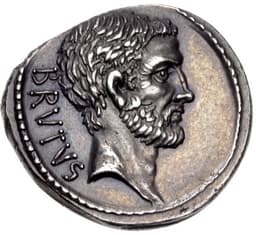
Lucius Junius Brutus
Politician · Ancient
72.7Total
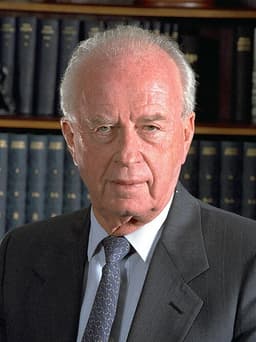
Yitzhak Rabin
General · Modern
66.4Total
Basic Information
Born
-540
1922
Died
-509
—
Era
Ancient
Modern
Nationality
Roman Republic
Israel
Occupation
Politician
General
Civilization
Western
Middle Eastern
Score Comparison
Military (10%)
45.0
61.7
Political (20%)
72.0
82.0
Influence (20%)
75.0
68.0
Legacy (20%)
90.0
55.0
Leadership (15%)
71.0
78.0
Strategy (15%)
54.8
55.0
TOTAL
72.7
66.4
Lucius Junius Brutus — Complete Timeline
509 BC
Battle of Silva ArsiaWar◆ Major
Brutus led the Roman army against the forces of Tarquinius Superbus and his Etruscan allies at Silva Arsia. During the battle, Brutus and Arruns Tarquinius, the king's son, killed each other in single combat, but the Romans ultimately won the battle, securing the Republic's survival.
BattleSingle CombatFounding Myth
Impact: nationaltragic
Expulsion of the TarquinsPolitical Action
Lucius Junius Brutus led a revolt against the Tarquin monarchy after the rape of Lucretia by Sextus Tarquinius. He organized the Senate and the people to expel the royal family, ending the Roman Kingdom and establishing the Roman Republic with himself as one of the first consuls.
RevolutionFounding of RepublicOverthrow of Monarchy
Impact: globalprogressive
Execution of His SonsPolitical Action◆ Major
Brutus discovered that his own sons, Titus and Tiberius, had conspired to restore the Tarquins. As consul, he ordered their arrest, trial, and execution by beheading in the Forum, demonstrating his unwavering commitment to the Republic over family loyalty.
ExecutionConspiracyRepublican Virtue
Impact: nationaltragic
Oath of BrutusPolitical Action◆ Major
After the expulsion of the Tarquins, Brutus made the Roman people swear an oath never to allow a king to rule Rome again. This oath became a foundational principle of the Republic, reinforcing the commitment to liberty and opposition to tyranny.
OathRepublican IdeologyAnti-Monarchy
Impact: nationalprogressive
Yitzhak Rabin — Complete Timeline
1967 AD
Chief of Staff during the Six-Day WarWar
As Chief of Staff of the Israel Defense Forces, Rabin commanded the Israeli military during the Six-Day War against Egypt, Jordan, and Syria. Israel captured the Sinai Peninsula, Gaza Strip, West Bank, East Jerusalem, and Golan Heights, reshaping the region.
Six-Day WarTerritorial ExpansionMilitary Victory
Impact: global
1993 AD
Signing of the Oslo AccordsPolitical Action
As prime minister, Rabin signed the Oslo Accords with PLO Chairman Yasser Arafat on the White House lawn. The agreement established the Palestinian Authority and set a framework for Palestinian self-governance in the West Bank and Gaza Strip.
Peace ProcessPalestiniansOslo
Impact: globalconstructive
1995 AD
Assassination at Peace RallyPolitical Action
Rabin was assassinated by Israeli extremist Yigal Amir after a peace rally in Tel Aviv. The assassination shocked Israel and the world, derailing the Oslo peace process and leading to a period of political instability.
AssassinationPeace ProcessPolitical Violence
Impact: globaltragic
Expert Analysis
Lucius Junius Brutus vs Yitzhak Rabin
### The Assassin and the Founder
On a warm November night in 1995, Yitzhak Rabin stood before a crowd of 100,000 in Tel Aviv, singing “The Song of Peace.” Moments later, three gunshots tore through the air, and the Israeli prime minister crumpled to the ground. Two thousand five hundred years earlier, in 509 BCE, Lucius Junius Brutus watched as his own sons were stripped, bound, and beaten to death before the Roman Forum—by his own order. Two men, separated by millennia, bound by a single, terrible truth: the guardians of a nation’s peace are often destroyed by the very people they seek to save.
### Origins
Yitzhak Rabin was born in Jerusalem in 1922, the son of Jewish immigrants from Eastern Europe. His childhood was shaped by the violence of the British Mandate and the growing Zionist movement. He came of age in a world where survival meant fighting—where a nation was being forged in blood and sand. Rabin was a sabra, tough, pragmatic, and deeply rooted in the land. His generation had no time for sentiment; they were building a state.
Lucius Junius Brutus was born into the late Roman monarchy, around 540 BCE, a time when Rome was a small, struggling city-state under the tyranny of the Tarquins. Legend has it that Brutus feigned idiocy to survive the purge of his family by the king—hence his cognomen “Brutus,” meaning “dullard.” He was a survivor, a man who learned early that power was a game of masks. Where Rabin was shaped by the necessity of war, Brutus was forged in the crucible of political fear.
### Rise to Power
Rabin’s ascent was military. He joined the Palmach, the elite strike force of the Jewish underground, and rose through the ranks. By 1967, as Chief of Staff of the Israel Defense Forces, he commanded the Six-Day War—a stunning, preemptive victory that captured the Sinai, Gaza, the West Bank, and the Golan Heights. Rabin was not a charismatic leader; he was a meticulous planner, a manager of war. His political rise came later, as ambassador to the United States and then as prime minister in 1974.
Brutus rose through cunning. After the rape of Lucretia by the king’s son, Brutus shed his mask of idiocy and rallied the Senate. He organized the expulsion of the Tarquins in 509 BCE and became one of the first two consuls of the new Roman Republic. His power came not from military brilliance but from political theater—he made the people swear the Oath of Brutus, forever banning kings from Rome. Rabin conquered land; Brutus conquered a system.
### Leadership & Governance
Rabin governed as a soldier-statesman. He was blunt, often awkward in public, but decisive. His greatest achievement was the Oslo Accords of 1993, where he shook hands with Yasser Arafat on the White House lawn. It was a leap of faith, a gamble that peace could be forged with enemies. Rabin’s strategy was incremental: build trust through negotiations, even as violence continued. He was a realist who dared to hope.
Brutus governed as a revolutionary. His leadership was ironclad, absolute in its dedication to the Republic. When his own sons conspired to restore the monarchy, Brutus did not hesitate. He ordered their execution, watching with a stoic face as the axes fell. He understood that a republic could not survive unless its founders were willing to sacrifice everything. Rabin sought to reconcile; Brutus sought to purify.
### Triumph & Tragedy
Rabin’s triumph was the Oslo Accords—a moment of global hope. But his tragedy was that the peace he built was fragile, hated by extremists on both sides. On November 4, 1995, Yigal Amir, a Jewish extremist, shot Rabin in the back. The assassin’s bullets killed not just a man but a moment. Rabin’s last words were to his security guard: “It’s nothing, it’s nothing.”
Brutus’s triumph was the foundation of the Roman Republic, a political system that would endure for nearly 500 years. His tragedy was personal: he died at the Battle of Silva Arsia in 509 BCE, fighting the very king he had overthrown. Yet even in death, he was victorious—the Republic survived. Brutus’s sacrifice was complete; Rabin’s was unfinished.
### Character & Destiny
Rabin was a man of contradictions. A warrior who sought peace, a pragmatist who took the greatest risk of his life. His assassination was the product of the very polarization he tried to bridge. He believed that leadership meant taking risks, even when the cost was your life. His destiny was to become a martyr for a peace that never fully came.
Brutus was a man of absolutes. He saw the world in black and white: monarchy was tyranny, republic was freedom. His execution of his own sons was not cruelty but conviction. He believed that the state was greater than the family, that the law was greater than blood. His destiny was to become the father of a republic that would later conquer the world.
### Legacy
Rabin is remembered as a fallen peacemaker. His name is etched into Israeli memory, a symbol of what might have been. The Oslo Accords remain a framework, but the peace he dreamed of is still elusive. His legacy is one of courage and tragedy—a warning that the path to peace is littered with the bodies of those who walk it.
Brutus is remembered as the founder of the Roman Republic. His Oath of Brutus became the bedrock of Roman identity. For centuries, Romans honored him as the first defender of liberty. His legacy is one of foundation and sacrifice—a reminder that nations are born from the blood of their founders.
### Conclusion
At the end of his life, Rabin sang a song of peace. At the end of his, Brutus watched his sons die for a principle. Both men understood that leadership demands a price—but they paid in different currencies. Rabin gave his life for a future he would not see; Brutus gave his sons for a republic he would not live to enjoy. One sought to end a cycle of violence; the other sought to begin a cycle of law. In their deaths, they defined their nations. And in their choices, they ask us still: what are we willing to sacrifice for the world we want to build?
Rankings
🥇
Lucius Junius BrutusLeader
Mil: 45.0Pol: 72.0Inf: 75.0
72.7
🥈
Yitzhak Rabin
Mil: 61.7Pol: 82.0Inf: 68.0
66.4
+6.3 behind
How This Comparison Works
Algorithm
Each figure is scored on 6 dimensions (0—100 scale) based on structured historical data: Military (10%), Political (20%), Influence (20%), Legacy (20%), Leadership (15%), Strategy (15%). The weighted total produces the final ranking.
Data Sources
Scores are computed from structured sub-indicators in the database. Scale factors adjust for era (Ancient ×0.85, Modern ×1.0) and civilization size (Eastern ×1.05, Other ×0.80) to account for differences in population and military scale.
Maximum 3 Figures
Comparisons are limited to 2—3 figures to ensure readability and statistical meaningfulness.
Error Margins
±5 points per dimension — Sub-scores are derived from historical records with inherent uncertainty. Two figures within 5 points on a dimension should be considered roughly equivalent in that area.
Total Score Accuracy
±3 points overall — The weighted combination of 6 dimensions produces a total score with approximately ±3 points of uncertainty. Differences of less than 3 points are not statistically significant— the figures are effectively tied.
Known Limitations
- Historical records are incomplete and uneven across civilizations
- Figures from oral-tradition societies may be underrepresented
- Occupation labels can misclassify multi-role figures
- Scores measure capability and impact, not moral character
- Quantitative scoring is a comparison tool, not absolute truth
Capability Radar
Military (10%) — Battles & Warfare
Battles
10
65
Win Rate
10
70
Expansion
10
50
Political (20%) — Governance & Reform
Reform
90
65
Diplomacy
40
85
Economy
30
60
Influence (20%) — Cultural & Global Reach
Cultural
70
55
Global
70
70
Legacy (20%) — Historical Impact
Historical
80
75
Longevity
80
60
Leadership (15%) — Power & Stability
Tenure
30
70
Stability
40
40
Strategy (15%) — Tactics & Innovation
Strategy
10
75
Tactics
10
60
Reform
20
55
Similar Comparisons
Comments & Discussion
No comments yet. Be the first to share your thoughts!