Loading...
Analysis will be generated on first visit.
Scores and timeline are available below. The page will refresh automatically when ready.
Lucius Tarquinius Priscus vs Napoleon Bonaparte
Napoleon Bonaparte leads by 20.7 pts · 2 figures compared
…

Lucius Tarquinius Priscus
Emperor · Ancient
61.7Total
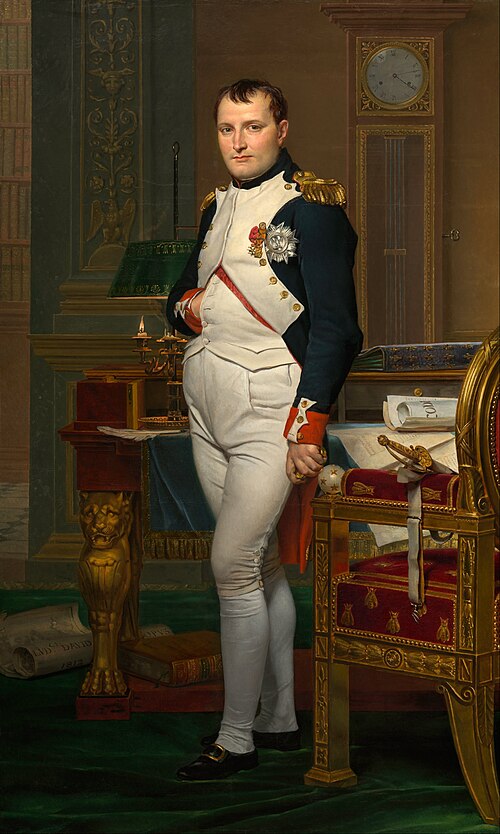
Napoleon Bonaparte
General · Modern
82.4Total
Basic Information
Born
-616
1769
Died
-579
1821
Era
Ancient
Modern
Nationality
Roman Kingdom
France
Occupation
Emperor
General
Civilization
Western
Western
Score Comparison
Military (10%)
39.7
94.0
Political (20%)
53.8
75.0
Influence (20%)
73.5
82.0
Legacy (20%)
66.7
78.0
Leadership (15%)
81.4
80.0
Strategy (15%)
45.0
93.0
TOTAL
61.7
82.4
Rankings
🥇
Napoleon BonaparteLeader
Mil: 94.0Pol: 75.0Inf: 82.0
82.4
🥈
Lucius Tarquinius Priscus
Mil: 39.7Pol: 53.8Inf: 73.5
61.7
+20.7 behind
How This Comparison Works
Algorithm
Each figure is scored on 6 dimensions (0—100 scale) based on structured historical data: Military (10%), Political (20%), Influence (20%), Legacy (20%), Leadership (15%), Strategy (15%). The weighted total produces the final ranking.
Data Sources
Scores are computed from structured sub-indicators in the database. Scale factors adjust for era (Ancient ×0.85, Modern ×1.0) and civilization size (Eastern ×1.05, Other ×0.80) to account for differences in population and military scale.
Maximum 3 Figures
Comparisons are limited to 2—3 figures to ensure readability and statistical meaningfulness.
Error Margins
±5 points per dimension — Sub-scores are derived from historical records with inherent uncertainty. Two figures within 5 points on a dimension should be considered roughly equivalent in that area.
Total Score Accuracy
±3 points overall — The weighted combination of 6 dimensions produces a total score with approximately ±3 points of uncertainty. Differences of less than 3 points are not statistically significant— the figures are effectively tied.
Known Limitations
- Historical records are incomplete and uneven across civilizations
- Figures from oral-tradition societies may be underrepresented
- Occupation labels can misclassify multi-role figures
- Scores measure capability and impact, not moral character
- Quantitative scoring is a comparison tool, not absolute truth
Capability Radar
Military (10%) — Battles & Warfare
Battles
20
95
Win Rate
25
90
Expansion
35
95
Political (20%) — Governance & Reform
Reform
60
95
Diplomacy
50
80
Economy
55
85
Influence (20%) — Cultural & Global Reach
Cultural
45
85
Global
30
90
Legacy (20%) — Historical Impact
Historical
50
95
Longevity
45
90
Leadership (15%) — Power & Stability
Tenure
55
85
Stability
50
70
Strategy (15%) — Tactics & Innovation
Strategy
25
95
Tactics
30
98
Reform
40
92
Analysis will be generated on first visit.
Scores and timeline are available below. The page will refresh automatically when ready.
Lucius Tarquinius Priscus — Complete Timeline
600 BC
War with the SabinesWar
Tarquinius Priscus waged a successful war against the Sabines, capturing the town of Collatia and other territories. He celebrated a triumph for his victory, bringing wealth and slaves to Rome, and strengthening his position as king.
Roman ExpansionSabine WarTriumph
Impact: regional
Construction of the Circus MaximusCultural◆ Major
Tarquinius Priscus initiated the construction of the Circus Maximus, Rome's first and largest chariot racing stadium, in the valley between the Palatine and Aventine hills. This venue became a central site for public games and entertainment, hosting the Ludi Romani.
EntertainmentChariot RacingPublic Works
Impact: nationalconstructive
Construction of the Cloaca MaximaCultural◆ Major
Tarquinius Priscus began the construction of the Cloaca Maxima, Rome's great sewer system, to drain the marshy lowlands between the hills. This engineering project improved sanitation and allowed for the development of the Roman Forum as a public space.
InfrastructureSanitationUrban Planning
Impact: nationalconstructive
Introduction of Etruscan InsigniaCultural
Tarquinius Priscus introduced Etruscan symbols of authority to Rome, including the fasces, the curule chair, and the purple toga. These insignia became standard for Roman magistrates and symbolized the power and dignity of the state.
Cultural AdoptionRoyal InsigniaEtruscan Influence
Impact: nationalconstructive
579 BC
Assassination by the Sons of Ancus MarciusPolitical Action◆ Major
Tarquinius Priscus was assassinated by the sons of his predecessor, Ancus Marcius, who sought to reclaim the throne. The assassination occurred after a reign of 38 years, and the conspirators failed to seize power as Servius Tullius became king.
AssassinationRoyal MurderSuccession Crisis
Impact: nationaltragic
Similar Comparisons
Comments & Discussion
No comments yet. Be the first to share your thoughts!