Loading...
Lula da Silva vs Robert Borden
Robert Borden leads by 2.1 pts · 2 figures compared
…
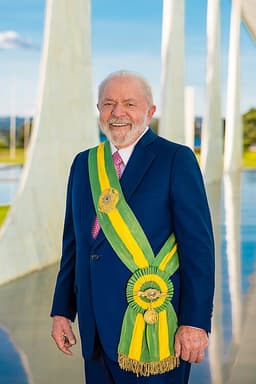
Lula da Silva
Politician · Modern
55.6Total
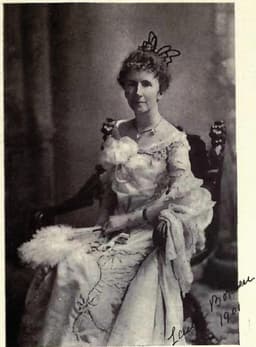
Robert Borden
Politician · Modern
57.7Total
Basic Information
Born
1945
1854
Died
—
1937
Era
Modern
Modern
Nationality
Brazil
Canada
Occupation
Politician
Politician
Civilization
Western
Western
Score Comparison
Military (10%)
48.9
36.7
Political (20%)
59.6
72.0
Influence (20%)
55.0
56.4
Legacy (20%)
52.0
49.2
Leadership (15%)
72.0
72.0
Strategy (15%)
42.5
60.0
TOTAL
55.6
57.7
Lula da Silva — Complete Timeline
2002 AD
Elected President of BrazilPolitical Action
Luiz Inácio Lula da Silva won the 2002 Brazilian presidential election, becoming the first left-wing president in decades. His victory represented a major shift in Brazilian politics and was seen as a triumph for the working class.
ElectionLeft-wingWorkers' Party
Impact: nationalprogressive
2003 AD
Implemented Bolsa Família ProgramReform◆ Major
Lula's government launched the Bolsa Fam
Social policyPoverty reductionWelfare
Impact: nationalprogressive
Oversaw Economic Growth and Reduced InequalityReform◆ Major
During Lula's two terms (2003-2010), Brazil experienced strong economic growth, reduced inflation, and a significant decrease in income inequality. His policies combined fiscal responsibility with social spending, leading to record popularity.
Economic growthInequality reductionPopularity
Impact: nationalconstructive
2018 AD
Convicted and Imprisoned for CorruptionPolitical Action◆ Major
Lula was convicted of corruption and money laundering in connection with the Lava Jato scandal. He was sentenced to 12 years in prison and began serving his sentence in April 2018, which barred him from running in the 2018 presidential election.
CorruptionLava JatoImprisonment
Impact: nationaldestructive
2021 AD
Convictions Overturned and Re-electedPolitical Action
In 2021, Brazil's Supreme Court overturned Lula's convictions on procedural grounds, restoring his political rights. He subsequently ran for president in 2022 and defeated incumbent Jair Bolsonaro, returning to office for a third term.
Legal reversalPolitical comebackElection
Impact: nationalprogressive
Robert Borden — Complete Timeline
1911 AD
Became Prime Minister of CanadaPolitical Action◆ Major
Borden became the eighth Prime Minister of Canada, leading a Conservative government. His victory was largely due to opposition to Laurier's reciprocity agreement with the United States.
Government FormationElectionConservatism
Impact: national
1914 AD
Led Canada through World War IWar◆ Major
Borden led Canada's war effort during World War I. He committed over 600,000 troops to the conflict, expanded the military, and managed the domestic war economy. The war deeply divided Canada along linguistic lines.
World War IMilitaryWar Effort
Impact: global
1917 AD
Introduced conscription in CanadaPolitical Action◆ Major
Borden's government passed the Military Service Act, introducing conscription for overseas service. The policy was deeply unpopular in Quebec and led to the Conscription Crisis of 1917, which exacerbated French-English tensions.
ConscriptionCrisisQuebec
Impact: nationaldestructive
1919 AD
Secured Canada's signature on the Treaty of VersaillesPolitical Action
Borden insisted that Canada sign the Treaty of Versailles as an independent nation, separate from Britain. This marked a significant step in Canada's evolution from a colony to a sovereign state, gaining a separate seat in the League of Nations.
TreatySovereigntyLeague of Nations
Impact: globalconstructive
Expert Analysis
Origins
**Luiz Inácio Lula da Silva** was born in 1945 in Caetés, Pernambuco, Brazil, into a poor family. His father left when he was young, and his mother moved the family to São Paulo. Lula worked as a shoeshiner and later as a metalworker, joining the union movement. He lost his left pinky finger in a press accident at age 19. Lula's formal education ended at primary school, but he became a leading figure in the metalworkers' union, organizing strikes against the military dictatorship.
**Robert Borden** was born in 1854 in Grand Pré, Nova Scotia, Canada, to a farming family. He studied at home and later became a teacher before articling as a lawyer. Borden practiced law in Halifax and entered politics as a Conservative in 1896. He was known for his legal acumen and moderate views, eventually becoming leader of the Conservative Party in 1901.
Rise to Power
Lula's rise came through labor activism. He led massive strikes in the late 1970s, which helped to weaken the military regime. In 1980, he co-founded the Workers' Party (PT). He ran for president three times (1989, 1994, 1998) before winning in 2002, capitalizing on economic discontent and a promise of social reform. His victory in October 2002 marked the first left-wing presidency in Brazil since 1964.
Borden became Prime Minister in 1911 after defeating Sir Wilfrid Laurier on the issue of free trade with the United States. Borden campaigned on protecting Canadian industry within the British Empire. His rise was also aided by the collapse of the Liberal government's naval policy. He took office on October 10, 1911.
Leadership & Governance
Lula's governance focused on social welfare and economic growth. He expanded the Bolsa Família program, which provided cash transfers to poor families conditional on school attendance and vaccinations. Under Lula, Brazil's GDP grew at an average of 4% per year, and 30 million people moved into the middle class. He maintained fiscal discipline, paying off IMF loans earlier than required. However, his government was also marked by corruption scandals, notably the mensalão vote-buying scheme, though Lula himself was not implicated at that time.
Borden's leadership was defined by World War I. He implemented the War Measures Act, giving the government broad powers, and introduced conscription in 1917 via the Military Service Act, which deeply divided the country, especially in Quebec. He also expanded the military from 3,000 to over 600,000 troops. Borden pushed for Canada's independent role at the Paris Peace Conference, securing separate signatures on the Treaty of Versailles and a seat in the League of Nations. His governance style was determined and imperialist, but he also advanced women's suffrage for federal elections in 1918.
Triumph & Tragedy
Lula's greatest triumph was the reduction of poverty and inequality. His policies lifted 30 million Brazilians out of poverty, and the Gini coefficient fell from 0.59 to 0.54. He also oversaw the discovery of massive offshore oil reserves. However, his tragedy came after his presidency: he was convicted in 2017 of corruption and money laundering in connection with the Lava Jato scandal, sentenced to 12 years, and imprisoned for 580 days. His convictions were later overturned on procedural grounds in 2021, allowing him to run for president again in 2022, which he won.
Borden's triumph was securing Canada's autonomy. By insisting on separate signatures at Versailles, he established Canada as a sovereign nation internationally. He also led Canada to victory in WWI. His tragedy was the political fallout from conscription, which alienated Quebec and led to the 1917 election that split the country along linguistic lines. The conscription crisis also caused the death of over 60,000 Canadian soldiers. Borden's health declined due to stress, and he resigned in 1920.
Character & Destiny
Lula was charismatic, pragmatic, and resilient. His ability to connect with the poor and his union background made him a powerful orator. He was willing to compromise, forming coalitions with centrist parties. However, his tolerance of corruption within his party and his personal legal troubles tarnished his reputation. His destiny was shaped by his humble origins and his determination to change Brazil, but also by the systemic corruption he failed to curb.
Borden was stern, principled, and determined. He was not a charismatic leader but was respected for his integrity and persistence. His character led him to push for Canadian autonomy despite British resistance. However, his stubbornness on conscription deepened national divisions. His destiny was to lead Canada through its greatest war and to lay the foundation for its independence, but at the cost of national unity.
Legacy
Lula's legacy is mixed. He is celebrated as the president who reduced poverty and grew the economy, but his corruption convictions (later overturned) cast a shadow. The Bolsa Família program has been continued by subsequent governments and has inspired similar programs worldwide. His influence on Brazilian politics remains strong, with his return to power in 2023. On the HistoryVersus scale, Lula scores 55.6 overall, with high marks in leadership (72.0) but low in military (48.9) and strategy (42.5).
Borden's legacy is more institutional. He established Canada's independent foreign policy and pushed for full autonomy within the British Empire. The conscription crisis, however, remains a divisive memory. He is remembered as a wartime leader who expanded the role of government. His scores include a total of 57.7, with high political (72.0) and leadership (72.0) scores, but lower military (36.7) and legacy (49.2).
Conclusion
While Lula's social policies had a direct impact on millions, Borden's constitutional achievements have had a longer-lasting effect on Canada's sovereignty. Borden's total score of 57.7 edges out Lula's 55.6 by 2.1 points. Borden's political and leadership scores are identical to Lula's, but his strategy score (60.0) is higher than Lula's (42.5). However, Lula's influence on global welfare policy is significant. Taking a clear stance, Borden had a greater structural impact on his nation's independence and global standing, while Lula's domestic achievements, though profound, were undermined by corruption and legal controversies. Therefore, Robert Borden is the more impactful leader in historical terms.
Rankings
🥇
Robert BordenLeader
Mil: 36.7Pol: 72.0Inf: 56.4
57.7
🥈
Lula da Silva
Mil: 48.9Pol: 59.6Inf: 55.0
55.6
+2.1 behind
How This Comparison Works
Algorithm
Each figure is scored on 6 dimensions (0—100 scale) based on structured historical data: Military (10%), Political (20%), Influence (20%), Legacy (20%), Leadership (15%), Strategy (15%). The weighted total produces the final ranking.
Data Sources
Scores are computed from structured sub-indicators in the database. Scale factors adjust for era (Ancient ×0.85, Modern ×1.0) and civilization size (Eastern ×1.05, Other ×0.80) to account for differences in population and military scale.
Maximum 3 Figures
Comparisons are limited to 2—3 figures to ensure readability and statistical meaningfulness.
Error Margins
±5 points per dimension — Sub-scores are derived from historical records with inherent uncertainty. Two figures within 5 points on a dimension should be considered roughly equivalent in that area.
Total Score Accuracy
±3 points overall — The weighted combination of 6 dimensions produces a total score with approximately ±3 points of uncertainty. Differences of less than 3 points are not statistically significant— the figures are effectively tied.
Known Limitations
- Historical records are incomplete and uneven across civilizations
- Figures from oral-tradition societies may be underrepresented
- Occupation labels can misclassify multi-role figures
- Scores measure capability and impact, not moral character
- Quantitative scoring is a comparison tool, not absolute truth
Capability Radar
Military (10%) — Battles & Warfare
Battles
31
48
Win Rate
31
47
Expansion
35
56
Political (20%) — Governance & Reform
Reform
75
60
Diplomacy
80
70
Economy
78
55
Influence (20%) — Cultural & Global Reach
Cultural
55
30
Global
65
50
Legacy (20%) — Historical Impact
Historical
60
55
Longevity
50
40
Leadership (15%) — Power & Stability
Tenure
65
65
Stability
60
60
Strategy (15%) — Tactics & Innovation
Strategy
37
57
Tactics
42
58
Reform
44
64
Similar Comparisons
Comments & Discussion
No comments yet. Be the first to share your thoughts!