Loading...
This comparison has not been analyzed yet.
One-time AI generation (~1 minute). Scores and timeline are already available below.
Magnus Malan vs Otto Perez Molina
Magnus Malan leads by 11.5 pts · 2 figures compared
…

Magnus Malan
General · Modern
49.3Total
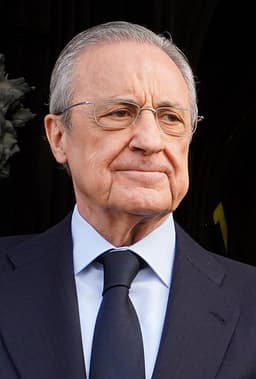
Otto Perez Molina
General · Modern
37.8Total
Basic Information
Born
1930
1950
Died
—
—
Era
Modern
Modern
Nationality
South Africa
Guatemala
Occupation
General
General
Civilization
Other
Western
Score Comparison
Military (10%)
47.5
22.6
Political (20%)
39.4
30.8
Influence (20%)
54.9
47.1
Legacy (20%)
43.3
37.5
Leadership (15%)
65.0
45.0
Strategy (15%)
43.3
30.3
TOTAL
49.3
37.8
Magnus Malan — Complete Timeline
1976 AD
Chief of the South African Defence ForcePolitical Action◆ Major
Malan was appointed Chief of the South African Defence Force (SADF). He oversaw the military's expansion and its involvement in the Border War in Angola and Namibia, as well as operations to destabilize neighboring countries.
SADFBorder WarMilitary
Impact: regional
1980 AD
Appointed Minister of DefencePolitical Action◆ Major
Malan was appointed Minister of Defence in P.W. Botha's government. He oversaw the SADF's operations, including cross-border raids into neighboring countries, and the implementation of the 'total strategy' to counter the anti-apartheid movement.
Defence MinisterTotal StrategyRepression
Impact: nationaldestructive
1981 AD
Oversaw Cross-Border RaidsWar◆ Major
Under Malan's leadership, the SADF conducted cross-border raids into Angola, Mozambique, and Lesotho, targeting ANC bases and infrastructure. These operations aimed to disrupt the armed struggle but also caused civilian casualties and regional instability.
Cross-Border RaidsANCDestabilization
Impact: regionaldestructive
1984 AD
Involved in the Nkomati AccordPolitical Action◆ Major
Malan was involved in the negotiation of the Nkomati Accord, a non-aggression pact between South Africa and Mozambique. The accord required both sides to stop supporting each other's armed opponents, but South Africa later violated it.
Nkomati AccordMozambiqueNon-Aggression
Impact: regional
1995 AD
Charged with Human Rights AbusesOther◆ Major
Malan was charged with murder and conspiracy in connection with the 1987 killing of 13 people, including women and children, in KwaMakhutha. He was acquitted in 1996, but the trial highlighted the SADF's involvement in human rights abuses.
Human RightsTrialApartheid
Impact: nationaltragic
Otto Perez Molina — Complete Timeline
2011 AD
Elected President of GuatemalaPolitical Action◆ Major
Otto Pérez Molina won the 2011 Guatemalan presidential election as candidate of the Patriotic Party. A retired general, he campaigned on a tough-on-crime platform and took office in 2012.
ElectionPresidencyGuatemala
Impact: national
2015 AD
Resigned Amid Corruption ScandalPolitical Action
Pérez Molina resigned the presidency after massive protests and a UN-backed anti-corruption investigation revealed a customs fraud scheme known as 'La Línea'. He was arrested and imprisoned pending trial, becoming the first Guatemalan president to resign due to corruption.
CorruptionResignationPolitical Crisis
Impact: nationaldestructive
2022 AD
Convicted of CorruptionPolitical Action◆ Major
Pérez Molina was convicted of illicit association and customs fraud in connection with the 'La Línea' scandal. He was sentenced to 16 years in prison, marking a significant anti-corruption victory in Guatemala.
ConvictionCorruptionJustice
Impact: nationaldestructive
This comparison has not been analyzed yet.
One-time AI generation (~1 minute). Scores and timeline are already available below.
Rankings
🥇
Magnus MalanLeader
Mil: 47.5Pol: 39.4Inf: 54.9
49.3
🥈
Otto Perez Molina
Mil: 22.6Pol: 30.8Inf: 47.1
37.8
+11.5 behind
How This Comparison Works
Algorithm
Each figure is scored on 6 dimensions (0—100 scale) based on structured historical data: Military (10%), Political (20%), Influence (20%), Legacy (20%), Leadership (15%), Strategy (15%). The weighted total produces the final ranking.
Data Sources
Scores are computed from structured sub-indicators in the database. Scale factors adjust for era (Ancient ×0.85, Modern ×1.0) and civilization size (Eastern ×1.05, Other ×0.80) to account for differences in population and military scale.
Maximum 3 Figures
Comparisons are limited to 2—3 figures to ensure readability and statistical meaningfulness.
Error Margins
±5 points per dimension — Sub-scores are derived from historical records with inherent uncertainty. Two figures within 5 points on a dimension should be considered roughly equivalent in that area.
Total Score Accuracy
±3 points overall — The weighted combination of 6 dimensions produces a total score with approximately ±3 points of uncertainty. Differences of less than 3 points are not statistically significant— the figures are effectively tied.
Known Limitations
- Historical records are incomplete and uneven across civilizations
- Figures from oral-tradition societies may be underrepresented
- Occupation labels can misclassify multi-role figures
- Scores measure capability and impact, not moral character
- Quantitative scoring is a comparison tool, not absolute truth
Capability Radar
Military (10%) — Battles & Warfare
Battles
20
10
Win Rate
25
10
Expansion
15
5
Political (20%) — Governance & Reform
Reform
30
10
Diplomacy
20
20
Economy
25
15
Influence (20%) — Cultural & Global Reach
Cultural
15
5
Global
25
5
Legacy (20%) — Historical Impact
Historical
30
10
Longevity
20
5
Leadership (15%) — Power & Stability
Tenure
60
30
Stability
20
5
Strategy (15%) — Tactics & Innovation
Strategy
35
15
Tactics
30
15
Reform
40
10
Similar Comparisons
Comments & Discussion
No comments yet. Be the first to share your thoughts!