Loading...
Analysis will be generated on first visit.
Scores and timeline are available below. The page will refresh automatically when ready.
Malik Ghulam Muhammad vs Napoleon Bonaparte
Napoleon Bonaparte leads by 20.6 pts · 2 figures compared
…

Malik Ghulam Muhammad
Politician · Modern
61.8Total
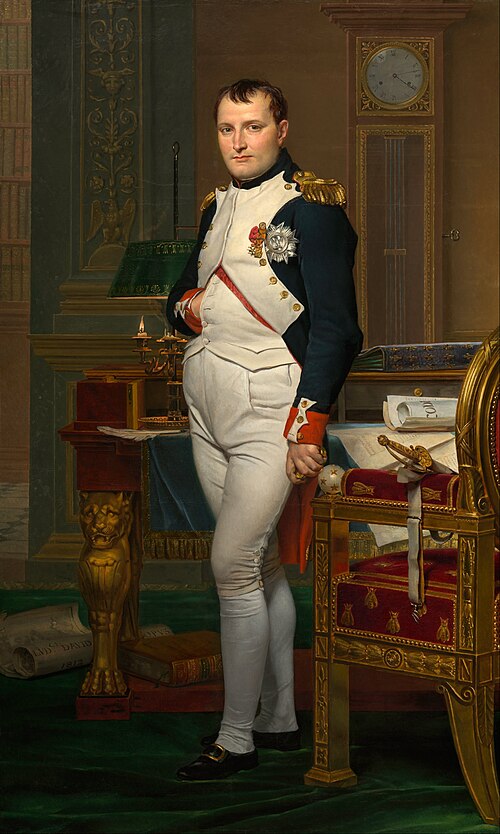
Napoleon Bonaparte
General · Modern
82.4Total
Basic Information
Born
1895
1769
Died
1956
1821
Era
Modern
Modern
Nationality
Pakistan
France
Occupation
Politician
General
Civilization
Indian
Western
Score Comparison
Military (10%)
34.3
94.0
Political (20%)
67.8
75.0
Influence (20%)
66.6
82.0
Legacy (20%)
55.8
78.0
Leadership (15%)
81.1
80.0
Strategy (15%)
54.1
93.0
TOTAL
61.8
82.4
Rankings
🥇
Napoleon BonaparteLeader
Mil: 94.0Pol: 75.0Inf: 82.0
82.4
🥈
Malik Ghulam Muhammad
Mil: 34.3Pol: 67.8Inf: 66.6
61.8
+20.6 behind
How This Comparison Works
Algorithm
Each figure is scored on 6 dimensions (0—100 scale) based on structured historical data: Military (10%), Political (20%), Influence (20%), Legacy (20%), Leadership (15%), Strategy (15%). The weighted total produces the final ranking.
Data Sources
Scores are computed from structured sub-indicators in the database. Scale factors adjust for era (Ancient ×0.85, Modern ×1.0) and civilization size (Eastern ×1.05, Other ×0.80) to account for differences in population and military scale.
Maximum 3 Figures
Comparisons are limited to 2—3 figures to ensure readability and statistical meaningfulness.
Error Margins
±5 points per dimension — Sub-scores are derived from historical records with inherent uncertainty. Two figures within 5 points on a dimension should be considered roughly equivalent in that area.
Total Score Accuracy
±3 points overall — The weighted combination of 6 dimensions produces a total score with approximately ±3 points of uncertainty. Differences of less than 3 points are not statistically significant— the figures are effectively tied.
Known Limitations
- Historical records are incomplete and uneven across civilizations
- Figures from oral-tradition societies may be underrepresented
- Occupation labels can misclassify multi-role figures
- Scores measure capability and impact, not moral character
- Quantitative scoring is a comparison tool, not absolute truth
Capability Radar
Military (10%) — Battles & Warfare
Battles
28
95
Win Rate
28
90
Expansion
31
95
Political (20%) — Governance & Reform
Reform
20
95
Diplomacy
30
80
Economy
25
85
Influence (20%) — Cultural & Global Reach
Cultural
10
85
Global
15
90
Legacy (20%) — Historical Impact
Historical
30
95
Longevity
20
90
Leadership (15%) — Power & Stability
Tenure
60
85
Stability
10
70
Strategy (15%) — Tactics & Innovation
Strategy
36
95
Tactics
39
98
Reform
38
92
Analysis will be generated on first visit.
Scores and timeline are available below. The page will refresh automatically when ready.
Malik Ghulam Muhammad — Complete Timeline
1951 AD
Appointed Governor-General of PakistanPolitical Action◆ Major
Malik Ghulam Muhammad became Governor-General after the assassination of Liaquat Ali Khan. He was a former finance minister. His tenure was marked by increasing executive power and conflict with the prime minister.
Governor-GeneralExecutive Power
Impact: national
1953 AD
Dismissed Prime Minister Khawaja NazimuddinPolitical Action◆ Major
Ghulam Muhammad dismissed Prime Minister Nazimuddin, citing his failure to maintain order during the anti-Ahmadiyya riots. The dismissal was a controversial use of constitutional powers. It set a precedent for the governor-general's dominance over the elected government.
DismissalConstitutional Crisis
Impact: nationaldestructive
1954 AD
Dissolved the Constituent AssemblyPolitical Action◆ Major
Ghulam Muhammad dissolved the Constituent Assembly, which was drafting the constitution, accusing it of overstepping its authority. The dissolution was challenged in court but upheld. This action delayed the constitution and deepened political instability.
Assembly DissolutionConstitutional Crisis
Impact: nationaldestructive
1955 AD
Resigned Due to Ill HealthPolitical Action
Ghulam Muhammad resigned as Governor-General after suffering a stroke. He was succeeded by Iskander Mirza. His resignation ended a period of assertive executive rule. His actions had weakened democratic institutions and contributed to the later military coup.
ResignationHealth
Impact: national
Similar Comparisons
Comments & Discussion
No comments yet. Be the first to share your thoughts!