Loading...
This comparison has not been analyzed yet.
One-time AI generation (~1 minute). Scores and timeline are already available below.
Manuel Gonzalez vs Okada Keisuke
Okada Keisuke leads by 10.1 pts · 2 figures compared
…

Manuel Gonzalez
General · Modern
48.4Total
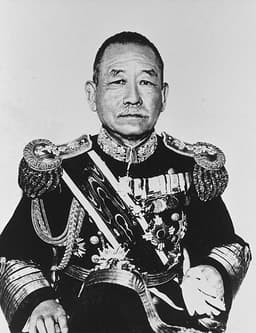
Okada Keisuke
General · Modern
58.5Total
Basic Information
Born
1833
1868
Died
1893
1952
Era
Modern
Modern
Nationality
Mexico
Japan
Occupation
General
General
Civilization
Western
Eastern
Score Comparison
Military (10%)
50.0
46.7
Political (20%)
45.1
62.7
Influence (20%)
49.4
55.7
Legacy (20%)
40.8
50.0
Leadership (15%)
65.0
80.0
Strategy (15%)
43.7
60.0
TOTAL
48.4
58.5
Manuel Gonzalez — Complete Timeline
1879 AD
Suppressed the Veracruz rebellionWar
As a general under D
Military campaignRebellionPorfiriato
Impact: regionaldestructive
1880 AD
Served as President of MexicoPolitical Action◆ Major
González assumed the presidency from 1880 to 1884 as a loyal ally of Porfirio Díaz. His administration continued Díaz's policies of modernization and centralization, but faced economic difficulties and corruption scandals.
PorfiriatoPresidencyModernization
Impact: national
1882 AD
Negotiated the González–Blaine TreatyPolitical Action
González's government negotiated a treaty with U.S. Secretary of State James G. Blaine to resolve border disputes and promote trade. The treaty was never ratified by the U.S. Senate, but it reflected efforts to improve bilateral relations.
DiplomacyUS-Mexico relationsTreaty
Impact: regionalconstructive
Okada Keisuke — Complete Timeline
1934 AD
Service as Prime MinisterPolitical Action
Okada Keisuke became Prime Minister in July 1934, succeeding Saito Makoto. His cabinet attempted to maintain civilian control over the military and pursued moderate foreign policies, but faced increasing pressure from ultranationalist factions.
Prime MinisterCivilian Control
Impact: national
1936 AD
Survival of the February 26 IncidentPolitical Action◆ Major
During the February 26 Incident, Prime Minister Okada Keisuke narrowly escaped assassination when rebels mistakenly killed his brother-in-law, who resembled him. Okada hid in a closet while rebels searched his residence, then fled to safety. His survival allowed him to continue as PM.
Coup AttemptEscapePolitical Violence
Impact: national
Resignation After February 26 IncidentPolitical Action◆ Major
Okada resigned as Prime Minister in March 1936, taking responsibility for the February 26 Incident and the breakdown of public order. His resignation marked the end of party cabinets and the beginning of military-dominated governments.
ResignationPolitical Crisis
Impact: nationaltragic
1945 AD
Post-War Role as Privy CouncillorPolitical Action
After World War II, Okada served as a member of the Privy Council and advised the government during the Allied occupation. He supported the new constitution and Japan's demilitarization, helping to transition Japan to a peaceful state.
Post-WarOccupationConstitution
Impact: nationalconstructive
This comparison has not been analyzed yet.
One-time AI generation (~1 minute). Scores and timeline are already available below.
Rankings
🥇
Okada KeisukeLeader
Mil: 46.7Pol: 62.7Inf: 55.7
58.5
🥈
Manuel Gonzalez
Mil: 50.0Pol: 45.1Inf: 49.4
48.4
+10.1 behind
How This Comparison Works
Algorithm
Each figure is scored on 6 dimensions (0—100 scale) based on structured historical data: Military (10%), Political (20%), Influence (20%), Legacy (20%), Leadership (15%), Strategy (15%). The weighted total produces the final ranking.
Data Sources
Scores are computed from structured sub-indicators in the database. Scale factors adjust for era (Ancient ×0.85, Modern ×1.0) and civilization size (Eastern ×1.05, Other ×0.80) to account for differences in population and military scale.
Maximum 3 Figures
Comparisons are limited to 2—3 figures to ensure readability and statistical meaningfulness.
Error Margins
±5 points per dimension — Sub-scores are derived from historical records with inherent uncertainty. Two figures within 5 points on a dimension should be considered roughly equivalent in that area.
Total Score Accuracy
±3 points overall — The weighted combination of 6 dimensions produces a total score with approximately ±3 points of uncertainty. Differences of less than 3 points are not statistically significant— the figures are effectively tied.
Known Limitations
- Historical records are incomplete and uneven across civilizations
- Figures from oral-tradition societies may be underrepresented
- Occupation labels can misclassify multi-role figures
- Scores measure capability and impact, not moral character
- Quantitative scoring is a comparison tool, not absolute truth
Capability Radar
Military (10%) — Battles & Warfare
Battles
20
30
Win Rate
25
35
Expansion
10
20
Political (20%) — Governance & Reform
Reform
30
50
Diplomacy
35
60
Economy
30
45
Influence (20%) — Cultural & Global Reach
Cultural
15
30
Global
10
35
Legacy (20%) — Historical Impact
Historical
20
50
Longevity
15
40
Leadership (15%) — Power & Stability
Tenure
55
55
Stability
25
40
Strategy (15%) — Tactics & Innovation
Strategy
20
45
Tactics
20
40
Reform
15
50
Similar Comparisons
Comments & Discussion
No comments yet. Be the first to share your thoughts!