Loading...
This comparison has not been analyzed yet.
One-time AI generation (~1 minute). Scores and timeline are already available below.
Manuel Odria vs Michal Serwacy Wisniowiecki
Manuel Odria leads by 4.9 pts · 2 figures compared
…
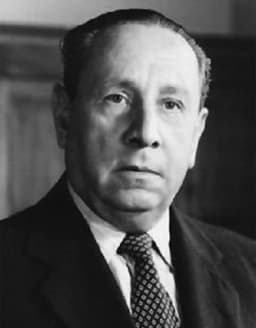
Manuel Odria
General · Modern
52.6Total

Michal Serwacy Wisniowiecki
General · Modern
47.7Total
Basic Information
Born
1897
1680
Died
1974
1744
Era
Modern
Modern
Nationality
Peru
Poland-Lithuania
Occupation
General
General
Civilization
Western
Western
Score Comparison
Military (10%)
50.0
46.7
Political (20%)
53.8
45.1
Influence (20%)
53.3
50.2
Legacy (20%)
45.0
40.0
Leadership (15%)
72.0
68.0
Strategy (15%)
41.7
35.0
TOTAL
52.6
47.7
Manuel Odria — Complete Timeline
1948 AD
Led the 1948 Peruvian coup d'étatPolitical Action
General Manuel Odria led a military coup that overthrew President Jos
CoupMilitaryDictatorship
Impact: nationaldestructive
Repressed political oppositionPolitical Action◆ Major
Odria's regime was characterized by the suppression of political dissent. He outlawed the APRA party, imprisoned and exiled opponents, and censored the press. This period is remembered for its human rights abuses, despite the economic gains.
RepressionHuman RightsDictatorship
Impact: nationaldestructive
1950 AD
Implemented economic development policiesReform◆ Major
Odria's government pursued a policy of economic development and modernization, including public works projects, road construction, and the expansion of the fishing and mining industries. This period saw significant economic growth, but also increased foreign debt and inequality.
Economic PolicyDevelopmentPublic Works
Impact: nationalconstructive
Became President of PeruPolitical Action◆ Major
After ruling as head of the military junta, Odria staged a single-candidate election in 1950 and was formally elected President of Peru. He then established a personalist dictatorship known as the Ochenio.
ElectionDictatorshipOchenio
Impact: national
1956 AD
Granted amnesty and allowed electionsPolitical Action
Facing growing pressure, Odria granted amnesty to political exiles and allowed free elections in 1956. He did not run for re-election, and his chosen successor lost to Manuel Prado Ugarteche, marking a transition back to civilian rule.
TransitionElectionAmnesty
Impact: nationalconstructive
Michal Serwacy Wisniowiecki — Complete Timeline
1702 AD
Battle of KliszówWar◆ Major
Wisniowiecki commanded Polish-Lithuanian forces under King Augustus II at Klisz
Great Northern WarBattleSweden
Impact: regionaltragic
1703 AD
Appointment as Great Hetman of LithuaniaPolitical Action
Wisniowiecki was appointed Great Hetman of Lithuania by King Augustus II. This position gave him command over Lithuanian forces, though his loyalty was divided between Augustus and the Swedish-backed Leszczy
AppointmentHetmanLithuania
Impact: regional
1709 AD
Battle of PołtawaWar◆ Major
Wisniowiecki fought on the side of Sweden and Stanis
Great Northern WarBattleRussiaSweden
Impact: globaltragic
Exile after PołtawaPolitical Action
Following the Swedish defeat at Po
ExileGreat Northern WarReturn
Impact: regionaltragic
This comparison has not been analyzed yet.
One-time AI generation (~1 minute). Scores and timeline are already available below.
Rankings
🥇
Manuel OdriaLeader
Mil: 50.0Pol: 53.8Inf: 53.3
52.6
🥈
Michal Serwacy Wisniowiecki
Mil: 46.7Pol: 45.1Inf: 50.2
47.7
+4.9 behind
How This Comparison Works
Algorithm
Each figure is scored on 6 dimensions (0—100 scale) based on structured historical data: Military (10%), Political (20%), Influence (20%), Legacy (20%), Leadership (15%), Strategy (15%). The weighted total produces the final ranking.
Data Sources
Scores are computed from structured sub-indicators in the database. Scale factors adjust for era (Ancient ×0.85, Modern ×1.0) and civilization size (Eastern ×1.05, Other ×0.80) to account for differences in population and military scale.
Maximum 3 Figures
Comparisons are limited to 2—3 figures to ensure readability and statistical meaningfulness.
Error Margins
±5 points per dimension — Sub-scores are derived from historical records with inherent uncertainty. Two figures within 5 points on a dimension should be considered roughly equivalent in that area.
Total Score Accuracy
±3 points overall — The weighted combination of 6 dimensions produces a total score with approximately ±3 points of uncertainty. Differences of less than 3 points are not statistically significant— the figures are effectively tied.
Known Limitations
- Historical records are incomplete and uneven across civilizations
- Figures from oral-tradition societies may be underrepresented
- Occupation labels can misclassify multi-role figures
- Scores measure capability and impact, not moral character
- Quantitative scoring is a comparison tool, not absolute truth
Capability Radar
Military (10%) — Battles & Warfare
Battles
15
35
Win Rate
20
30
Expansion
10
20
Political (20%) — Governance & Reform
Reform
55
30
Diplomacy
50
40
Economy
55
25
Influence (20%) — Cultural & Global Reach
Cultural
30
20
Global
20
10
Legacy (20%) — Historical Impact
Historical
35
25
Longevity
25
15
Leadership (15%) — Power & Stability
Tenure
60
45
Stability
40
30
Strategy (15%) — Tactics & Innovation
Strategy
25
35
Tactics
20
40
Reform
30
25
Similar Comparisons
Comments & Discussion
No comments yet. Be the first to share your thoughts!