Loading...
This comparison has not been analyzed yet.
One-time AI generation (~1 minute). Scores and timeline are already available below.
Margaret Ekpo vs Mary Robinson
Mary Robinson leads by 8.4 pts · 2 figures compared
…
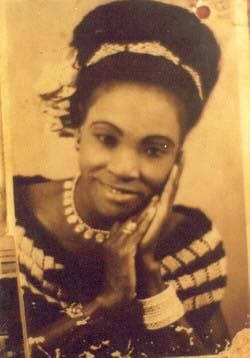
Margaret Ekpo
Politician · Modern
52.8Total

Mary Robinson
Politician · Modern
61.2Total
Basic Information
Born
1914
1944
Died
2006
—
Era
Modern
Modern
Nationality
Nigeria
Ireland
Occupation
Politician
Politician
Civilization
Other
Western
Score Comparison
Military (10%)
17.2
47.8
Political (20%)
62.7
55.0
Influence (20%)
60.0
72.0
Legacy (20%)
52.0
56.0
Leadership (15%)
65.0
80.0
Strategy (15%)
38.9
41.4
TOTAL
52.8
61.2
Margaret Ekpo — Complete Timeline
1929 AD
Led the Aba Women's Tax Riot protestsPolitical Action◆ Major
Margaret Ekpo was a leader in the Aba Women's Tax Riot, a massive protest by Igbo women against colonial taxation and the imposition of warrant chiefs. The protests forced the colonial government to reconsider its policies and marked a turning point in women's political activism in Nigeria.
Women's ProtestColonial TaxationAba Riots
Impact: regional
1949 AD
Co-founded the Nigerian Women's UnionPolitical Action◆ Major
Margaret Ekpo co-founded the Nigerian Women's Union, an organization that mobilized women across the country to fight for political rights and social justice. The union became a powerful force in the nationalist movement, advocating for women's suffrage and representation.
Women's RightsNationalismNigerian Women's Union
Impact: nationalconstructive
1961 AD
Elected to the Eastern Region House of AssemblyPolitical Action◆ Major
Margaret Ekpo was elected to the Eastern Region House of Assembly, becoming one of the first women to hold such a position in Nigeria. She used her platform to advocate for women's rights, education, and social welfare policies.
Women in PoliticsEastern RegionLegislator
Impact: regionalconstructive
1967 AD
Detained during the Nigerian Civil WarPolitical Action
Margaret Ekpo was detained by the Biafran authorities during the Nigerian Civil War for her pro-Nigerian federal stance. She was held for several months before being released, and the experience affected her health and political involvement.
Civil WarDetentionBiafra
Impact: nationaltragic
Mary Robinson — Complete Timeline
1990 AD
Elected President of IrelandPolitical Action
Robinson was elected as the first female President of Ireland in November 1990, running as an independent with Labour Party support. She defeated Fianna F
ElectionWomen in PoliticsPresidency
Impact: nationalprogressive
Championed Human Rights as PresidentPolitical Action◆ Major
During her presidency (1990-1997), Robinson used the office to highlight human rights issues, including visiting Northern Ireland, meeting with the Pope, and speaking out on abortion and divorce. She also visited famine-stricken Somalia in 1992, raising the profile of the presidency internationally.
Human RightsPresidencySomalia
Impact: globalconstructive
1997 AD
Appointed United Nations High Commissioner for Human RightsPolitical Action◆ Major
Robinson was appointed UN High Commissioner for Human Rights by Secretary-General Kofi Annan in 1997, after leaving the Irish presidency. She served until 2002, advocating for human rights globally, including in China, Rwanda, and the former Yugoslavia. She criticized the US response to 9/11.
UNHuman RightsInternational
Impact: globalconstructive
2002 AD
Resigned as UN High CommissionerPolitical Action◆ Major
Robinson resigned as UN High Commissioner for Human Rights in September 2002, citing frustration with the lack of support from major powers, particularly the US, and the UN's failure to address human rights abuses. Her resignation highlighted tensions between human rights advocacy and realpolitik.
ResignationUNHuman Rights
Impact: globaltragic
This comparison has not been analyzed yet.
One-time AI generation (~1 minute). Scores and timeline are already available below.
Rankings
🥇
Mary RobinsonLeader
Mil: 47.8Pol: 55.0Inf: 72.0
61.2
🥈
Margaret Ekpo
Mil: 17.2Pol: 62.7Inf: 60.0
52.8
+8.4 behind
How This Comparison Works
Algorithm
Each figure is scored on 6 dimensions (0—100 scale) based on structured historical data: Military (10%), Political (20%), Influence (20%), Legacy (20%), Leadership (15%), Strategy (15%). The weighted total produces the final ranking.
Data Sources
Scores are computed from structured sub-indicators in the database. Scale factors adjust for era (Ancient ×0.85, Modern ×1.0) and civilization size (Eastern ×1.05, Other ×0.80) to account for differences in population and military scale.
Maximum 3 Figures
Comparisons are limited to 2—3 figures to ensure readability and statistical meaningfulness.
Error Margins
±5 points per dimension — Sub-scores are derived from historical records with inherent uncertainty. Two figures within 5 points on a dimension should be considered roughly equivalent in that area.
Total Score Accuracy
±3 points overall — The weighted combination of 6 dimensions produces a total score with approximately ±3 points of uncertainty. Differences of less than 3 points are not statistically significant— the figures are effectively tied.
Known Limitations
- Historical records are incomplete and uneven across civilizations
- Figures from oral-tradition societies may be underrepresented
- Occupation labels can misclassify multi-role figures
- Scores measure capability and impact, not moral character
- Quantitative scoring is a comparison tool, not absolute truth
Capability Radar
Military (10%) — Battles & Warfare
Battles
21
31
Win Rate
22
31
Expansion
25
37
Political (20%) — Governance & Reform
Reform
70
70
Diplomacy
60
75
Economy
40
55
Influence (20%) — Cultural & Global Reach
Cultural
55
60
Global
45
65
Legacy (20%) — Historical Impact
Historical
60
65
Longevity
50
55
Leadership (15%) — Power & Stability
Tenure
30
65
Stability
50
70
Strategy (15%) — Tactics & Innovation
Strategy
30
36
Tactics
36
39
Reform
38
44
Similar Comparisons
Comments & Discussion
No comments yet. Be the first to share your thoughts!