Loading...
Marina Silva vs Saad Hariri
Marina Silva leads by 15.6 pts · 2 figures compared
…
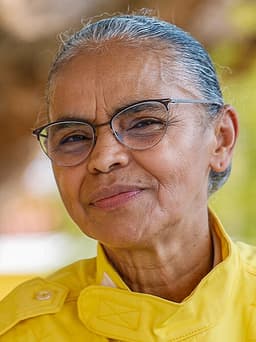
Marina Silva
Politician · Modern
54.0Total
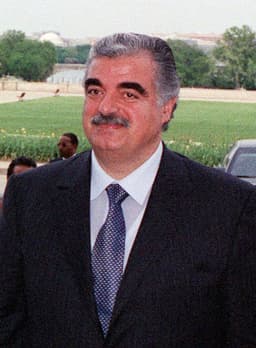
Saad Hariri
Politician · Modern
38.4Total
Basic Information
Born
1958
1970
Died
—
—
Era
Modern
Modern
Nationality
Brazil
Lebanon
Occupation
Politician
Politician
Civilization
Western
Middle Eastern
Score Comparison
Military (10%)
49.1
15.3
Political (20%)
53.8
32.2
Influence (20%)
58.3
48.6
Legacy (20%)
50.0
37.5
Leadership (15%)
65.0
41.5
Strategy (15%)
41.9
43.2
TOTAL
54.0
38.4
Marina Silva — Complete Timeline
2003 AD
Appointed Minister of EnvironmentPolitical Action◆ Major
Marina Silva was appointed Minister of Environment under President Luiz In
Environmental PolicyAmazon Conservation
Impact: globalconstructive
2008 AD
Resigned as Minister of EnvironmentPolitical Action◆ Major
Marina Silva resigned as Minister of Environment, citing frustration with the Lula administration's support for infrastructure projects in the Amazon and lack of progress on environmental protection.
ResignationEnvironmental Policy
Impact: national
2010 AD
Presidential candidate in 2010 electionPolitical Action◆ Major
Marina Silva ran for President of Brazil in the 2010 election as the Green Party candidate. She finished third with 19.3% of the vote, a strong showing that established her as a national political figure.
Presidential ElectionGreen Party
Impact: nationalconstructive
2014 AD
Presidential candidate in 2014 electionPolitical Action◆ Major
Marina Silva ran for President of Brazil in the 2014 election as the Brazilian Socialist Party candidate. She finished third with 21.3% of the vote, after initially leading in polls following the death of candidate Eduardo Campos.
Presidential ElectionPolitical Campaign
Impact: national
Saad Hariri — Complete Timeline
2009 AD
Elected Prime Minister of LebanonPolitical Action◆ Major
Saad Hariri was elected Prime Minister of Lebanon on November 9, 2009, after his March 14 Alliance won parliamentary elections. He formed a national unity government that included Hezbollah, reflecting Lebanon's complex political landscape.
Prime MinisterElectionCoalition
Impact: national
2011 AD
Resigned as Prime Minister in 2011Political Action◆ Major
Hariri resigned as Prime Minister on January 12, 2011, after Hezbollah and its allies withdrew from his government, collapsing the coalition. The resignation followed tensions over the Special Tribunal for Lebanon investigating his father's assassination.
ResignationHezbollahPolitical Crisis
Impact: nationaldestructive
2016 AD
Returned as Prime Minister in 2016Political Action◆ Major
Saad Hariri was again appointed Prime Minister in December 2016 after a two-year political vacuum. He formed a unity government with Hezbollah and President Michel Aoun, but the government struggled with economic crises and corruption.
Return to PowerUnity GovernmentEconomic Crisis
Impact: national
2017 AD
Resigned from Saudi Arabia in 2017Political Action◆ Major
Hariri announced his resignation as Prime Minister on November 4, 2017, while in Saudi Arabia, sparking allegations that he was forced to resign by Saudi authorities. He later returned to Lebanon and rescinded the resignation after international mediation.
ResignationSaudi ArabiaPolitical Crisis
Impact: regionaldestructive
2022 AD
Stepped down after 2022 electionsPolitical Action
After the 2022 parliamentary elections, Hariri's Future Movement lost significant seats. He announced he would not run for prime minister again and boycotted the political process, citing Hezbollah's dominance and lack of reform.
ElectionBoycottPolitical Withdrawal
Impact: national
Expert Analysis
Origins
Marina Silva was born on February 8, 1958, in the rubber-tapping community of Breu Velho, Acre, Brazil. She came from a poor family of seringueiros (rubber tappers), working alongside her parents from age 10. She learned to read at 16 and later earned a degree in history from the Federal University of Acre. Her early life was shaped by the Amazon rainforest and the struggle for land rights, influenced by Chico Mendes.
Saad Hariri was born on April 18, 1970, in Riyadh, Saudi Arabia, into a wealthy political dynasty. His father, Rafic Hariri, was a billionaire businessman and former Prime Minister of Lebanon. Saad studied business administration at Georgetown University and later managed his father's construction company, Saudi Oger. His formative years were marked by privilege and exposure to Lebanese-Saudi relations.
Rise to Power
Marina Silva's rise began as a union leader and activist alongside Chico Mendes. After Mendes' assassination in 1988, she became a prominent environmentalist. She was elected to the Brazilian Senate in 2002 for the Workers' Party (PT). In 2003, President Luiz Inácio Lula da Silva appointed her Minister of Environment, a role she held until 2008. Her tenure saw a 59% reduction in Amazon deforestation rates between 2004 and 2007. However, she resigned in 2008 due to conflicts over infrastructure projects like the Belo Monte Dam.
Saad Hariri's rise was accelerated by his father's assassination in 2005. He inherited leadership of the Future Movement and the March 14 Alliance. In 2009, his coalition won parliamentary elections, and he became Prime Minister on November 9, 2009, at age 39. His rise was heavily supported by Saudi Arabia and the international community.
Leadership & Governance
Marina Silva's leadership style is principled and grassroots-oriented. As Minister, she implemented the Action Plan for Prevention and Control of Deforestation in the Legal Amazon (PPCDAm), which used satellite monitoring and enforcement. She prioritized environmental sustainability over economic development, leading to clashes with agribusiness and within the PT. She scored 65.0 in leadership, reflecting her conviction but also her difficulty in building broad coalitions.
Saad Hariri's governance was characterized by compromise and coalition-building. He led national unity governments that included Hezbollah, a group opposed to his own political bloc. His tenure saw economic stagnation, political paralysis, and the 2017 resignation incident in Saudi Arabia, where he was allegedly forced to step down. He scored 32.2 in political skill and 41.5 in leadership, indicating challenges in navigating Lebanon's sectarian system.
Triumph & Tragedy
Marina Silva's greatest triumph was her environmental record as minister, reducing deforestation rates significantly and establishing a model for forest conservation. She also inspired a global movement, scoring 58.3 in influence. Her tragedy was her inability to translate environmental success into presidential victories; she finished third in 2010 (19.3%) and 2014 (21.3%). She also faced criticism for not fully supporting the PT's social programs.
Saad Hariri's triumph was leading the March 14 Alliance to victory and becoming prime minister, a symbol of anti-Syrian sentiment. He also secured a $11 billion aid package from international donors in 2018. His tragedies include the collapse of his government in 2011, the 2017 resignation crisis that damaged his credibility, and the 2020 Beirut explosion that exposed systemic corruption. He scored 37.5 in legacy, reflecting limited lasting achievements.
Character & Destiny
Marina Silva is known for her integrity and environmental activism. Her character, shaped by the Amazon and her faith (she is Evangelical), made her a moral force but also politically rigid. She scored 53.8 in political skill, indicating a principled but sometimes inflexible approach. Her destiny was to be a symbol of environmentalism rather than a holder of executive power.
Saad Hariri is seen as a pragmatist, but often indecisive. His character was molded by his father's legacy and the pressures of Lebanese politics. He scored 43.2 in strategy, showing some maneuvering but ultimately unable to reform the system. His destiny was to be a caretaker prime minister, overshadowed by Hezbollah and economic crises.
Legacy
Marina Silva's legacy is in environmental policy and the global fight against climate change. The PPCDAm framework influenced other countries. She remains a respected figure, but her political impact is limited to environmental advocacy. Her total score of 54.0 reflects a strong but niche influence.
Saad Hariri's legacy is mixed. He failed to stabilize Lebanon or implement reforms. His family's business empire and political dynasty have declined. He scored 38.4 total, reflecting a short-lived political career with little structural change. The 2022 elections saw his Future Movement lose seats, and he boycotted further politics.
Conclusion
Marina Silva had greater impact than Saad Hariri. Her environmental policies tangibly reduced deforestation (by up to 59% during her tenure) and set global precedents. Hariri, despite being prime minister, left Lebanon worse off: public debt soared, corruption persisted, and the state collapsed. Silva's total score of 54.0 versus Hariri's 38.4 underscores her stronger leadership (65.0 vs 41.5) and influence (58.3 vs 48.6). While both faced political constraints, Silva's legacy in conservation is more enduring and positive. Hariri's tenure was marked by failure to address Lebanon's crises. Therefore, Marina Silva is the more impactful figure.
Rankings
🥇
Marina SilvaLeader
Mil: 49.1Pol: 53.8Inf: 58.3
54.0
🥈
Saad Hariri
Mil: 15.3Pol: 32.2Inf: 48.6
38.4
+15.6 behind
How This Comparison Works
Algorithm
Each figure is scored on 6 dimensions (0—100 scale) based on structured historical data: Military (10%), Political (20%), Influence (20%), Legacy (20%), Leadership (15%), Strategy (15%). The weighted total produces the final ranking.
Data Sources
Scores are computed from structured sub-indicators in the database. Scale factors adjust for era (Ancient ×0.85, Modern ×1.0) and civilization size (Eastern ×1.05, Other ×0.80) to account for differences in population and military scale.
Maximum 3 Figures
Comparisons are limited to 2—3 figures to ensure readability and statistical meaningfulness.
Error Margins
±5 points per dimension — Sub-scores are derived from historical records with inherent uncertainty. Two figures within 5 points on a dimension should be considered roughly equivalent in that area.
Total Score Accuracy
±3 points overall — The weighted combination of 6 dimensions produces a total score with approximately ±3 points of uncertainty. Differences of less than 3 points are not statistically significant— the figures are effectively tied.
Known Limitations
- Historical records are incomplete and uneven across civilizations
- Figures from oral-tradition societies may be underrepresented
- Occupation labels can misclassify multi-role figures
- Scores measure capability and impact, not moral character
- Quantitative scoring is a comparison tool, not absolute truth
Capability Radar
Military (10%) — Battles & Warfare
Battles
30
19
Win Rate
30
22
Expansion
36
27
Political (20%) — Governance & Reform
Reform
70
15
Diplomacy
65
30
Economy
40
20
Influence (20%) — Cultural & Global Reach
Cultural
60
10
Global
60
20
Legacy (20%) — Historical Impact
Historical
55
15
Longevity
50
10
Leadership (15%) — Power & Stability
Tenure
45
20
Stability
35
10
Strategy (15%) — Tactics & Innovation
Strategy
37
30
Tactics
41
32
Reform
43
35
Similar Comparisons
Comments & Discussion
No comments yet. Be the first to share your thoughts!