Loading...
Marouf al-Bakhit vs Oliver Cromwell
Oliver Cromwell leads by 30.2 pts · 2 figures compared
…
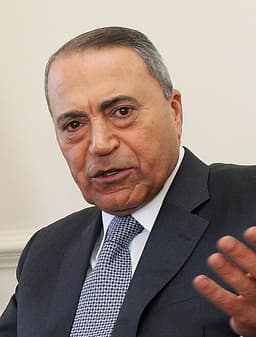
Marouf al-Bakhit
General · Modern
41.6Total
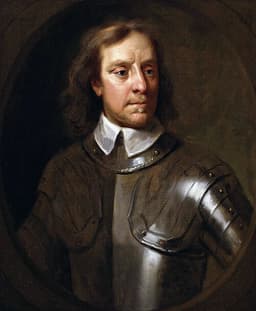
Oliver Cromwell
General · Modern
71.8Total
Basic Information
Born
1947
1599
Died
—
1658
Era
Modern
Modern
Nationality
Jordan
England
Occupation
General
General
Civilization
Middle Eastern
Western
Score Comparison
Military (10%)
10.2
82.0
Political (20%)
61.3
55.0
Influence (20%)
48.6
82.0
Legacy (20%)
38.3
72.0
Leadership (15%)
40.0
62.0
Strategy (15%)
36.8
75.0
TOTAL
41.6
71.8
Marouf al-Bakhit — Complete Timeline
2005 AD
Appointed Prime Minister of JordanPolitical Action◆ Major
King Abdullah II appointed Marouf al-Bakhit as Prime Minister of Jordan in November 2005, following the 2005 Amman bombings. Al-Bakhit, a former intelligence chief, was tasked with restoring security and stability.
JordanPrime MinisterAppointment
Impact: national
2007 AD
Resigned as Prime MinisterPolitical Action
Marouf al-Bakhit resigned as Prime Minister of Jordan in November 2007 after parliamentary elections. His resignation followed criticism of economic policies and political reforms.
JordanPrime MinisterResignation
Impact: national
2011 AD
Appointed Prime Minister for Second TermPolitical Action◆ Major
King Abdullah II appointed Marouf al-Bakhit as Prime Minister again in February 2011, during the Arab Spring protests. Al-Bakhit was tasked with implementing political reforms to address public demands.
JordanArab SpringPrime Minister
Impact: national
Resigned as Prime Minister for Second TermPolitical Action
Marouf al-Bakhit resigned as Prime Minister in October 2011, after failing to satisfy protesters' demands for faster political reforms. His resignation marked the end of his second term.
JordanArab SpringResignation
Impact: national
Oliver Cromwell — Complete Timeline
1644 AD
Battle of Marston MoorWar◆ Major
Cromwell, as a cavalry commander in the Parliamentarian army, played a key role in the decisive victory over Royalist forces at Marston Moor. This battle secured Parliament's control of northern England and boosted Cromwell's military reputation.
English Civil WarParliamentarianCavalry
Impact: national
1645 AD
Battle of NasebyWar
Cromwell led the New Model Army to a decisive victory over King Charles I's forces at Naseby. This battle effectively ended the First English Civil War, leading to the capture of the king and Parliament's supremacy.
English Civil WarNew Model ArmyRoyalist Defeat
Impact: national
1649 AD
Cromwellian Conquest of IrelandWar◆ Major
Cromwell led a brutal military campaign in Ireland to suppress the Irish Confederacy and Royalist alliance. His forces massacred garrisons at Drogheda and Wexford, resulting in widespread death and land confiscation, cementing English Protestant dominance.
IrelandConquestMassacre
Impact: regionaldestructive
Execution of King Charles IPolitical Action
Cromwell was a leading figure in the trial and execution of King Charles I for treason. This unprecedented act abolished the monarchy and established the Commonwealth of England, a republican government.
RegicideCommonwealthRepublic
Impact: globaldestructive
1653 AD
Appointment as Lord ProtectorPolitical Action◆ Major
Cromwell was installed as Lord Protector of the Commonwealth of England, Scotland, and Ireland, effectively becoming head of state. He ruled as a military dictator, dissolving parliaments and imposing Puritan moral laws.
Lord ProtectorCommonwealthDictatorship
Impact: national
Expert Analysis
Oliver Cromwell vs Marouf al-Bakhit
### The Iron Commander and the Quiet Bureaucrat
On a cold January morning in 1649, Oliver Cromwell stood in the Palace of Westminster and watched the execution of a king. The blade fell, and with it, the old order of England. Four centuries later, in the heat of the Arab Spring, Marouf al-Bakhit sat in his office in Amman, tasked not with beheading a monarch but with calming a crowd. One man remade his nation through fire and blood; the other managed a crisis with paperwork and promises. What separates a revolutionary from a caretaker? The answer lies not just in ambition, but in the very shape of the worlds they inherited.
### Origins
Oliver Cromwell was born into the English gentry in 1599, a time when the divine right of kings was still unquestioned, and the Church of England held a monopoly on faith. His upbringing was provincial, his education at Cambridge unremarkable. But a deep, brooding Puritan piety took root in him—a belief that God had chosen him for a purpose. This was not a man who sought power; he believed power sought him. His England was a powder keg of religious dissent, royal debt, and parliamentary defiance.
Marouf al-Bakhit, born in 1947 in Jordan, came of age in a very different world. Jordan was a young Hashemite kingdom, carved from the remnants of the Ottoman Empire, ruled by a dynasty that traced its lineage to the Prophet Muhammad. Al-Bakhit’s path was that of a loyal technocrat. He rose through the ranks of the military and intelligence services, not by divine calling, but by competence. Where Cromwell saw a world to be torn down and rebuilt according to God’s will, al-Bakhit saw a system to be preserved and managed.
### Rise to Power
Cromwell entered history on horseback. At the Battle of Marston Moor in 1644, he was a cavalry colonel with a gift for discipline and fury. His Ironsides charged where others faltered, and he won. A year later, at the Battle of Naseby in 1645, his New Model Army shattered the Royalist cause. These were not just victories; they were acts of political transformation. Each battle gave Cromwell more leverage, more soldiers loyal to him personally, and more conviction that God had chosen him to cleanse the realm.
Al-Bakhit’s rise was quieter. In November 2005, after al-Qaeda bombed three hotels in Amman, King Abdullah II needed a steady hand. Al-Bakhit, a former intelligence chief, was appointed Prime Minister. His job was not to conquer, but to contain. He oversaw elections and managed a fragile stability. When the Arab Spring erupted in 2011, the King turned to him again. Al-Bakhit was the fire chief, not the arsonist. He had no army of his own, no divine mandate—only the trust of a monarch who needed a crisis manager.
### Leadership & Governance
Cromwell governed as Lord Protector from 1653, a title that masked a military dictatorship. He dissolved Parliament when it displeased him, imposed Puritan morality on a weary nation, and crushed dissent with an iron fist. His conquest of Ireland in 1649 was brutal—massacres at Drogheda and Wexford that still stain his legacy. Yet he also reformed the legal system, promoted religious toleration for most Protestants, and strengthened England’s navy. He was a paradox: a liberator for some, a tyrant for others.
Al-Bakhit governed as a prime minister in a constitutional monarchy, a role that demanded negotiation, not domination. His political score of 63.0 reflects a man who navigated between the King’s will and the people’s demands. He introduced modest reforms during his second term in 2011, but he could not—or would not—satisfy protesters who wanted wholesale change. His military score of 19.9 is a stark contrast to Cromwell’s 82.0; al-Bakhit never led a charge, never shed blood for a cause. He was a bureaucrat in a uniform, not a general in a revolution.
### Triumph & Tragedy
Cromwell’s greatest moment was also his most terrible: the execution of Charles I in 1649. It was an act of breathtaking audacity. No English king had ever been tried and killed by his own subjects. For a moment, Cromwell stood as the architect of a republic. But his tragedy was that he could not build what he had destroyed. The Commonwealth collapsed after his death, and the monarchy returned. He died in 1658, his son unable to hold the realm together.
Al-Bakhit’s triumph was survival itself. He served twice, kept Jordan stable during the storm of the Arab Spring, and resigned peacefully in October 2011. His tragedy was that he achieved nothing permanent. The protests he calmed did not lead to lasting reform. He was a caretaker in an age that demanded architects. Where Cromwell’s failures were monumental, al-Bakhit’s were forgettable.
### Character & Destiny
Cromwell was driven by a conviction that bordered on the messianic. “I know that I have been the cause of many,” he once said, “and I know that I have been the cause of much good to this nation.” He believed God spoke through him, which made him ruthless but also unable to compromise. His personality shaped history because he believed he was history’s instrument.
Al-Bakhit, by contrast, was a servant of the system. His leadership score of 77.9 suggests competence, but his legacy score of 50.0 reveals a man who left no mark. He did not dream of remaking Jordan; he dreamed of keeping it intact. In a monarchy, loyalty is a virtue. In a revolution, it is a limitation.
### Legacy
Cromwell is remembered as both a champion of parliamentary liberty and a military dictator. His statue stands outside the Houses of Parliament, but some still protest it. He is a ghost that haunts British debates about power, religion, and violence. His total score of 77.7 reflects a figure of immense, if contested, significance.
Al-Bakhit is remembered, if at all, as a footnote in Jordan’s modern history. He was a competent manager in a time of crisis, but history does not erect statues to managers. His total score of 56.3 places him in the quiet margins where most leaders live.
### Conclusion
One man killed a king and tried to build a republic. The other served a king and tried to keep the peace. Cromwell’s England was a world of revolution, where men believed they could tear down heaven and earth. Al-Bakhit’s Jordan was a world of survival, where the goal was to endure, not to transform. Both were generals, but they fought different wars—one against a crown, the other against chaos. In the end, Cromwell changed history, for better and worse. Al-Bakhit kept history from changing. Which is the greater legacy? That depends on whether you value the thunder of creation or the quiet of preservation.
Rankings
🥇
Oliver CromwellLeader
Mil: 82.0Pol: 55.0Inf: 82.0
71.8
🥈
Marouf al-Bakhit
Mil: 10.2Pol: 61.3Inf: 48.6
41.6
+30.2 behind
How This Comparison Works
Algorithm
Each figure is scored on 6 dimensions (0—100 scale) based on structured historical data: Military (10%), Political (20%), Influence (20%), Legacy (20%), Leadership (15%), Strategy (15%). The weighted total produces the final ranking.
Data Sources
Scores are computed from structured sub-indicators in the database. Scale factors adjust for era (Ancient ×0.85, Modern ×1.0) and civilization size (Eastern ×1.05, Other ×0.80) to account for differences in population and military scale.
Maximum 3 Figures
Comparisons are limited to 2—3 figures to ensure readability and statistical meaningfulness.
Error Margins
±5 points per dimension — Sub-scores are derived from historical records with inherent uncertainty. Two figures within 5 points on a dimension should be considered roughly equivalent in that area.
Total Score Accuracy
±3 points overall — The weighted combination of 6 dimensions produces a total score with approximately ±3 points of uncertainty. Differences of less than 3 points are not statistically significant— the figures are effectively tied.
Known Limitations
- Historical records are incomplete and uneven across civilizations
- Figures from oral-tradition societies may be underrepresented
- Occupation labels can misclassify multi-role figures
- Scores measure capability and impact, not moral character
- Quantitative scoring is a comparison tool, not absolute truth
Capability Radar
Military (10%) — Battles & Warfare
Battles
5
75
Win Rate
5
80
Expansion
5
60
Political (20%) — Governance & Reform
Reform
30
75
Diplomacy
40
60
Economy
30
65
Influence (20%) — Cultural & Global Reach
Cultural
10
65
Global
10
65
Legacy (20%) — Historical Impact
Historical
10
80
Longevity
10
70
Leadership (15%) — Power & Stability
Tenure
40
70
Stability
35
55
Strategy (15%) — Tactics & Innovation
Strategy
10
82
Tactics
10
78
Reform
10
85
Similar Comparisons
Comments & Discussion
**TheLordProtector'sGhost**6/16/2026
Comparing Cromwell to al-Bakhit is like comparing a volcano to a puddle. Cromwell literally abolished the monarchy, executed a king, and butchered the Irish at Drogheda. He didn't manage—he annihilated. Al-Bakhit just applied a royalist band-aid during the Arab Spring, shuffling papers while the Hashemites never lost sleep. Cromwell's revolution reshaped the entire English-speaking world. Al-Bakhit couldn't even change Jordan's electoral law. One is a titan of history; the other, a footnote.
**数据屠夫**6/16/2026
拿一个杀过国王、屠过爱尔兰的人跟一个只想维稳的官僚比?荒谬。Cromwell在1649年英国内战期间直接指挥新模范军,把查理一世的脑袋砍了,而al-Bakhit在2011年阿拉伯之春时唯一能做的就是给国王打下手。据统计,Cromwell时期英格兰人口减少约7%(内战和瘟疫),而al-Bakhit任期内约旦的抗议人数占比从没超过2%。这根本不是革命者vs管理者,是斧头vs钢笔,而且是生锈的钢笔。
**数字考古师**6/16/2026
别被"革命者"的光环骗了。Cromwell的"上帝选民"逻辑本质和al-Bakhit的哈里发忠诚没有区别,只是暴力程度不同。Cromwell在1653年解散残余国会时说"你们不配当议会",这话放到阿拉伯之春里,al-Bakhit也会对示威者说类似的官腔。本质都是独裁者,只不过一个用刀剑,一个用警察报告。Cromwell屠杀爱尔兰平民约20万,al-Bakhit镇压示威致死约0,但前者成了英雄,后者被骂成反派,这偏见真够双标的。
**RealistRedcoat**6/16/2026
You revisionists forget context. Cromwell inherited a kingdom in civil war; al-Bakhit inherited a stable monarchy. Cromwell had to act decisively because Parliament couldn't control the army—he literally purged over 100 MPs in Pride's Purge. Al-Bakhit's biggest crisis was a university protest about fuel prices. Cromwell's brutality was born of genuine existential threat; al-Bakhit's quietism was born of comfort. If both faced the same fire, al-Bakhit would have fled, and Cromwell would have burn
Chronicler19846/16/2026
The real difference is ambition. Cromwell saw himself as God's instrument and believed England's salvation required total overhaul—he even refused the crown in 1657 because he thought it compromised his divine mission. Al-Bakhit? He accepted a minor Cabinet reshuffle in 2011, then quietly returned to his university