Loading...
This comparison has not been analyzed yet.
One-time AI generation (~1 minute). Scores and timeline are already available below.
Marouf al-Bakhit vs Raheel Sharif
Raheel Sharif leads by 15.3 pts · 2 figures compared
…
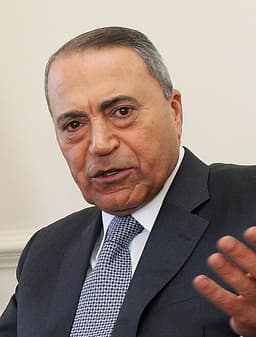
Marouf al-Bakhit
General · Modern
41.6Total
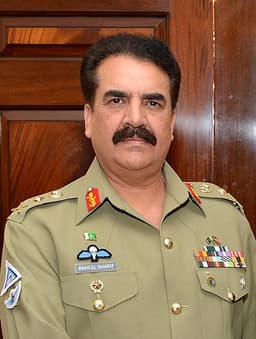
Raheel Sharif
General · Modern
56.9Total
Basic Information
Born
1947
1956
Died
—
—
Era
Modern
Modern
Nationality
Jordan
Pakistan
Occupation
General
General
Civilization
Middle Eastern
Indian
Score Comparison
Military (10%)
10.2
40.0
Political (20%)
61.3
68.0
Influence (20%)
48.6
58.0
Legacy (20%)
38.3
47.5
Leadership (15%)
40.0
65.0
Strategy (15%)
36.8
65.4
TOTAL
41.6
56.9
Marouf al-Bakhit — Complete Timeline
2005 AD
Appointed Prime Minister of JordanPolitical Action◆ Major
King Abdullah II appointed Marouf al-Bakhit as Prime Minister of Jordan in November 2005, following the 2005 Amman bombings. Al-Bakhit, a former intelligence chief, was tasked with restoring security and stability.
JordanPrime MinisterAppointment
Impact: national
2007 AD
Resigned as Prime MinisterPolitical Action
Marouf al-Bakhit resigned as Prime Minister of Jordan in November 2007 after parliamentary elections. His resignation followed criticism of economic policies and political reforms.
JordanPrime MinisterResignation
Impact: national
2011 AD
Appointed Prime Minister for Second TermPolitical Action◆ Major
King Abdullah II appointed Marouf al-Bakhit as Prime Minister again in February 2011, during the Arab Spring protests. Al-Bakhit was tasked with implementing political reforms to address public demands.
JordanArab SpringPrime Minister
Impact: national
Resigned as Prime Minister for Second TermPolitical Action
Marouf al-Bakhit resigned as Prime Minister in October 2011, after failing to satisfy protesters' demands for faster political reforms. His resignation marked the end of his second term.
JordanArab SpringResignation
Impact: national
Raheel Sharif — Complete Timeline
2013 AD
Appointment as Chief of Army StaffPolitical Action◆ Major
General Raheel Sharif was appointed as the 15th Chief of Army Staff of the Pakistan Army, succeeding General Ashfaq Parvez Kayani. His appointment came at a time of heightened terrorism and political instability, and he was seen as a reformist leader within the military.
Military LeadershipPakistan Army
Impact: national
2014 AD
Launch of Operation Zarb-e-AzbWar◆ Major
General Raheel Sharif launched Operation Zarb-e-Azb, a large-scale military offensive against militant groups in North Waziristan. The operation targeted Tehrik-i-Taliban Pakistan and other insurgents, resulting in the clearance of the region and a significant reduction in terrorist attacks across Pakistan.
Counter-TerrorismMilitary OperationNorth Waziristan
Impact: nationalconstructive
Execution of convicted terroristsPolitical Action◆ Major
Following the Peshawar school massacre, General Raheel Sharif oversaw the lifting of a moratorium on the death penalty for terrorism-related cases. Hundreds of convicted militants were executed, and military courts were established to expedite trials. This policy was controversial but widely supported domestically.
Death PenaltyCounter-TerrorismMilitary Courts
Impact: nationaldestructive
2015 AD
Formation of the Saudi-led Islamic Military AlliancePolitical Action◆ Major
General Raheel Sharif was appointed as the first commander-in-chief of the Islamic Military Alliance to Fight Terrorism (IMAFT), a Saudi-led coalition of Muslim countries. He retired from the Pakistan Army to take this role, marking a significant international engagement for a former Pakistani army chief.
International CoalitionCounter-TerrorismSaudi Arabia
Impact: global
This comparison has not been analyzed yet.
One-time AI generation (~1 minute). Scores and timeline are already available below.
Rankings
🥇
Raheel SharifLeader
Mil: 40.0Pol: 68.0Inf: 58.0
56.9
🥈
Marouf al-Bakhit
Mil: 10.2Pol: 61.3Inf: 48.6
41.6
+15.3 behind
How This Comparison Works
Algorithm
Each figure is scored on 6 dimensions (0—100 scale) based on structured historical data: Military (10%), Political (20%), Influence (20%), Legacy (20%), Leadership (15%), Strategy (15%). The weighted total produces the final ranking.
Data Sources
Scores are computed from structured sub-indicators in the database. Scale factors adjust for era (Ancient ×0.85, Modern ×1.0) and civilization size (Eastern ×1.05, Other ×0.80) to account for differences in population and military scale.
Maximum 3 Figures
Comparisons are limited to 2—3 figures to ensure readability and statistical meaningfulness.
Error Margins
±5 points per dimension — Sub-scores are derived from historical records with inherent uncertainty. Two figures within 5 points on a dimension should be considered roughly equivalent in that area.
Total Score Accuracy
±3 points overall — The weighted combination of 6 dimensions produces a total score with approximately ±3 points of uncertainty. Differences of less than 3 points are not statistically significant— the figures are effectively tied.
Known Limitations
- Historical records are incomplete and uneven across civilizations
- Figures from oral-tradition societies may be underrepresented
- Occupation labels can misclassify multi-role figures
- Scores measure capability and impact, not moral character
- Quantitative scoring is a comparison tool, not absolute truth
Capability Radar
Military (10%) — Battles & Warfare
Battles
5
55
Win Rate
5
60
Expansion
5
10
Political (20%) — Governance & Reform
Reform
30
40
Diplomacy
40
50
Economy
30
30
Influence (20%) — Cultural & Global Reach
Cultural
10
40
Global
10
40
Legacy (20%) — Historical Impact
Historical
10
45
Longevity
10
30
Leadership (15%) — Power & Stability
Tenure
40
45
Stability
35
35
Strategy (15%) — Tactics & Innovation
Strategy
10
70
Tactics
10
65
Reform
10
75
Similar Comparisons
Comments & Discussion
No comments yet. Be the first to share your thoughts!