Loading...
Analysis will be generated on first visit.
Scores and timeline are available below. The page will refresh automatically when ready.
Martin Luther vs Napoleon Bonaparte
Napoleon Bonaparte leads by 17.4 pts · 2 figures compared
…

Martin Luther
Religious Leader · Medieval
65.0Total
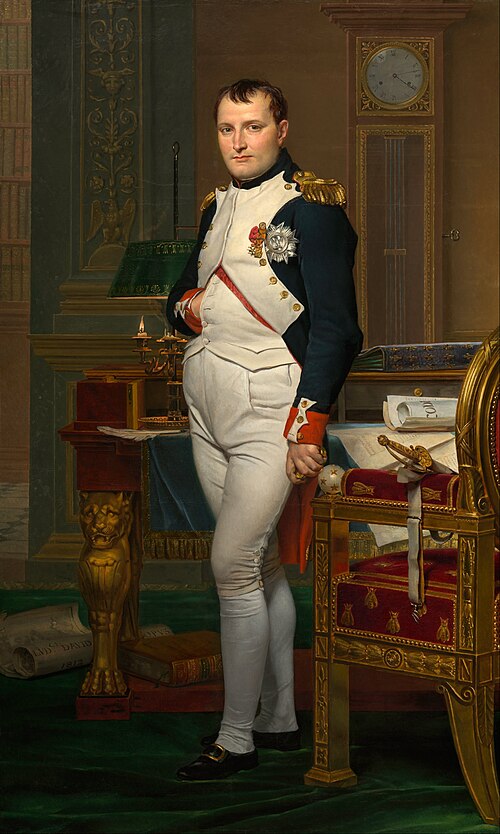
Napoleon Bonaparte
General · Modern
82.4Total
Basic Information
Born
1483
1769
Died
1546
1821
Era
Medieval
Modern
Nationality
Germany
France
Occupation
Religious Leader
General
Civilization
Western
Western
Score Comparison
Military (10%)
31.2
94.0
Political (20%)
67.3
75.0
Influence (20%)
72.0
82.0
Legacy (20%)
77.3
78.0
Leadership (15%)
72.3
80.0
Strategy (15%)
51.4
93.0
TOTAL
65.0
82.4
Rankings
🥇
Napoleon BonaparteLeader
Mil: 94.0Pol: 75.0Inf: 82.0
82.4
🥈
Martin Luther
Mil: 31.2Pol: 67.3Inf: 72.0
65.0
+17.4 behind
How This Comparison Works
Algorithm
Each figure is scored on 6 dimensions (0—100 scale) based on structured historical data: Military (10%), Political (20%), Influence (20%), Legacy (20%), Leadership (15%), Strategy (15%). The weighted total produces the final ranking.
Data Sources
Scores are computed from structured sub-indicators in the database. Scale factors adjust for era (Ancient ×0.85, Modern ×1.0) and civilization size (Eastern ×1.05, Other ×0.80) to account for differences in population and military scale.
Maximum 3 Figures
Comparisons are limited to 2—3 figures to ensure readability and statistical meaningfulness.
Error Margins
±5 points per dimension — Sub-scores are derived from historical records with inherent uncertainty. Two figures within 5 points on a dimension should be considered roughly equivalent in that area.
Total Score Accuracy
±3 points overall — The weighted combination of 6 dimensions produces a total score with approximately ±3 points of uncertainty. Differences of less than 3 points are not statistically significant— the figures are effectively tied.
Known Limitations
- Historical records are incomplete and uneven across civilizations
- Figures from oral-tradition societies may be underrepresented
- Occupation labels can misclassify multi-role figures
- Scores measure capability and impact, not moral character
- Quantitative scoring is a comparison tool, not absolute truth
Capability Radar
Military (10%) — Battles & Warfare
Battles
24
95
Win Rate
26
90
Expansion
30
95
Political (20%) — Governance & Reform
Reform
90
95
Diplomacy
20
80
Economy
10
85
Influence (20%) — Cultural & Global Reach
Cultural
85
85
Global
85
90
Legacy (20%) — Historical Impact
Historical
90
95
Longevity
90
90
Leadership (15%) — Power & Stability
Tenure
0
85
Stability
10
70
Strategy (15%) — Tactics & Innovation
Strategy
32
95
Tactics
32
98
Reform
36
92
Analysis will be generated on first visit.
Scores and timeline are available below. The page will refresh automatically when ready.
Martin Luther — Complete Timeline
1517 AD
Publication of the 95 ThesesPolitical Action
Martin Luther posted 95 theses on the door of the Wittenberg Castle Church, criticizing the sale of indulgences and papal authority. This act initiated the Protestant Reformation, leading to the fragmentation of Western Christianity and the rise of Protestant denominations.
ReformationChurchIndulgences
Impact: globalconstructive
1521 AD
Diet of WormsPolitical Action◆ Major
Luther was summoned before the Holy Roman Emperor Charles V at the Diet of Worms and ordered to recant his writings. He refused, stating 'Here I stand, I can do no other.' The Edict of Worms declared him an outlaw and heretic.
ReformationImperial DietExcommunication
Impact: regional
1522 AD
Translation of the New Testament into GermanCultural◆ Major
While in hiding at Wartburg Castle, Luther translated the New Testament from Greek into German. This translation made the Bible accessible to common people, standardized the German language, and promoted lay literacy and individual interpretation of scripture.
Bible TranslationLanguageLiteracy
Impact: regionalconstructive
1525 AD
Marriage to Katharina von BoraPolitical Action
Luther married Katharina von Bora, a former nun, publicly rejecting clerical celibacy. This marriage served as a model for Protestant clergy and challenged the Catholic Church's requirement of priestly celibacy, reshaping the social role of ministers.
MarriageClergyReformation
Impact: regionalconstructive
1530 AD
Publication of the Augsburg ConfessionPolitical Action◆ Major
Luther's colleague Philipp Melanchthon presented the Augsburg Confession to Emperor Charles V, outlining the core doctrines of the Lutheran movement. This document became the foundational confession of the Lutheran Church and defined the theological split from Catholicism.
LutheranismConfessionDoctrine
Impact: regionalconstructive
Similar Comparisons
Comments & Discussion
No comments yet. Be the first to share your thoughts!