Loading...
Matti Vanhanen vs Slobodan Milosevic
Slobodan Milosevic leads by 1.7 pts · 2 figures compared
…

Matti Vanhanen
Politician · Modern
48.0Total
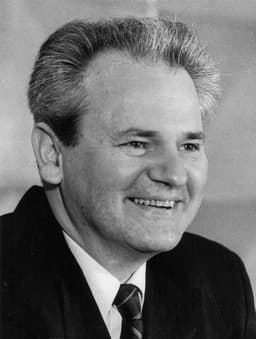
Slobodan Milosevic
Politician · Modern
49.7Total
Basic Information
Born
1955
1941
Died
—
—
Era
Modern
Modern
Nationality
Finland
Serbia
Occupation
Politician
Politician
Civilization
Western
Western
Score Comparison
Military (10%)
13.7
50.0
Political (20%)
68.0
30.8
Influence (20%)
48.6
58.0
Legacy (20%)
39.2
47.5
Leadership (15%)
68.0
67.0
Strategy (15%)
43.0
36.8
TOTAL
48.0
49.7
Matti Vanhanen — Complete Timeline
2003 AD
Appointed Prime Minister of FinlandPolitical Action◆ Major
Vanhanen became Prime Minister of Finland in June 2003, succeeding Anneli J
Finnish PoliticsGovernment Formation
Impact: national
2010 AD
Resigned as Prime MinisterPolitical Action◆ Major
Vanhanen resigned as Prime Minister in June 2010 to run for the position of European Commissioner. He was succeeded by Mari Kiviniemi. His resignation ended a seven-year tenure.
Finnish PoliticsResignation
Impact: national
2022 AD
Speaker of the Parliament of FinlandPolitical Action
Vanhanen was elected Speaker of the Parliament of Finland in February 2022. He served in this role until April 2023, presiding over parliamentary sessions.
Finnish PoliticsParliamentary Role
Impact: national
Slobodan Milosevic — Complete Timeline
1989 AD
Milosevic's Gazimestan speechPolitical Action◆ Major
Milosevic delivered a speech at the 600th anniversary of the Battle of Kosovo, invoking Serbian nationalism and victimhood. The speech is widely seen as a catalyst for the rise of ethnic nationalism that led to the breakup of Yugoslavia.
NationalismYugoslaviaKosovo
Impact: regionaldestructive
Abolition of Kosovo's autonomyPolitical Action◆ Major
Milosevic pushed through constitutional changes that revoked the autonomous status of Kosovo and Vojvodina, concentrating power in Serbia. This move inflamed Albanian nationalism in Kosovo and was a key step toward the Yugoslav Wars.
KosovoNationalismHuman Rights
Impact: regionaldestructive
1992 AD
Start of the Bosnian WarWar
Milosevic's Serbia provided military and financial support to Bosnian Serb forces led by Radovan Karadzic. The war resulted in the Siege of Sarajevo, ethnic cleansing, and the Srebrenica massacre, with over 100,000 killed.
Yugoslav WarsBosniaWar Crimes
Impact: regionaldestructive
1995 AD
Dayton AgreementPolitical Action◆ Major
Milosevic represented the Bosnian Serbs at the Dayton peace talks, where he agreed to end the Bosnian War. The agreement created a decentralized Bosnian state but left many issues unresolved, and Milosevic was criticized for conceding too much.
Peace TreatyBosniaDiplomacy
Impact: regional
1999 AD
NATO bombing of YugoslaviaWar◆ Major
NATO launched a 78-day bombing campaign against Yugoslavia to stop Milosevic's crackdown on Kosovo Albanians. The bombing forced Milosevic to withdraw from Kosovo, but caused significant civilian casualties and infrastructure damage.
NATOKosovoWar
Impact: regionaldestructive
2001 AD
Extradition to the ICTYPolitical Action◆ Major
Milosevic was arrested in Serbia and extradited to the International Criminal Tribunal for the former Yugoslavia in The Hague. He was charged with war crimes, crimes against humanity, and genocide for his role in the Yugoslav Wars.
War CrimesJusticeICTY
Impact: global
Expert Analysis
Origins
Matti Vanhanen was born on October 4, 1955, in Jyväskylä, Finland, into a politically active family. His father, Tatu Vanhanen, was a political scientist and professor. Vanhanen studied political science at the University of Helsinki, earning a master's degree in 1989. He worked as a journalist and later entered politics, joining the Centre Party. His early career included serving as a local councilor and as an adviser to the Minister of Agriculture.
Slobodan Milosevic was born on August 20, 1941, in Požarevac, Serbia, then part of Yugoslavia. His father was a Serbian Orthodox priest, and his mother was a teacher. Milosevic studied law at the University of Belgrade, graduating in 1964. He joined the League of Communists of Yugoslavia and worked in various economic and banking positions, including head of a major bank. His early political rise was supported by his wife, Mira Marković, a Marxist theorist.
Rise to Power
Vanhanen entered the Finnish Parliament in 1991. He served as Minister of Defence from 2003 to 2003 under Prime Minister Anneli Jäätteenmäki. When Jäätteenmäki resigned in June 2003 due to a scandal over leaked Iraq war documents, Vanhanen succeeded her as Prime Minister, leading a coalition government of the Centre Party, Social Democrats, and Swedish People's Party. He was re-elected in 2007 and served until June 2010.
Milosevic rose to prominence in the late 1980s by harnessing Serbian nationalism. In 1987, he gave a speech in Kosovo Polje, promising to protect Serbs from Albanian oppression. He became President of Serbia in 1989. His Gazimestan speech on June 28, 1989, at the 600th anniversary of the Battle of Kosovo, invoked Serbian victimhood and historical grievances, galvanizing support. He abolished Kosovo's autonomy in 1990, concentrating power in Serbia, and later became President of Yugoslavia in 1997.
Leadership & Governance
Vanhanen's leadership style was pragmatic and consensus-oriented. He managed a multi-party coalition through compromise and negotiation. His governance focused on economic stability, EU integration, and social welfare. Under his tenure, Finland's economy grew steadily, and he supported the euro currency. However, his government faced criticism for slow reforms in healthcare and education. Vanhanen's political score of 68.0 reflects his ability to maintain stability.
Milosevic's leadership was authoritarian and nationalist. He centralized power, suppressed opposition, and used state media for propaganda. He maintained control through a mix of patronage and fear. His governance led to international isolation, economic decline, and hyperinflation. His political score of 30.8 indicates his divisive and destructive rule. He supported ethnic Serb forces in Croatia and Bosnia, leading to the Bosnian War (1992-1995) and the Siege of Sarajevo.
Triumph & Tragedy
Vanhanen's greatest success was maintaining Finland's stability and prosperity during his premiership. He navigated coalition politics effectively and kept Finland on a pro-European course. His resignation in 2010 to seek a European Commission post was a personal ambition, but he failed to secure the position. He later returned as Speaker of Parliament in 2022, a respected but less powerful role.
Milosevic's triumph was the Dayton Agreement in 1995, where he represented Bosnian Serbs and helped end the Bosnian War. However, his policies caused immense suffering: the wars in Croatia, Bosnia, and Kosovo resulted in over 100,000 deaths and millions of refugees. The NATO bombing of Yugoslavia in 1999 forced him to withdraw from Kosovo. He was eventually indicted for war crimes, arrested in 2001, and died in 2006 during his trial at The Hague.
Character & Destiny
Vanhanen was known for his calm, reserved, and methodical approach. He avoided grand rhetoric and focused on practical governance. His character suited Finland's political culture of consensus and moderation. He left office with a reputation as a competent but uncharismatic leader.
Milosevic was charismatic, manipulative, and ruthless. He exploited nationalist sentiments and used violence to achieve his goals. His character led to conflict and ultimately his downfall. Historians assess him as a key figure in the breakup of Yugoslavia and the ensuing wars.
Legacy
Vanhanen's legacy is modest. He is remembered as a steady prime minister who upheld Finnish democracy and EU membership. His influence score of 48.6 reflects his limited global impact. However, he contributed to Finland's stable governance model.
Milosevic's legacy is deeply negative. He is condemned for ethnic cleansing and war crimes. His influence score of 58.0 recognizes his significant but destructive impact on the Balkans and international relations. The wars he instigated reshaped the region, leading to new states and ongoing tensions.
Conclusion
Slobodan Milosevic had a greater impact than Matti Vanhanen, measured by the scale of historical change. His total score of 49.7 just edges Vanhanen's 48.0, but the difference in influence is stark. Milosevic's actions led to wars, deaths, and the redrawing of borders, while Vanhanen's tenure was one of stability. However, Milosevic's impact was overwhelmingly destructive, whereas Vanhanen's was constructive. In terms of positive legacy, Vanhanen's governance was superior. But for sheer historical significance, Milosevic's role in the Yugoslav Wars overshadows Vanhanen's quiet leadership.
Rankings
🥇
Slobodan MilosevicLeader
Mil: 50.0Pol: 30.8Inf: 58.0
49.7
🥈
Matti Vanhanen
Mil: 13.7Pol: 68.0Inf: 48.6
48.0
+1.7 behind
How This Comparison Works
Algorithm
Each figure is scored on 6 dimensions (0—100 scale) based on structured historical data: Military (10%), Political (20%), Influence (20%), Legacy (20%), Leadership (15%), Strategy (15%). The weighted total produces the final ranking.
Data Sources
Scores are computed from structured sub-indicators in the database. Scale factors adjust for era (Ancient ×0.85, Modern ×1.0) and civilization size (Eastern ×1.05, Other ×0.80) to account for differences in population and military scale.
Maximum 3 Figures
Comparisons are limited to 2—3 figures to ensure readability and statistical meaningfulness.
Error Margins
±5 points per dimension — Sub-scores are derived from historical records with inherent uncertainty. Two figures within 5 points on a dimension should be considered roughly equivalent in that area.
Total Score Accuracy
±3 points overall — The weighted combination of 6 dimensions produces a total score with approximately ±3 points of uncertainty. Differences of less than 3 points are not statistically significant— the figures are effectively tied.
Known Limitations
- Historical records are incomplete and uneven across civilizations
- Figures from oral-tradition societies may be underrepresented
- Occupation labels can misclassify multi-role figures
- Scores measure capability and impact, not moral character
- Quantitative scoring is a comparison tool, not absolute truth
Capability Radar
Military (10%) — Battles & Warfare
Battles
24
30
Win Rate
25
25
Expansion
28
30
Political (20%) — Governance & Reform
Reform
40
20
Diplomacy
50
25
Economy
45
15
Influence (20%) — Cultural & Global Reach
Cultural
15
30
Global
15
50
Legacy (20%) — Historical Impact
Historical
20
55
Longevity
15
30
Leadership (15%) — Power & Stability
Tenure
55
60
Stability
50
10
Strategy (15%) — Tactics & Innovation
Strategy
30
25
Tactics
35
20
Reform
35
15
Similar Comparisons
Comments & Discussion
No comments yet. Be the first to share your thoughts!