Loading...
This comparison has not been analyzed yet.
One-time AI generation (~1 minute). Scores and timeline are already available below.
Maxime Carlot Korman vs Woodrow Wilson
Woodrow Wilson leads by 7.1 pts · 2 figures compared
…

Maxime Carlot Korman
Politician · Modern
47.8Total
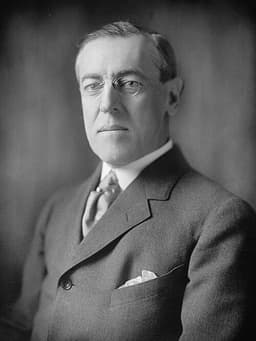
Woodrow Wilson
Politician · Modern
54.9Total
Basic Information
Born
1942
1856
Died
—
1924
Era
Modern
Modern
Nationality
Vanuatu
United States
Occupation
Politician
Politician
Civilization
Other
Western
Score Comparison
Military (10%)
46.6
48.2
Political (20%)
45.1
55.0
Influence (20%)
50.2
55.0
Legacy (20%)
40.0
52.0
Leadership (15%)
64.0
72.0
Strategy (15%)
42.3
42.5
TOTAL
47.8
54.9
Maxime Carlot Korman — Complete Timeline
1991 AD
Appointed Prime Minister of VanuatuPolitical Action◆ Major
Maxime Carlot Korman became the first Francophone Prime Minister of Vanuatu, leading a coalition government. His appointment marked a shift in the political landscape, representing the Francophone community in a predominantly Anglophone political system.
Prime MinisterFrancophone Politics
Impact: national
1994 AD
Re-elected Prime MinisterPolitical Action
Korman was re-elected as Prime Minister after the 1994 general election, continuing his leadership. His second term focused on economic reforms and maintaining political stability in Vanuatu.
Re-electionGovernance
Impact: national
Woodrow Wilson — Complete Timeline
1913 AD
Federal Reserve ActPolitical Action◆ Major
Wilson signed the Federal Reserve Act, creating the Federal Reserve System to regulate the US banking system and monetary policy. This established a central bank to manage economic stability.
Federal ReserveBanking ReformEconomic Policy
Impact: nationalconstructive
Segregation of the Federal GovernmentPolitical Action◆ Major
Wilson allowed his cabinet members to segregate federal government offices, reversing post-Reconstruction integration. This policy increased racial discrimination in federal employment and was criticized by civil rights leaders.
SegregationCivil RightsRacial Discrimination
Impact: nationaldestructive
1917 AD
US Entry into World War IWar
Wilson asked Congress to declare war on Germany after unrestricted submarine warfare and the Zimmermann Telegram. US entry shifted the balance of power, leading to the Allied victory in 1918.
World War IUS Foreign PolicyWar Declaration
Impact: global
1918 AD
Fourteen Points SpeechPolitical Action◆ Major
Wilson delivered the Fourteen Points speech outlining his vision for post-war peace, including self-determination, open diplomacy, and the creation of a League of Nations. This shaped the Treaty of Versailles negotiations.
Fourteen PointsWorld War IPeace Plan
Impact: globalconstructive
1919 AD
Treaty of Versailles and League of NationsPolitical Action◆ Major
Wilson participated in the Paris Peace Conference and helped draft the Treaty of Versailles, which included the League of Nations covenant. The US Senate rejected the treaty, and the US never joined the League.
Treaty of VersaillesLeague of NationsDiplomacy
Impact: global
This comparison has not been analyzed yet.
One-time AI generation (~1 minute). Scores and timeline are already available below.
Rankings
🥇
Woodrow WilsonLeader
Mil: 48.2Pol: 55.0Inf: 55.0
54.9
🥈
Maxime Carlot Korman
Mil: 46.6Pol: 45.1Inf: 50.2
47.8
+7.1 behind
How This Comparison Works
Algorithm
Each figure is scored on 6 dimensions (0—100 scale) based on structured historical data: Military (10%), Political (20%), Influence (20%), Legacy (20%), Leadership (15%), Strategy (15%). The weighted total produces the final ranking.
Data Sources
Scores are computed from structured sub-indicators in the database. Scale factors adjust for era (Ancient ×0.85, Modern ×1.0) and civilization size (Eastern ×1.05, Other ×0.80) to account for differences in population and military scale.
Maximum 3 Figures
Comparisons are limited to 2—3 figures to ensure readability and statistical meaningfulness.
Error Margins
±5 points per dimension — Sub-scores are derived from historical records with inherent uncertainty. Two figures within 5 points on a dimension should be considered roughly equivalent in that area.
Total Score Accuracy
±3 points overall — The weighted combination of 6 dimensions produces a total score with approximately ±3 points of uncertainty. Differences of less than 3 points are not statistically significant— the figures are effectively tied.
Known Limitations
- Historical records are incomplete and uneven across civilizations
- Figures from oral-tradition societies may be underrepresented
- Occupation labels can misclassify multi-role figures
- Scores measure capability and impact, not moral character
- Quantitative scoring is a comparison tool, not absolute truth
Capability Radar
Military (10%) — Battles & Warfare
Battles
24
31
Win Rate
22
33
Expansion
28
35
Political (20%) — Governance & Reform
Reform
35
75
Diplomacy
45
70
Economy
30
55
Influence (20%) — Cultural & Global Reach
Cultural
20
55
Global
20
65
Legacy (20%) — Historical Impact
Historical
25
70
Longevity
15
60
Leadership (15%) — Power & Stability
Tenure
40
60
Stability
35
50
Strategy (15%) — Tactics & Innovation
Strategy
30
41
Tactics
34
42
Reform
38
41
Similar Comparisons
Comments & Discussion
No comments yet. Be the first to share your thoughts!