Loading...
Analysis will be generated on first visit.
Scores and timeline are available below. The page will refresh automatically when ready.
Mehmed III vs Napoleon Bonaparte
Napoleon Bonaparte leads by 31.1 pts · 2 figures compared
…

Mehmed III
Emperor · Modern
51.3Total
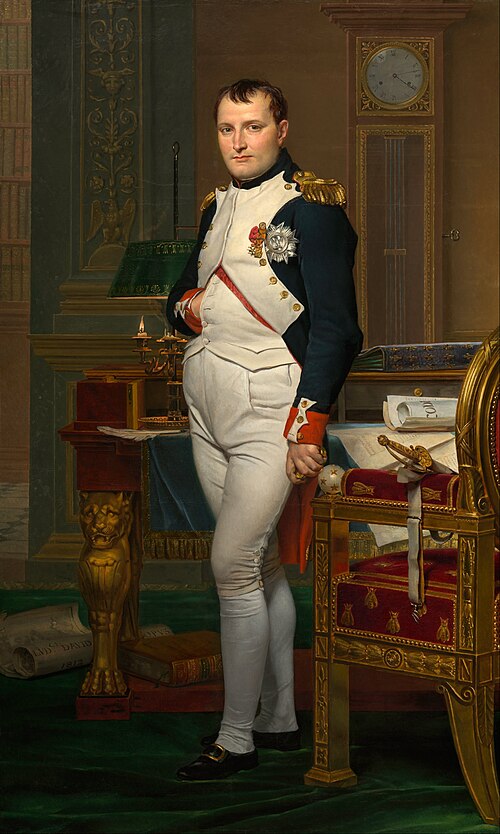
Napoleon Bonaparte
General · Modern
82.4Total
Basic Information
Born
1566
1769
Died
1603
1821
Era
Modern
Modern
Nationality
Ottoman Empire
France
Occupation
Emperor
General
Civilization
Middle Eastern
Western
Score Comparison
Military (10%)
38.5
94.0
Political (20%)
44.7
75.0
Influence (20%)
66.1
82.0
Legacy (20%)
52.3
78.0
Leadership (15%)
42.1
80.0
Strategy (15%)
57.0
93.0
TOTAL
51.3
82.4
Rankings
🥇
Napoleon BonaparteLeader
Mil: 94.0Pol: 75.0Inf: 82.0
82.4
🥈
Mehmed III
Mil: 38.5Pol: 44.7Inf: 66.1
51.3
+31.1 behind
How This Comparison Works
Algorithm
Each figure is scored on 6 dimensions (0—100 scale) based on structured historical data: Military (10%), Political (20%), Influence (20%), Legacy (20%), Leadership (15%), Strategy (15%). The weighted total produces the final ranking.
Data Sources
Scores are computed from structured sub-indicators in the database. Scale factors adjust for era (Ancient ×0.85, Modern ×1.0) and civilization size (Eastern ×1.05, Other ×0.80) to account for differences in population and military scale.
Maximum 3 Figures
Comparisons are limited to 2—3 figures to ensure readability and statistical meaningfulness.
Error Margins
±5 points per dimension — Sub-scores are derived from historical records with inherent uncertainty. Two figures within 5 points on a dimension should be considered roughly equivalent in that area.
Total Score Accuracy
±3 points overall — The weighted combination of 6 dimensions produces a total score with approximately ±3 points of uncertainty. Differences of less than 3 points are not statistically significant— the figures are effectively tied.
Known Limitations
- Historical records are incomplete and uneven across civilizations
- Figures from oral-tradition societies may be underrepresented
- Occupation labels can misclassify multi-role figures
- Scores measure capability and impact, not moral character
- Quantitative scoring is a comparison tool, not absolute truth
Capability Radar
Military (10%) — Battles & Warfare
Battles
30
95
Win Rate
40
90
Expansion
20
95
Political (20%) — Governance & Reform
Reform
10
95
Diplomacy
30
80
Economy
20
85
Influence (20%) — Cultural & Global Reach
Cultural
20
85
Global
20
90
Legacy (20%) — Historical Impact
Historical
30
95
Longevity
20
90
Leadership (15%) — Power & Stability
Tenure
40
85
Stability
20
70
Strategy (15%) — Tactics & Innovation
Strategy
30
95
Tactics
30
98
Reform
10
92
Analysis will be generated on first visit.
Scores and timeline are available below. The page will refresh automatically when ready.
Mehmed III — Complete Timeline
1595 AD
Executed Nineteen Brothers at AccessionPolitical Action◆ Major
Upon ascending the throne, Mehmed III ordered the execution of his nineteen brothers to eliminate potential rivals. This was the largest single fratricide in Ottoman history, following the tradition of Mehmed II's law of fratricide. It shocked the court and populace.
FratricideSuccessionOttoman Law
Impact: nationaltragic
1596 AD
Battle of KeresztesWar◆ Major
Mehmed III personally led the Ottoman army to victory against the Habsburg forces at Keresztes in Hungary. Despite initial setbacks, the Ottomans won, securing control over much of Hungary. This was the last time an Ottoman sultan personally commanded a campaign.
Long Turkish WarHabsburgsHungary
Impact: regional
1598 AD
Suppressed the Celali RebellionsWar
Mehmed III's reign saw the outbreak of the Celali rebellions, a series of uprisings by Anatolian peasants and soldiers. The government sent forces to suppress them, but the rebellions continued into the next century, weakening central authority.
Celali RebellionsAnatoliaInternal Conflict
Impact: nationaldestructive
1603 AD
Death of Safiye Sultan's InfluencePolitical Action
Mehmed III died in 1603, ending the direct influence of his mother Safiye Sultan over the court. She had been a dominant figure during his reign, but after his death, her power waned as the new sultan Ahmed I took a different approach.
Safiye SultanSultanate of WomenCourt Politics
Impact: national
Similar Comparisons
Comments & Discussion
No comments yet. Be the first to share your thoughts!