Loading...
This comparison has not been analyzed yet.
One-time AI generation (~1 minute). Scores and timeline are already available below.
Mikheil Saakashvili vs Vladimir Meciar
Mikheil Saakashvili leads by 3.3 pts · 2 figures compared
…

Mikheil Saakashvili
Politician · Modern
53.9Total
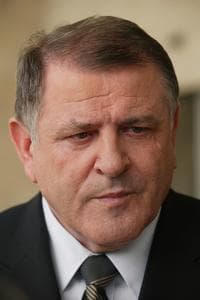
Vladimir Meciar
Politician · Modern
50.6Total
Basic Information
Born
1967
1942
Died
—
—
Era
Modern
Modern
Nationality
Georgia
Slovakia
Occupation
Politician
Politician
Civilization
Western
Western
Score Comparison
Military (10%)
36.6
35.5
Political (20%)
53.8
48.0
Influence (20%)
57.2
51.0
Legacy (20%)
45.8
40.0
Leadership (15%)
74.0
74.0
Strategy (15%)
53.0
60.0
TOTAL
53.9
50.6
Mikheil Saakashvili — Complete Timeline
2003 AD
Rose RevolutionPolitical Action
Saakashvili led mass protests against disputed parliamentary elections, culminating in the peaceful Rose Revolution. President Eduard Shevardnadze resigned, and Saakashvili was elected President of Georgia in a landslide victory, promising democratic reforms and anti-corruption measures.
RevolutionGeorgiaDemocracy
Impact: nationalconstructive
2004 AD
Launched Anti-Corruption CampaignReform◆ Major
Saakashvili's government launched a sweeping anti-corruption campaign, firing corrupt officials, reforming the police, and simplifying bureaucracy. The campaign dramatically reduced petty corruption and improved public services, but was criticized for using heavy-handed methods against political opponents.
Anti-CorruptionReformGeorgia
Impact: nationalconstructive
2008 AD
Russo-Georgian WarWar
Saakashvili ordered a military offensive to regain control of the breakaway region of South Ossetia. Russia responded with a full-scale invasion of Georgia, defeating the Georgian military and occupying parts of the country. The war ended with a ceasefire, but Georgia lost control of South Ossetia and Abkhazia.
WarRussiaGeorgiaSouth Ossetia
Impact: regionaldestructive
2013 AD
Lost Presidential ElectionPolitical Action◆ Major
Saakashvili's term as President ended, and he was constitutionally barred from running again. His party lost the presidential election to Giorgi Margvelashvili of the Georgian Dream coalition, marking a peaceful transfer of power and the end of Saakashvili's era.
ElectionGeorgiaPower Transfer
Impact: national
2017 AD
Arrested in UkrainePolitical Action◆ Major
Saakashvili, who had been granted Ukrainian citizenship and appointed governor of Odessa, was arrested in Kyiv during a protest against President Petro Poroshenko. He was accused of aiding a criminal organization and plotting a coup, charges he denied. The arrest highlighted his turbulent post-presidency.
UkraineArrestPolitical Conflict
Impact: regionaltragic
Vladimir Meciar — Complete Timeline
1993 AD
First term as Prime Minister of SlovakiaPolitical Action◆ Major
Meciar became the first Prime Minister of independent Slovakia after the dissolution of Czechoslovakia. His government pursued nationalist policies, centralized power, and clashed with President Michal Kovac, leading to political instability.
IndependenceNationalismCentralization
Impact: national
1995 AD
Abduction of Michal Kovac's sonPolitical Action◆ Major
The son of President Michal Kovac was abducted and taken to Austria. Meciar's government was widely accused of involvement, though he denied it. The incident deepened the political crisis and damaged Slovakia's international reputation.
AbductionPolitical CrisisScandal
Impact: nationaldestructive
1997 AD
Referendum on NATO membership blockedPolitical Action◆ Major
Meciar's government blocked a referendum on NATO membership, contributing to Slovakia's exclusion from the first round of NATO enlargement. This decision was criticized as undermining Slovakia's Euro-Atlantic integration.
NATOReferendumIntegration
Impact: nationaldestructive
1998 AD
Loss of power in 1998 electionsPolitical Action
Meciar's party lost the parliamentary elections to a reformist coalition led by Mikulas Dzurinda. The defeat ended his third term as Prime Minister and marked a shift toward pro-Western reforms in Slovakia.
ElectionPolitical ChangeReform
Impact: national
This comparison has not been analyzed yet.
One-time AI generation (~1 minute). Scores and timeline are already available below.
Rankings
🥇
Mikheil SaakashviliLeader
Mil: 36.6Pol: 53.8Inf: 57.2
53.9
🥈
Vladimir Meciar
Mil: 35.5Pol: 48.0Inf: 51.0
50.6
+3.3 behind
How This Comparison Works
Algorithm
Each figure is scored on 6 dimensions (0—100 scale) based on structured historical data: Military (10%), Political (20%), Influence (20%), Legacy (20%), Leadership (15%), Strategy (15%). The weighted total produces the final ranking.
Data Sources
Scores are computed from structured sub-indicators in the database. Scale factors adjust for era (Ancient ×0.85, Modern ×1.0) and civilization size (Eastern ×1.05, Other ×0.80) to account for differences in population and military scale.
Maximum 3 Figures
Comparisons are limited to 2—3 figures to ensure readability and statistical meaningfulness.
Error Margins
±5 points per dimension — Sub-scores are derived from historical records with inherent uncertainty. Two figures within 5 points on a dimension should be considered roughly equivalent in that area.
Total Score Accuracy
±3 points overall — The weighted combination of 6 dimensions produces a total score with approximately ±3 points of uncertainty. Differences of less than 3 points are not statistically significant— the figures are effectively tied.
Known Limitations
- Historical records are incomplete and uneven across civilizations
- Figures from oral-tradition societies may be underrepresented
- Occupation labels can misclassify multi-role figures
- Scores measure capability and impact, not moral character
- Quantitative scoring is a comparison tool, not absolute truth
Capability Radar
Military (10%) — Battles & Warfare
Battles
5
47
Win Rate
5
53
Expansion
5
52
Political (20%) — Governance & Reform
Reform
65
45
Diplomacy
60
40
Economy
50
35
Influence (20%) — Cultural & Global Reach
Cultural
40
25
Global
45
20
Legacy (20%) — Historical Impact
Historical
45
30
Longevity
30
20
Leadership (15%) — Power & Stability
Tenure
55
65
Stability
30
20
Strategy (15%) — Tactics & Innovation
Strategy
5
53
Tactics
5
58
Reform
10
61
Similar Comparisons
Comments & Discussion
No comments yet. Be the first to share your thoughts!