Loading...
Milan Kucan vs Nilo Pecanha
Milan Kucan leads by 7.8 pts · 2 figures compared
…
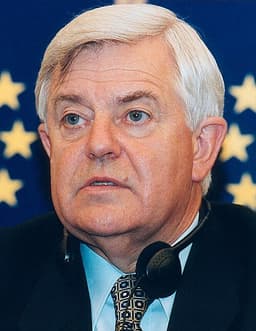
Milan Kucan
Politician · Modern
54.0Total

Nilo Pecanha
Politician · Modern
46.2Total
Basic Information
Born
1941
1867
Died
—
1924
Era
Modern
Modern
Nationality
Slovenia
Brazil
Occupation
Politician
Politician
Civilization
Western
Western
Score Comparison
Military (10%)
50.0
20.3
Political (20%)
62.7
43.7
Influence (20%)
53.3
55.7
Legacy (20%)
45.0
47.5
Leadership (15%)
72.0
51.9
Strategy (15%)
41.8
40.1
TOTAL
54.0
46.2
Milan Kucan — Complete Timeline
1991 AD
Ten-Day WarWar◆ Major
As president, Ku
War of IndependenceYugoslav Wars
Impact: regionalconstructive
Election as President of SloveniaPolitical Action
Kučan was elected the first president of independent Slovenia after the country declared independence from Yugoslavia. He led the nation through the Ten-Day War and the transition to democracy.
IndependenceSlovenia
Impact: regionalconstructive
2002 AD
End of PresidencyPolitical Action
Kučan completed his second term as president and stepped down, having served two five-year terms. He was succeeded by Janez Drnovšek.
PresidencyTransition
Impact: national
Nilo Pecanha — Complete Timeline
1909 AD
Implemented the 'Peçanha Law' (Lei Peçanha)Reform
Peçanha signed a law reorganizing the Brazilian Navy, including the creation of the Naval School and the establishment of new naval districts. This reform aimed to modernize the navy and improve its administrative structure.
Naval ReformMilitaryModernization
Impact: nationalconstructive
Assumed the Presidency of BrazilPolitical Action◆ Major
Nilo Peçanha became President of Brazil after the death of President Afonso Pena. He served from 1909 to 1910, becoming the first Afro-Brazilian to hold the office. His presidency was a transitional period in the First Brazilian Republic.
PresidencyFirst Afro-Brazilian PresidentTransition
Impact: national
1910 AD
Supported the 'Salvationist' Intervention in BahiaPolitical Action
Peçanha authorized federal intervention in the state of Bahia to suppress a rebellion led by local oligarchs. This action was part of the broader 'Salvationist' movement to reduce the power of traditional state elites in the Northeast.
Federal InterventionSalvationist MovementOligarchy
Impact: regional
1912 AD
Elected Senator for Rio de JaneiroPolitical Action
After his presidency, Pe
SenatePost-PresidencyPolitics
Impact: national
Expert Analysis
Origins
Milan Kučan was born in 1941 in Križevci, Slovenia, then part of Yugoslavia. He studied law at the University of Ljubljana and became active in the League of Communists of Slovenia. His early career involved party administration, rising through the ranks as a pragmatic communist reformer.
Nilo Peçanha was born in 1867 in Campos dos Goytacazes, Brazil, to a poor family of mixed African and Portuguese descent. He studied law at the Faculdade de Direito de São Paulo and became a lawyer and journalist. Despite racial prejudice, he entered politics as a member of the Republican Party of Rio de Janeiro.
Rise to Power
Kučan rose to prominence as a reformist within the Slovenian communist party. In 1986, he became President of the Presidency of the Socialist Republic of Slovenia, a key position. He skillfully navigated the dissolution of Yugoslavia, pushing for democratic reforms and Slovenia's independence. In December 1990, he was elected President of Slovenia in the first multi-party elections, with 58.4% of the vote. His leadership during the Ten-Day War in June-July 1991 secured Slovenia's independence from the Yugoslav People's Army.
Peçanha's rise was slower. He served as governor of Rio de Janeiro (1903-1906) and then as Vice President under Afonso Pena. When Pena died in 1909, Peçanha assumed the presidency, becoming the first Afro-Brazilian head of state. His ascension was controversial; many elites opposed him due to his race. He served only 18 months, until 1910.
Leadership & Governance
Kučan governed as a consensus-builder, focusing on integrating Slovenia into European institutions. He oversaw the transition from socialism to democracy, implementing market reforms and stabilizing the currency. His leadership score of 72.0 reflects his ability to unite a small nation during a volatile period. He maintained neutrality in the Balkan wars, prioritizing Slovenia's security.
Peçanha's governance was marked by efforts to modernize the navy and suppress oligarchic rebellions. He implemented the 'Peçanha Law' to reorganize the navy, but his short term limited broader reforms. His political score of 43.7 indicates limited effectiveness. He supported federal intervention in Bahia (Salvationist movement) to break the power of local oligarchs, but faced opposition from coffee elites.
Triumph & Tragedy
Kučan's greatest triumph was securing Slovenia's independence with minimal bloodshed. The Ten-Day War ended with only 76 casualties. He also led Slovenia into the United Nations and the European Union. His tragedy was the economic hardship during the transition, with unemployment rising to 14% in the 1990s. His legacy score of 45.0 suggests a modest long-term impact.
Peçanha's triumph was breaking racial barriers: he remains a symbol of Afro-Brazilian achievement. His tragedy was his short, ineffective presidency. He failed to enact lasting reforms; his naval reorganization had limited effect. His total score of 46.2 reflects his marginal impact.
Character & Destiny
Kučan was pragmatic and cautious, avoiding confrontation. He resigned from the communist party in 1989 to embrace democracy. His character shaped Slovenia's peaceful transition. Historians credit him with strategic patience (score 41.8).
Peçanha was determined but constrained by racism and a weak political base. His presidency was a historical accident; his destiny was to be a footnote in Brazilian history. His strategy score of 40.1 indicates reactive rather than proactive leadership.
Legacy
Kučan's legacy is as the founding father of independent Slovenia. He established democratic institutions and led the country to EU membership. However, his influence is limited to Slovenia's early years.
Peçanha's legacy is symbolic: he is remembered as the first Afro-Brazilian president, but his actual policies had little lasting impact. His influence score of 55.7 reflects his symbolic importance.
Conclusion
Milan Kučan had a greater impact than Nilo Peçanha. Kučan's leadership (72.0) and political skill (62.7) directly shaped a nation's existence and trajectory. Peçanha's presidency was too brief and constrained to achieve substantial change. While Peçanha broke a racial barrier, Kučan created a new country. The data supports Kučan's higher total score of 54.0 versus Peçanha's 46.2. Kučan's impact on Slovenia's sovereignty and European integration is concrete; Peçanha's legacy remains largely symbolic.
Rankings
🥇
Milan KucanLeader
Mil: 50.0Pol: 62.7Inf: 53.3
54.0
🥈
Nilo Pecanha
Mil: 20.3Pol: 43.7Inf: 55.7
46.2
+7.8 behind
How This Comparison Works
Algorithm
Each figure is scored on 6 dimensions (0—100 scale) based on structured historical data: Military (10%), Political (20%), Influence (20%), Legacy (20%), Leadership (15%), Strategy (15%). The weighted total produces the final ranking.
Data Sources
Scores are computed from structured sub-indicators in the database. Scale factors adjust for era (Ancient ×0.85, Modern ×1.0) and civilization size (Eastern ×1.05, Other ×0.80) to account for differences in population and military scale.
Maximum 3 Figures
Comparisons are limited to 2—3 figures to ensure readability and statistical meaningfulness.
Error Margins
±5 points per dimension — Sub-scores are derived from historical records with inherent uncertainty. Two figures within 5 points on a dimension should be considered roughly equivalent in that area.
Total Score Accuracy
±3 points overall — The weighted combination of 6 dimensions produces a total score with approximately ±3 points of uncertainty. Differences of less than 3 points are not statistically significant— the figures are effectively tied.
Known Limitations
- Historical records are incomplete and uneven across civilizations
- Figures from oral-tradition societies may be underrepresented
- Occupation labels can misclassify multi-role figures
- Scores measure capability and impact, not moral character
- Quantitative scoring is a comparison tool, not absolute truth
Capability Radar
Military (10%) — Battles & Warfare
Battles
29
24
Win Rate
31
27
Expansion
35
29
Political (20%) — Governance & Reform
Reform
55
35
Diplomacy
65
40
Economy
50
30
Influence (20%) — Cultural & Global Reach
Cultural
30
45
Global
30
30
Legacy (20%) — Historical Impact
Historical
40
50
Longevity
30
35
Leadership (15%) — Power & Stability
Tenure
60
20
Stability
60
25
Strategy (15%) — Tactics & Innovation
Strategy
38
30
Tactics
40
34
Reform
42
40
Similar Comparisons
Comments & Discussion
No comments yet. Be the first to share your thoughts!