Loading...
Miyoshi Nagayoshi vs Zhu De
Zhu De leads by 7.8 pts · 2 figures compared
…

Miyoshi Nagayoshi
General · Modern
56.9Total
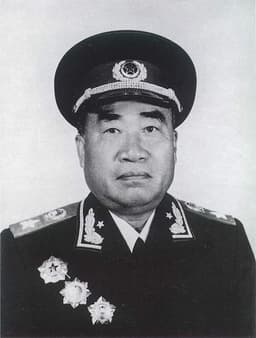
Zhu De
General · Modern
64.7Total
Basic Information
Born
1522
1886
Died
1564
1976
Era
Modern
Modern
Nationality
Japan
China
Occupation
General
General
Civilization
Eastern
Eastern
Score Comparison
Military (10%)
74.7
78.0
Political (20%)
45.0
70.0
Influence (20%)
56.4
40.0
Legacy (20%)
49.2
70.0
Leadership (15%)
72.0
78.0
Strategy (15%)
55.0
72.0
TOTAL
56.9
64.7
Miyoshi Nagayoshi — Complete Timeline
1527 AD
Battle of Katsura RiverWar
Nagayoshi fought alongside Hosokawa Harumoto against Hosokawa Takakuni at the Battle of Katsura River. Their victory led to Takakuni's defeat and Nagayoshi's rise in power.
BattleVictoryHosokawa
Impact: regional
1549 AD
Seized power in KyotoPolitical Action◆ Major
Nagayoshi defeated Hosokawa Harumoto and seized control of Kyoto and the Ashikaga shogunate. He became the de facto ruler of the capital region, displacing the Hosokawa clan.
KyotoShogunatePower seizure
Impact: national
1564 AD
Conflict with the Miyoshi TriumvirateWar◆ Major
Nagayoshi died during a conflict with the Miyoshi Triumvirate, a group of his former retainers who rebelled. His death led to the decline of the Miyoshi clan's power.
MiyoshiRebellionDeath
Impact: regionaltragic
Zhu De — Complete Timeline
1927 AD
Led the Nanchang UprisingWar
Zhu De was a key commander in the Nanchang Uprising, the first major armed revolt by the Communist Party against the Nationalists. Though defeated, it marked the founding of the Red Army.
Chinese Civil WarRed Army Founding
Impact: national
1928 AD
Jinggangshan Reunion with Mao ZedongWar◆ Major
Zhu De led his surviving forces to Jinggangshan to join Mao Zedong's base. This merger created the Fourth Red Army, with Zhu as commander and Mao as political commissar, forming a long-term partnership.
Red ArmyBase Area
Impact: nationalconstructive
1946 AD
Appointed Commander-in-Chief of the People's Liberation ArmyPolitical Action◆ Major
Zhu De was named Commander-in-Chief of the PLA during the Chinese Civil War. He directed military strategy that led to the defeat of the Nationalists and the establishment of the People's Republic.
Chinese Civil WarMilitary Leadership
Impact: nationalconstructive
1967 AD
Purged During the Cultural RevolutionPolitical Action◆ Major
Zhu De was criticized and marginalized by Red Guards during the Cultural Revolution. He was accused of being a 'capitalist roader' and stripped of effective power, though he retained his titles.
Cultural RevolutionPurge
Impact: nationaldestructive
Expert Analysis
Origins
Miyoshi Nagayoshi (1522-1564) was born into a samurai family in Awa Province, Japan. His father, Miyoshi Motonaga, was a powerful daimyo who served the Hosokawa clan. Nagayoshi inherited leadership at age 17 after his father's death in battle, receiving military training from a young age. His early years were defined by the chaos of the Sengoku period, where local lords vied for control.
Zhu De (1886-1976) was born into a poor peasant family in Yilong County, Sichuan, China. Despite poverty, he received a classical education and later attended the Yunnan Military Academy, graduating in 1911. He served in the Beiyang Army under warlords before turning to communism. His formative experiences included exposure to revolutionary ideas and the failure of the 1911 Revolution to unify China.
Rise to Power
Nagayoshi rose by defeating Hosokawa Harumoto in 1549, seizing Kyoto and the Ashikaga shogunate. He allied with the Hosokawa initially, winning the Battle of Katsura River in 1527 alongside Harumoto against Hosokawa Takakuni. By 1550, he controlled the capital region, becoming de facto ruler. His power peaked around 1560, but he faced rebellion from his own retainers, the Miyoshi Triumvirate.
Zhu De's rise began with the Nanchang Uprising on August 1, 1927, where he commanded troops against Nationalists. Though defeated, he led survivors to Jinggangshan in 1928, merging with Mao Zedong's forces to form the Fourth Red Army, with Zhu as commander. He became Commander-in-Chief of the People's Liberation Army in 1946, directing campaigns that defeated the Nationalists by 1949. His political score of 70.0 reflects his role in the Communist hierarchy.
Leadership & Governance
Nagayoshi ruled Kyoto through military force and alliances, but his governance was unstable. He failed to establish a lasting administrative structure, relying on personal loyalty. His leadership score of 72.0 reflects tactical skill but poor political consolidation. In contrast, Zhu De's leadership score of 78.0 stems from his ability to build a disciplined army and integrate with Mao's political strategy. Zhu emphasized guerrilla warfare and mass mobilization, as seen in the Long March (1934-1935).
Triumph & Tragedy
Nagayoshi's greatest triumph was seizing Kyoto and controlling the shogunate, a rare feat for a daimyo. His tragedy came in 1564 when he died during the Miyoshi Triumvirate rebellion, leading to his clan's decline. His military score of 74.7 reflects battlefield success but strategic failure in retaining power.
Zhu De's triumph was co-founding the Red Army and leading it to victory in the Chinese Civil War, scoring 78.0 in military. His tragedy occurred during the Cultural Revolution (1966-1976), when he was purged and marginalized, accused of being a 'capitalist roader'. He lost effective power but was rehabilitated after Mao's death.
Character & Destiny
Nagayoshi was ambitious and ruthless, typical of Sengoku lords, but his overreliance on personal bonds led to betrayal. His character score of 56.9 total reflects a rise-and-fall pattern. Zhu De was disciplined and pragmatic, willing to subordinate himself to Mao's political leadership. His character allowed him to survive political purges, though he suffered in his final decade.
Legacy
Nagayoshi's legacy is limited to the Sengoku period; his rule was ephemeral, with a legacy score of 49.2. He is remembered as a capable general but not a transformative figure. Zhu De's legacy is immense: he is honored as the founder of the Red Army and a key architect of Communist victory. His legacy score of 70.0 reflects his enduring impact on China's military and political systems.
Conclusion
Zhu De had greater impact, with a total score of 64.7 vs Nagayoshi's 56.9. His military score of 78.0 exceeds Nagayoshi's 74.7, and his political score of 70.0 dwarfs Nagayoshi's 45.0. While Nagayoshi was a notable Sengoku warlord, Zhu De helped shape modern China, influencing billions. The 7.8-point gap is decisive.
Rankings
🥇
Zhu DeLeader
Mil: 78.0Pol: 70.0Inf: 40.0
64.7
🥈
Miyoshi Nagayoshi
Mil: 74.7Pol: 45.0Inf: 56.4
56.9
+7.8 behind
How This Comparison Works
Algorithm
Each figure is scored on 6 dimensions (0—100 scale) based on structured historical data: Military (10%), Political (20%), Influence (20%), Legacy (20%), Leadership (15%), Strategy (15%). The weighted total produces the final ranking.
Data Sources
Scores are computed from structured sub-indicators in the database. Scale factors adjust for era (Ancient ×0.85, Modern ×1.0) and civilization size (Eastern ×1.05, Other ×0.80) to account for differences in population and military scale.
Maximum 3 Figures
Comparisons are limited to 2—3 figures to ensure readability and statistical meaningfulness.
Error Margins
±5 points per dimension — Sub-scores are derived from historical records with inherent uncertainty. Two figures within 5 points on a dimension should be considered roughly equivalent in that area.
Total Score Accuracy
±3 points overall — The weighted combination of 6 dimensions produces a total score with approximately ±3 points of uncertainty. Differences of less than 3 points are not statistically significant— the figures are effectively tied.
Known Limitations
- Historical records are incomplete and uneven across civilizations
- Figures from oral-tradition societies may be underrepresented
- Occupation labels can misclassify multi-role figures
- Scores measure capability and impact, not moral character
- Quantitative scoring is a comparison tool, not absolute truth
Capability Radar
Military (10%) — Battles & Warfare
Battles
75
85
Win Rate
70
80
Expansion
65
85
Political (20%) — Governance & Reform
Reform
50
75
Diplomacy
60
70
Economy
55
60
Influence (20%) — Cultural & Global Reach
Cultural
40
70
Global
30
75
Legacy (20%) — Historical Impact
Historical
50
85
Longevity
35
75
Leadership (15%) — Power & Stability
Tenure
55
80
Stability
45
75
Strategy (15%) — Tactics & Innovation
Strategy
68
85
Tactics
72
75
Reform
60
90
Similar Comparisons
Comments & Discussion
No comments yet. Be the first to share your thoughts!