Loading...
This comparison has not been analyzed yet.
One-time AI generation (~1 minute). Scores and timeline are already available below.
Moulay Ismail ibn Sharif vs Oba Esigie
Moulay Ismail ibn Sharif leads by 7.4 pts · 2 figures compared
…

Moulay Ismail ibn Sharif
Emperor · Modern
62.8Total
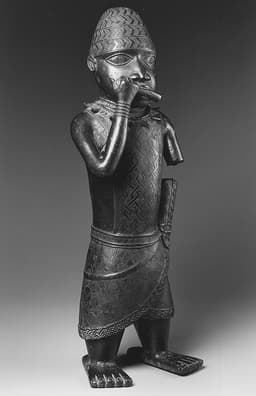
Oba Esigie
Emperor · Modern
55.4Total
Basic Information
Born
1645
1504
Died
1727
1550
Era
Modern
Modern
Nationality
Morocco
Benin Kingdom
Occupation
Emperor
Emperor
Civilization
Middle Eastern
Other
Score Comparison
Military (10%)
72.0
30.0
Political (20%)
59.3
72.0
Influence (20%)
59.0
57.2
Legacy (20%)
52.0
45.8
Leadership (15%)
80.0
66.0
Strategy (15%)
69.1
60.0
TOTAL
62.8
55.4
Moulay Ismail ibn Sharif — Complete Timeline
1672 AD
Accession as SultanPolitical Action◆ Major
Moulay Ismail ibn Sharif became Sultan of Morocco after the death of his brother Moulay al-Rashid. He inherited a fragmented kingdom and immediately began consolidating power through military campaigns and political purges.
Moroccan SultanateSuccessionAlaouite Dynasty
Impact: regional
1673 AD
Creation of the Black GuardReform◆ Major
Moulay Ismail established the Black Guard, a slave army composed of sub-Saharan Africans. This force became the backbone of his military, used to suppress rebellions and enforce his authority across Morocco, numbering up to 150,000 men.
Black GuardSlave ArmyMilitary Reform
Impact: regionaldestructive
1675 AD
Construction of MeknesCultural◆ Major
Moulay Ismail undertook the massive construction of Meknes as his imperial capital, building palaces, mosques, and fortifications. The project employed thousands of slaves and prisoners, creating a monumental city that rivaled Versailles in scale.
MeknesArchitectureImperial Capital
Impact: regionalconstructive
1681 AD
Conquest of the Atlantic PortsWar◆ Major
Moulay Ismail captured the European-held Atlantic ports of Mehdia, Larache, and Tangier from the Spanish and English. These victories expelled foreign powers from the Moroccan coast and secured trade routes for the sultanate.
Atlantic PortsEuropean ExpulsionMoroccan Sovereignty
Impact: regionalconstructive
1682 AD
Diplomatic Relations with FrancePolitical Action
Moulay Ismail exchanged ambassadors with King Louis XIV of France, seeking an alliance against Spain. The negotiations failed due to disagreements over trade and the release of Christian captives, but established diplomatic precedents.
DiplomacyFranceInternational Relations
Impact: regional
1685 AD
Suppression of Berber RevoltsWar
Moulay Ismail launched brutal campaigns against Berber tribes in the Atlas Mountains who resisted his rule. He destroyed villages, executed thousands, and imposed heavy taxes, but the revolts continued throughout his reign, draining resources.
Berber RevoltRepressionAtlas Campaign
Impact: regionaldestructive
1727 AD
Death and Succession CrisisPolitical Action◆ Major
Moulay Ismail died after a 55-year reign, leaving a power vacuum. His numerous sons fought a civil war for succession, leading to decades of instability and the decline of the Alaouite dynasty's power.
Succession CrisisCivil WarAlaouite Decline
Impact: regionaltragic
Oba Esigie — Complete Timeline
1515 AD
Welcome of Portuguese missionariesCultural◆ Major
Oba Esigie received Portuguese missionaries at his court in Benin City, allowing them to establish a mission. He learned Portuguese and engaged in diplomatic correspondence with the Portuguese king, opening trade relations.
DiplomacyChristianityBenin-Portugal
Impact: regionalconstructive
1516 AD
Battle of the Idah RiverWar◆ Major
Esigie defeated the Igala army at the Idah River, using Portuguese firearms for the first time in Benin warfare. This victory secured Benin's northern frontier and demonstrated the effectiveness of European weapons.
BattleFirearmsBenin
Impact: regional
1520 AD
Establishment of diplomatic mission to PortugalPolitical Action◆ Major
Esigie sent an ambassador to the Portuguese court in Lisbon, establishing formal diplomatic relations. This mission facilitated the exchange of goods, including ivory and pepper for European textiles and weapons.
DiplomacyTradeBenin-Portugal
Impact: regionalconstructive
1525 AD
Promotion of brass castingCultural
Esigie patronized the art of brass casting, commissioning numerous plaques and sculptures for the royal palace. This period saw the flourishing of Benin's famous brass art tradition, which depicted court life and historical events.
ArtBrass CastingBenin Culture
Impact: nationalconstructive
This comparison has not been analyzed yet.
One-time AI generation (~1 minute). Scores and timeline are already available below.
Rankings
🥇
Moulay Ismail ibn SharifLeader
Mil: 72.0Pol: 59.3Inf: 59.0
62.8
🥈
Oba Esigie
Mil: 30.0Pol: 72.0Inf: 57.2
55.4
+7.4 behind
How This Comparison Works
Algorithm
Each figure is scored on 6 dimensions (0—100 scale) based on structured historical data: Military (10%), Political (20%), Influence (20%), Legacy (20%), Leadership (15%), Strategy (15%). The weighted total produces the final ranking.
Data Sources
Scores are computed from structured sub-indicators in the database. Scale factors adjust for era (Ancient ×0.85, Modern ×1.0) and civilization size (Eastern ×1.05, Other ×0.80) to account for differences in population and military scale.
Maximum 3 Figures
Comparisons are limited to 2—3 figures to ensure readability and statistical meaningfulness.
Error Margins
±5 points per dimension — Sub-scores are derived from historical records with inherent uncertainty. Two figures within 5 points on a dimension should be considered roughly equivalent in that area.
Total Score Accuracy
±3 points overall — The weighted combination of 6 dimensions produces a total score with approximately ±3 points of uncertainty. Differences of less than 3 points are not statistically significant— the figures are effectively tied.
Known Limitations
- Historical records are incomplete and uneven across civilizations
- Figures from oral-tradition societies may be underrepresented
- Occupation labels can misclassify multi-role figures
- Scores measure capability and impact, not moral character
- Quantitative scoring is a comparison tool, not absolute truth
Capability Radar
Military (10%) — Battles & Warfare
Battles
85
40
Win Rate
80
45
Expansion
85
45
Political (20%) — Governance & Reform
Reform
70
55
Diplomacy
60
65
Economy
65
50
Influence (20%) — Cultural & Global Reach
Cultural
50
50
Global
45
35
Legacy (20%) — Historical Impact
Historical
65
45
Longevity
55
40
Leadership (15%) — Power & Stability
Tenure
95
60
Stability
40
55
Strategy (15%) — Tactics & Innovation
Strategy
80
55
Tactics
75
50
Reform
90
50
Similar Comparisons
Comments & Discussion
No comments yet. Be the first to share your thoughts!