Loading...
This comparison has not been analyzed yet.
One-time AI generation (~1 minute). Scores and timeline are already available below.
Mpande kaSenzangakhona vs Prempeh I
Mpande kaSenzangakhona leads by 6.6 pts · 2 figures compared
…

Mpande kaSenzangakhona
Emperor · Modern
56.2Total
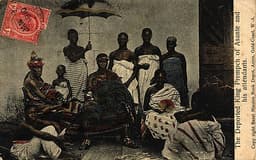
Prempeh I
Emperor · Modern
49.6Total
Basic Information
Born
1798
1870
Died
1872
1931
Era
Modern
Modern
Nationality
Zulu Kingdom
Ashanti Empire
Occupation
Emperor
Emperor
Civilization
Other
Other
Score Comparison
Military (10%)
50.0
22.6
Political (20%)
68.0
54.7
Influence (20%)
53.3
56.4
Legacy (20%)
45.8
47.5
Leadership (15%)
80.0
62.2
Strategy (15%)
42.3
38.6
TOTAL
56.2
49.6
Mpande kaSenzangakhona — Complete Timeline
1840 AD
Became Zulu King with Boer SupportPolitical Action
Mpande kaSenzangakhona became Zulu king in February 1840 after overthrowing his half-brother Dingane with the help of Boer forces. He agreed to cede land to the Boers in return for their support, establishing a cooperative relationship with the Natal Boers.
SuccessionBoer AllianceZulu Kingdom
Impact: regional
Ceded Land to BoersPolitical Action◆ Major
Mpande ceded large territories to the Boers, including the land that became the Natalia Republic, as part of his alliance with them. This land loss reduced Zulu territory but allowed Mpande to consolidate power internally and avoid further conflict with the Boers.
Land CessionBoer RepublicTerritorial Loss
Impact: regionaldestructive
1872 AD
Longest-Reigning Zulu KingOther◆ Major
Mpande reigned as Zulu king for 32 years, from 1840 to 1872, the longest reign of any Zulu monarch. His reign was marked by relative peace and stability, as he avoided major wars with European powers and focused on internal consolidation and economic development.
ReignStabilityLongevity
Impact: regionalconstructive
Died and Succession to CetshwayoPolitical Action◆ Major
Mpande died in October 1872, leading to a succession struggle between his sons Cetshwayo and Mbuyazi. Cetshwayo emerged victorious after the Battle of Ndondakusuka in 1856, but Mpande's death officially transferred power, setting the stage for the Anglo-Zulu War.
SuccessionCetshwayoAnglo-Zulu War
Impact: regional
Prempeh I — Complete Timeline
1895 AD
Fourth Anglo-Ashanti WarWar◆ Major
Prempeh I faced the Fourth Anglo-Ashanti War, where British forces invaded Ashanti to enforce a protectorate. The Ashanti were defeated, and Prempeh I was captured and exiled to the Seychelles.
Anglo-Ashanti WarBritish InvasionExile
Impact: regionaldestructive
1896 AD
Exile to the SeychellesPolitical Action◆ Major
After the British conquest of Ashanti, Prempeh I was deposed and exiled to the Seychelles along with his family. This exile ended Ashanti independence and incorporated the kingdom into the British Gold Coast colony.
ExileBritish ColonialismAshanti
Impact: nationaltragic
1924 AD
Return from exilePolitical Action◆ Major
Prempeh I was allowed to return to the Gold Coast after 28 years in exile. He was restored as a private citizen, not as Asantehene, but his return was a significant moment for Ashanti national pride.
ReturnExileAshanti
Impact: nationalconstructive
This comparison has not been analyzed yet.
One-time AI generation (~1 minute). Scores and timeline are already available below.
Rankings
🥇
Mpande kaSenzangakhonaLeader
Mil: 50.0Pol: 68.0Inf: 53.3
56.2
🥈
Prempeh I
Mil: 22.6Pol: 54.7Inf: 56.4
49.6
+6.6 behind
How This Comparison Works
Algorithm
Each figure is scored on 6 dimensions (0—100 scale) based on structured historical data: Military (10%), Political (20%), Influence (20%), Legacy (20%), Leadership (15%), Strategy (15%). The weighted total produces the final ranking.
Data Sources
Scores are computed from structured sub-indicators in the database. Scale factors adjust for era (Ancient ×0.85, Modern ×1.0) and civilization size (Eastern ×1.05, Other ×0.80) to account for differences in population and military scale.
Maximum 3 Figures
Comparisons are limited to 2—3 figures to ensure readability and statistical meaningfulness.
Error Margins
±5 points per dimension — Sub-scores are derived from historical records with inherent uncertainty. Two figures within 5 points on a dimension should be considered roughly equivalent in that area.
Total Score Accuracy
±3 points overall — The weighted combination of 6 dimensions produces a total score with approximately ±3 points of uncertainty. Differences of less than 3 points are not statistically significant— the figures are effectively tied.
Known Limitations
- Historical records are incomplete and uneven across civilizations
- Figures from oral-tradition societies may be underrepresented
- Occupation labels can misclassify multi-role figures
- Scores measure capability and impact, not moral character
- Quantitative scoring is a comparison tool, not absolute truth
Capability Radar
Military (10%) — Battles & Warfare
Battles
15
15
Win Rate
20
10
Expansion
10
10
Political (20%) — Governance & Reform
Reform
40
35
Diplomacy
60
45
Economy
30
30
Influence (20%) — Cultural & Global Reach
Cultural
40
50
Global
20
30
Legacy (20%) — Historical Impact
Historical
45
55
Longevity
40
40
Leadership (15%) — Power & Stability
Tenure
70
40
Stability
65
20
Strategy (15%) — Tactics & Innovation
Strategy
15
25
Tactics
10
20
Reform
10
30
Similar Comparisons
Comments & Discussion
No comments yet. Be the first to share your thoughts!