Loading...
This comparison has not been analyzed yet.
One-time AI generation (~1 minute). Scores and timeline are already available below.
Mu Chong vs Sergey Shoygu
Sergey Shoygu leads by 11.4 pts · 2 figures compared
…

Mu Chong
General · Modern
42.3Total
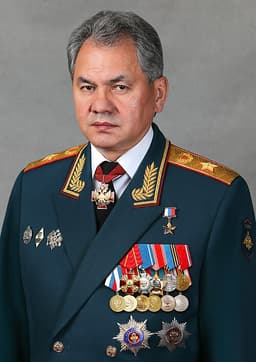
Sergey Shoygu
General · Modern
53.7Total
Basic Information
Born
1905
1955
Died
1951
—
Era
Modern
Modern
Nationality
North Korea
Russia
Occupation
General
General
Civilization
Eastern
Western
Score Comparison
Military (10%)
50.0
20.0
Political (20%)
30.8
68.0
Influence (20%)
51.8
59.0
Legacy (20%)
39.2
43.3
Leadership (15%)
40.4
66.0
Strategy (15%)
38.6
60.0
TOTAL
42.3
53.7
Mu Chong — Complete Timeline
1925 AD
Joined the Chinese Communist PartyPolitical Action◆ Major
Mu Chong joined the Chinese Communist Party and became a veteran of the Chinese Civil War. He fought alongside Mao Zedong's forces, gaining military experience that would later be crucial for building the North Korean military.
ChinaChinese Communist PartyCivil War
Impact: regional
1945 AD
Returned to Korea and helped build the KPAPolitical Action◆ Major
Mu Chong returned to Korea after World War II and played a key role in establishing the Korean People's Army. His experience from the Chinese Civil War was instrumental in training and organizing North Korean military forces.
North KoreaKorean People's ArmyMilitary Building
Impact: nationalconstructive
1950 AD
Purged by Kim Il-sungPolitical Action◆ Major
Mu Chong was purged by Kim Il-sung during the Korean War, accused of factionalism and disloyalty. He was executed or died in captivity, reflecting the intense power struggles within the North Korean leadership.
North KoreaPurgeKim Il-sung
Impact: nationaltragic
Sergey Shoygu — Complete Timeline
1991 AD
Appointed Minister of Emergency SituationsPolitical Action◆ Major
Shoygu was appointed Minister of Emergency Situations of the Russian Soviet Federative Socialist Republic in 1991, later becoming the head of the federal ministry. He built the agency into a professional disaster response organization, serving until 2012.
Emergency ServicesDisaster Response
Impact: nationalconstructive
2012 AD
Appointed Minister of Defence of RussiaPolitical Action◆ Major
Sergey Shoygu was appointed Minister of Defence of Russia in November 2012, succeeding Anatoly Serdyukov. He became the longest-serving defense minister in modern Russian history, overseeing military modernization and operations in Syria and Ukraine.
DefenceMilitary
Impact: global
Appointed Governor of Moscow OblastPolitical Action
Shoygu served as Governor of Moscow Oblast from May to November 2012, before being appointed Defence Minister. His brief tenure focused on regional development and infrastructure.
GovernorshipMoscow Oblast
Impact: regional
2015 AD
Oversaw the Russian military intervention in SyriaWar
As Defence Minister, Shoygu oversaw the Russian military intervention in Syria starting in September 2015. The operation supported the Assad government against rebel forces and ISIS, marking Russia's largest foreign military engagement since the Soviet era.
SyriaMilitary Intervention
Impact: global
2022 AD
Led the Russian invasion of UkraineWar
Shoygu, as Defence Minister, was a key figure in planning and executing the Russian invasion of Ukraine that began in February 2022. The invasion led to widespread international sanctions and a protracted war.
UkraineInvasion
Impact: globaldestructive
This comparison has not been analyzed yet.
One-time AI generation (~1 minute). Scores and timeline are already available below.
Rankings
🥇
Sergey ShoyguLeader
Mil: 20.0Pol: 68.0Inf: 59.0
53.7
🥈
Mu Chong
Mil: 50.0Pol: 30.8Inf: 51.8
42.3
+11.4 behind
How This Comparison Works
Algorithm
Each figure is scored on 6 dimensions (0—100 scale) based on structured historical data: Military (10%), Political (20%), Influence (20%), Legacy (20%), Leadership (15%), Strategy (15%). The weighted total produces the final ranking.
Data Sources
Scores are computed from structured sub-indicators in the database. Scale factors adjust for era (Ancient ×0.85, Modern ×1.0) and civilization size (Eastern ×1.05, Other ×0.80) to account for differences in population and military scale.
Maximum 3 Figures
Comparisons are limited to 2—3 figures to ensure readability and statistical meaningfulness.
Error Margins
±5 points per dimension — Sub-scores are derived from historical records with inherent uncertainty. Two figures within 5 points on a dimension should be considered roughly equivalent in that area.
Total Score Accuracy
±3 points overall — The weighted combination of 6 dimensions produces a total score with approximately ±3 points of uncertainty. Differences of less than 3 points are not statistically significant— the figures are effectively tied.
Known Limitations
- Historical records are incomplete and uneven across civilizations
- Figures from oral-tradition societies may be underrepresented
- Occupation labels can misclassify multi-role figures
- Scores measure capability and impact, not moral character
- Quantitative scoring is a comparison tool, not absolute truth
Capability Radar
Military (10%) — Battles & Warfare
Battles
15
45
Win Rate
20
40
Expansion
10
30
Political (20%) — Governance & Reform
Reform
15
55
Diplomacy
20
50
Economy
10
45
Influence (20%) — Cultural & Global Reach
Cultural
10
25
Global
10
40
Legacy (20%) — Historical Impact
Historical
15
30
Longevity
10
20
Leadership (15%) — Power & Stability
Tenure
20
75
Stability
15
40
Strategy (15%) — Tactics & Innovation
Strategy
20
40
Tactics
25
35
Reform
15
60
Similar Comparisons
Comments & Discussion
No comments yet. Be the first to share your thoughts!