Loading...
This comparison has not been analyzed yet.
One-time AI generation (~1 minute). Scores and timeline are already available below.
Mubarak al-Sabah vs Sisavang Vong
Mubarak al-Sabah leads by 0.0 pts · 2 figures compared
…
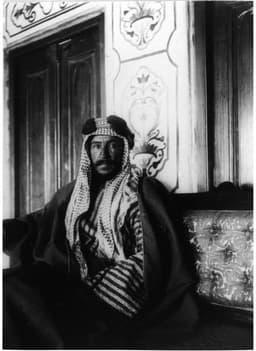
Mubarak al-Sabah
Emperor · Modern
56.8Total

Sisavang Vong
Emperor · Modern
56.8Total
Basic Information
Born
1837
1885
Died
1915
1959
Era
Modern
Modern
Nationality
Kuwait
Laos
Occupation
Emperor
Emperor
Civilization
Middle Eastern
Eastern
Score Comparison
Military (10%)
47.5
51.0
Political (20%)
70.0
61.3
Influence (20%)
56.4
53.3
Legacy (20%)
49.2
45.8
Leadership (15%)
72.0
80.0
Strategy (15%)
43.3
57.6
TOTAL
56.8
56.8
Mubarak al-Sabah — Complete Timeline
1896 AD
Assassination of Mubarak al-Sabah's BrothersPolitical Action◆ Major
Mubarak al-Sabah assassinated his half-brothers, Sheikh Muhammad and Sheikh Jarrah, to seize power as the ruler of Kuwait. This act ended the Al-Sabah succession dispute and established Mubarak as the sole authority, marking the beginning of his reign.
Kuwaiti SuccessionAssassinationPower Struggle
Impact: nationaldestructive
1899 AD
Signing of the Anglo-Kuwaiti Agreement of 1899Political Action◆ Major
Mubarak signed a treaty with Britain making Kuwait a British protectorate. Britain guaranteed Kuwait's security and autonomy in exchange for control over its foreign affairs. This agreement protected Kuwait from Ottoman and Saudi expansion.
British ProtectorateKuwaiti IndependenceDiplomacy
Impact: regional
1910 AD
Battle of HadiaWar◆ Major
Mubarak's forces defeated the Saudi-aligned Ikhwan at the Battle of Hadia. This victory secured Kuwait's southern borders and prevented Saudi expansion into Kuwaiti territory. It solidified Mubarak's control over the region.
Kuwait-Saudi WarBorder ConflictMilitary Victory
Impact: regional
Sisavang Vong — Complete Timeline
1904 AD
Accession to the Throne of Luang PrabangPolitical Action◆ Major
Sisavang Vong became king of Luang Prabang, a French protectorate, at age 19. His reign began under French colonial administration, with the king exercising limited authority over traditional Lao affairs while French officials controlled foreign policy and defense.
CoronationFrench ColonialismLuang Prabang
Impact: national
1947 AD
Unification of Laos under French RulePolitical Action◆ Major
Sisavang Vong agreed to the French-sponsored constitution that unified the three Lao kingdoms (Luang Prabang, Vientiane, Champasak) into the Kingdom of Laos. He became the first constitutional monarch of a unified Laos, though French control remained strong.
UnificationConstitutionFrench Indochina
Impact: nationalconstructive
1953 AD
Granting of Full Independence to LaosPolitical Action
Sisavang Vong signed the Franco-Lao Treaty of Friendship and Association, granting Laos full independence from France. The treaty ended 60 years of French colonial rule, though Laos remained in the French Union. The king became the sovereign head of an independent state.
IndependenceTreatyDecolonization
Impact: nationalprogressive
1959 AD
Death and SuccessionPolitical Action◆ Major
Sisavang Vong died at age 73 after a 55-year reign, the longest in Lao history. His son Savang Vatthana succeeded him as king. The transition occurred during the early stages of the Laotian Civil War, with the country increasingly divided between communist and royalist factions.
DeathSuccessionMonarchy
Impact: national
This comparison has not been analyzed yet.
One-time AI generation (~1 minute). Scores and timeline are already available below.
Rankings
🥇
Mubarak al-SabahLeader
Mil: 47.5Pol: 70.0Inf: 56.4
56.8
🥈
Sisavang Vong
Mil: 51.0Pol: 61.3Inf: 53.3
56.8
How This Comparison Works
Algorithm
Each figure is scored on 6 dimensions (0—100 scale) based on structured historical data: Military (10%), Political (20%), Influence (20%), Legacy (20%), Leadership (15%), Strategy (15%). The weighted total produces the final ranking.
Data Sources
Scores are computed from structured sub-indicators in the database. Scale factors adjust for era (Ancient ×0.85, Modern ×1.0) and civilization size (Eastern ×1.05, Other ×0.80) to account for differences in population and military scale.
Maximum 3 Figures
Comparisons are limited to 2—3 figures to ensure readability and statistical meaningfulness.
Error Margins
±5 points per dimension — Sub-scores are derived from historical records with inherent uncertainty. Two figures within 5 points on a dimension should be considered roughly equivalent in that area.
Total Score Accuracy
±3 points overall — The weighted combination of 6 dimensions produces a total score with approximately ±3 points of uncertainty. Differences of less than 3 points are not statistically significant— the figures are effectively tied.
Known Limitations
- Historical records are incomplete and uneven across civilizations
- Figures from oral-tradition societies may be underrepresented
- Occupation labels can misclassify multi-role figures
- Scores measure capability and impact, not moral character
- Quantitative scoring is a comparison tool, not absolute truth
Capability Radar
Military (10%) — Battles & Warfare
Battles
15
52
Win Rate
20
53
Expansion
35
57
Political (20%) — Governance & Reform
Reform
70
30
Diplomacy
75
60
Economy
60
25
Influence (20%) — Cultural & Global Reach
Cultural
40
30
Global
30
20
Legacy (20%) — Historical Impact
Historical
50
40
Longevity
45
35
Leadership (15%) — Power & Stability
Tenure
65
85
Stability
55
50
Strategy (15%) — Tactics & Innovation
Strategy
30
64
Tactics
25
63
Reform
40
68
Similar Comparisons
Comments & Discussion
No comments yet. Be the first to share your thoughts!