Loading...
Analysis will be generated on first visit.
Scores and timeline are available below. The page will refresh automatically when ready.
Muhammad Ali Jinnah vs Napoleon Bonaparte
Napoleon Bonaparte leads by 13.3 pts · 2 figures compared
…
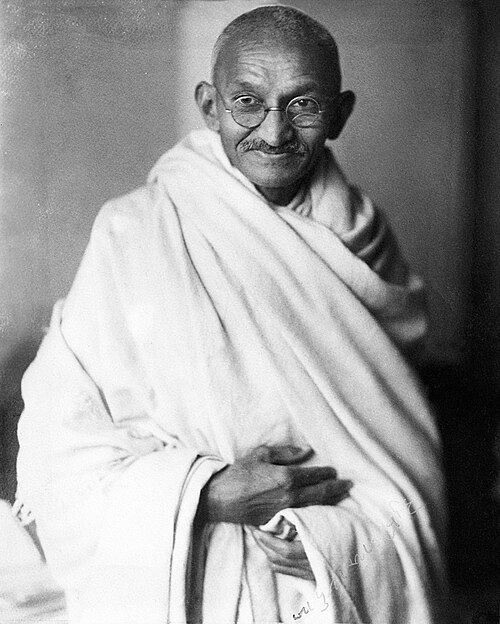
Muhammad Ali Jinnah
Politician · Modern
69.1Total
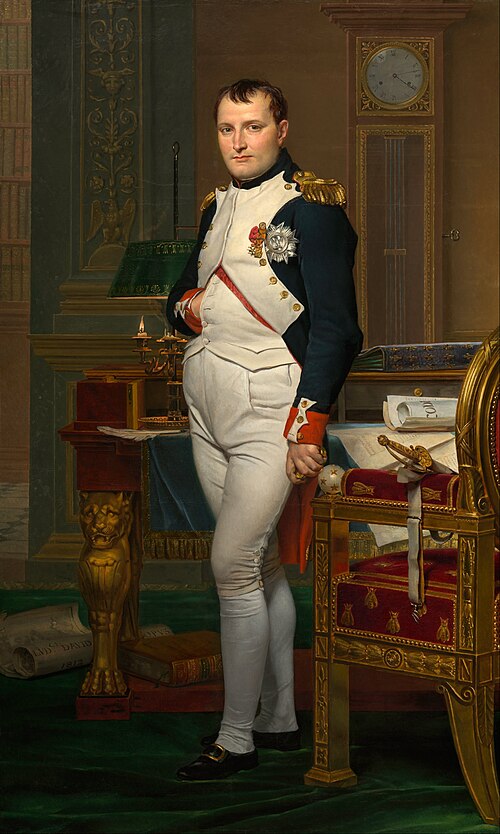
Napoleon Bonaparte
General · Modern
82.4Total
Basic Information
Born
1876
1769
Died
1948
1821
Era
Modern
Modern
Nationality
Pakistan
France
Occupation
Politician
General
Civilization
Indian
Western
Score Comparison
Military (10%)
34.3
94.0
Political (20%)
77.0
75.0
Influence (20%)
72.8
82.0
Legacy (20%)
74.5
78.0
Leadership (15%)
84.7
80.0
Strategy (15%)
54.1
93.0
TOTAL
69.1
82.4
Rankings
🥇
Napoleon BonaparteLeader
Mil: 94.0Pol: 75.0Inf: 82.0
82.4
🥈
Muhammad Ali Jinnah
Mil: 34.3Pol: 77.0Inf: 72.8
69.1
+13.3 behind
How This Comparison Works
Algorithm
Each figure is scored on 6 dimensions (0—100 scale) based on structured historical data: Military (10%), Political (20%), Influence (20%), Legacy (20%), Leadership (15%), Strategy (15%). The weighted total produces the final ranking.
Data Sources
Scores are computed from structured sub-indicators in the database. Scale factors adjust for era (Ancient ×0.85, Modern ×1.0) and civilization size (Eastern ×1.05, Other ×0.80) to account for differences in population and military scale.
Maximum 3 Figures
Comparisons are limited to 2—3 figures to ensure readability and statistical meaningfulness.
Error Margins
±5 points per dimension — Sub-scores are derived from historical records with inherent uncertainty. Two figures within 5 points on a dimension should be considered roughly equivalent in that area.
Total Score Accuracy
±3 points overall — The weighted combination of 6 dimensions produces a total score with approximately ±3 points of uncertainty. Differences of less than 3 points are not statistically significant— the figures are effectively tied.
Known Limitations
- Historical records are incomplete and uneven across civilizations
- Figures from oral-tradition societies may be underrepresented
- Occupation labels can misclassify multi-role figures
- Scores measure capability and impact, not moral character
- Quantitative scoring is a comparison tool, not absolute truth
Capability Radar
Military (10%) — Battles & Warfare
Battles
23
95
Win Rate
31
90
Expansion
34
95
Political (20%) — Governance & Reform
Reform
85
95
Diplomacy
90
80
Economy
40
85
Influence (20%) — Cultural & Global Reach
Cultural
70
85
Global
75
90
Legacy (20%) — Historical Impact
Historical
85
95
Longevity
75
90
Leadership (15%) — Power & Stability
Tenure
60
85
Stability
50
70
Strategy (15%) — Tactics & Innovation
Strategy
37
95
Tactics
39
98
Reform
43
92
Analysis will be generated on first visit.
Scores and timeline are available below. The page will refresh automatically when ready.
Muhammad Ali Jinnah — Complete Timeline
1929 AD
Fourteen Points of JinnahPolitical Action◆ Major
Jinnah presented fourteen constitutional reforms to the British government demanding safeguards for Muslim rights in India. The points rejected the Nehru Report and became the basis for the Muslim League's political platform.
Constitutional ReformMuslim RightsIndian Politics
Impact: national
1940 AD
Lahore ResolutionPolitical Action
Jinnah presided over the Muslim League session in Lahore where the resolution for separate Muslim states was passed. This formally demanded the creation of Pakistan, marking a turning point in the independence movement.
Pakistan MovementPartitionMuslim League
Impact: regional
1946 AD
Direct Action DayPolitical Action◆ Major
Jinnah called for a day of protest to demand Pakistan. The protest in Calcutta escalated into communal riots that killed over 4,000 people. This violence accelerated the partition process.
Communal ViolencePartitionCalcutta
Impact: nationaltragic
1947 AD
Independence of PakistanPolitical Action
Pakistan became an independent nation on August 14, 1947. Jinnah became its first Governor-General, delivering a famous speech about unity and democracy. The partition caused massive population transfers and violence.
IndependencePartitionFounding of Pakistan
Impact: global
Jinnah's Address to Constituent AssemblyPolitical Action◆ Major
Jinnah addressed the first Constituent Assembly of Pakistan, outlining his vision for a secular, democratic state where all citizens had equal rights regardless of religion. This speech remains influential in Pakistani politics.
ConstitutionSecularismPakistan Vision
Impact: nationalconstructive
Similar Comparisons
Comments & Discussion
No comments yet. Be the first to share your thoughts!