Loading...
Muhammad ibn Abd al-Karim al-Khattabi vs Pushpa Kamal Dahal
Pushpa Kamal Dahal leads by 8.3 pts · 2 figures compared
…
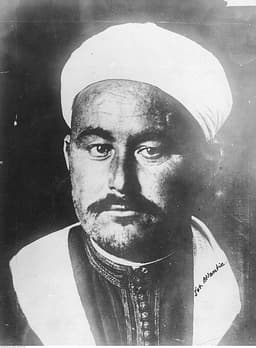
Muhammad ibn Abd al-Karim al-Khattabi
Revolutionary · Modern
41.7Total
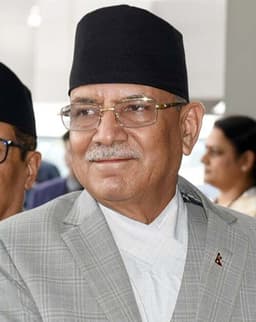
Pushpa Kamal Dahal
Revolutionary · Modern
50.0Total
Basic Information
Born
1854
1954
Died
1927
—
Era
Modern
Modern
Nationality
Sudan
Nepal
Occupation
Revolutionary
Revolutionary
Civilization
Other
Indian
Score Comparison
Military (10%)
47.5
35.0
Political (20%)
25.0
54.7
Influence (20%)
52.5
51.0
Legacy (20%)
40.0
40.8
Leadership (15%)
41.5
62.0
Strategy (15%)
38.3
60.0
TOTAL
41.7
50.0
Muhammad ibn Abd al-Karim al-Khattabi — Complete Timeline
1884 AD
Command at the Battle of El TebWar◆ Major
Muhammad ibn Abd al-Karim al-Khattabi led Mahdist forces at the Battle of El Teb against a British relief column. Although the Mahdists were defeated, the battle demonstrated their ability to challenge British military power in Sudan.
Mahdist WarBattle of El TebBritish Relief
Impact: regional
Participation in the Siege of KhartoumWar◆ Major
Al-Khattabi commanded Mahdist forces during the siege of Khartoum. His troops played a key role in the final assault that captured the city and killed General Gordon, contributing to the Mahdist victory.
Siege of KhartoumMahdist WarGordon's Death
Impact: regional
1899 AD
Capture by British ForcesWar◆ Major
Following the fall of the Mahdist state, al-Khattabi was captured by British forces. He was taken prisoner and later exiled, ending his military career and role in the Mahdist movement.
CaptureExileMahdist Defeat
Impact: regionaltragic
Pushpa Kamal Dahal — Complete Timeline
1996 AD
Launch of People's WarWar
Prachanda, as leader of the Communist Party of Nepal (Maoist), initiated a armed insurgency against the Nepalese state. The People's War began with attacks on police posts and government offices, escalating into a decade-long civil war.
InsurgencyCivil WarMaoist
Impact: nationaldestructive
2006 AD
Signing of Comprehensive Peace AccordPolitical Action◆ Major
Prachanda signed the Comprehensive Peace Accord with Prime Minister Girija Prasad Koirala, ending the civil war. The agreement committed the Maoists to lay down arms and join mainstream politics in exchange for integration into state institutions.
Peace TreatyCivil WarNepal
Impact: nationalconstructive
2008 AD
Election as Prime MinisterPolitical Action◆ Major
Following the Maoist victory in the Constituent Assembly elections, Prachanda became the first prime minister of the Federal Democratic Republic of Nepal. His tenure focused on integrating former Maoist combatants into the national army.
ElectionGovernmentRepublic
Impact: national
2009 AD
Resignation as Prime MinisterPolitical Action
Prachanda resigned as prime minister after a dispute with President Ram Baran Yadav over the dismissal of the army chief. The crisis highlighted tensions between the Maoists and the established political order.
ResignationPoliticsCrisis
Impact: national
Expert Analysis
Muhammad ibn Abd al-Karim al-Khattabi vs Pushpa Kamal Dahal
# The Revolutionary’s Crossroads: Prachanda and Al-Khattabi
In the mountains of Nepal, a schoolteacher named Pushpa Kamal Dahal was about to transform himself into Prachanda—the “Fierce One.” Half a world away and a century earlier, a Sudanese commander named Muhammad ibn Abd al-Karim al-Khattabi rode into battle against British Gatling guns, his faith in the Mahdi’s divine mission unshaken. Both men were revolutionaries who rose from obscurity to challenge established powers. Both led armies, signed peace accords, and tasted both victory and defeat. Yet their paths diverged dramatically: one became prime minister, the other a prisoner. Why? The answer lies not in their courage—both possessed it in abundance—but in the peculiar interplay of timing, strategy, and the nature of the states they fought.
Origins
Prachanda was born in 1954 into a poor Brahmin family in the hills of western Nepal. His childhood was marked by poverty—he once walked miles to school barefoot—and the rigid caste hierarchies of a Hindu kingdom. The 1950s and 1960s were a time of global ferment: Mao’s China, Ho Chi Minh’s Vietnam, and the Naxalite uprising in India all offered templates for revolution. Prachanda absorbed these influences as a young communist activist, eventually joining the underground Communist Party of Nepal. His was a revolution born of ideology, nurtured in universities and clandestine cells.
Al-Khattabi, born in 1854 in Sudan, came from a different world. He was a member of the Hadendoa tribe, a warrior people known for their fierce independence. Sudan in the late 19th century was a land of colonial exploitation, ruled by Ottoman-Egyptian elites who taxed peasants mercilessly. When Muhammad Ahmad declared himself the Mahdi—the guided one of Islamic prophecy—al-Khattabi found a cause that fused religious fervor with anti-colonial rage. His revolution was not Marxist but millenarian, not about class but about faith and liberation.
Rise to Power
Prachanda’s ascent was slow, patient, and organizational. He rose through the ranks of Nepal’s fractious communist movement, eventually becoming general secretary of the Communist Party of Nepal (Maoist) in 1996. That year, he launched the “People’s War” with a series of coordinated attacks on police posts. For a decade, his guerrilla army fought from the hills, using hit-and-run tactics, land mines, and political indoctrination. The turning point came in 2001, when the Nepalese royal family was massacred in a palace shooting—a stroke of fortune that destabilized the monarchy and created a power vacuum.
Al-Khattabi’s rise was swifter and more dramatic. In 1884, he commanded Mahdist forces at the Battle of El Teb against a British relief column. Though his troops were cut down by machine-gun fire—a brutal lesson in the asymmetry of modern warfare—he survived and fought on. Later that year, he participated in the Siege of Khartoum, where his men stormed the city and killed General Charles Gordon. For a brief, glorious moment, the Mahdist state seemed invincible. Al-Khattabi was not its supreme leader—the Mahdi himself held that role—but he was a trusted commander, a sword of the revolution.
Leadership & Governance
Prachanda proved a master of political maneuver. After the 2006 Comprehensive Peace Accord, which ended the civil war, he transformed his Maoist army into a political party. In 2008, he became prime minister of the new Federal Democratic Republic of Nepal. But governance was harder than war. He resigned in 2009 after a dispute with the president over the army chief’s dismissal—a clash of egos and constitutional ambiguities. His military score of 25.6 reflects his guerrilla origins; he was no grand strategist on the battlefield. Yet his political score of 61.5 shows a man who understood that revolutions are won not only by guns but by ballots.
Al-Khattabi’s leadership was forged in combat. His military score of 43.2 is higher than Prachanda’s, reflecting his battlefield experience. But his political score of 60.7 is comparable—he, too, understood the need for legitimacy. The Mahdist state was a theocracy, with sharia law and a centralized administration. Yet it was also fragile, dependent on the Mahdi’s charisma. When the Mahdi died in 1885, the state began to crumble. Al-Khattabi lacked the political infrastructure to sustain the revolution; his was a movement of faith, not institutions.
Triumph & Tragedy
Prachanda’s greatest triumph was the Comprehensive Peace Accord of 2006. It ended a civil war that had killed over 13,000 people and brought Maoists into the political mainstream. His tragedy came in 2009, when his resignation revealed the limits of his power. He would return as prime minister twice more, but each term was marred by coalition infighting. The revolution had succeeded, but the revolutionary had become a politician—and politics is the art of compromise.
Al-Khattabi’s triumph was the fall of Khartoum in 1885, a victory that echoed across the Islamic world. His tragedy was the fall of the Mahdist state itself. In 1898, at the Battle of Omdurman, British forces under Lord Kitchener annihilated the Mahdist army. Al-Khattabi was captured in 1899 and exiled to Egypt. He died in 1927, a forgotten prisoner. His revolution had failed, but his resistance inspired later generations of Sudanese nationalists.
Character & Destiny
Prachanda was pragmatic, flexible, and patient. He could shift from guerrilla commander to prime minister, from revolutionary to statesman. His leadership score of 75.7 reflects this adaptability. Al-Khattabi was a warrior of faith, rigid in his devotion. His leadership score of 75.4 is nearly identical, but his destiny was shaped by the era: the age of high imperialism left little room for independent African states. Prachanda, by contrast, emerged in a post-colonial world, where the United Nations and international mediators could broker peace.
Legacy
Prachanda’s legacy is mixed. To his supporters, he is the father of Nepal’s federal republic; to his critics, a man who traded ideals for power. His influence score of 68.8 and legacy score of 54.7 reflect this ambiguity. Al-Khattabi is remembered as a martyr of anti-colonial resistance, his name invoked by Sudanese nationalists. His influence score of 69.2 is slightly higher, but his legacy score of 52.3 is lower—a fate of the defeated.
Conclusion
Standing at the crossroads of revolution and governance, Prachanda and al-Khattabi embody two fates of the revolutionary. One adapted and survived, the other resisted and fell. Their stories remind us that revolutions are not judged by their purity but by their outcomes—and that the greatest test of a revolutionary is not how he fights, but how he governs. In the end, history is written by the survivors, but it is the fallen who haunt our dreams.
Rankings
🥇
Pushpa Kamal DahalLeader
Mil: 35.0Pol: 54.7Inf: 51.0
50.0
🥈
Muhammad ibn Abd al-Karim al-Khattabi
Mil: 47.5Pol: 25.0Inf: 52.5
41.7
+8.3 behind
How This Comparison Works
Algorithm
Each figure is scored on 6 dimensions (0—100 scale) based on structured historical data: Military (10%), Political (20%), Influence (20%), Legacy (20%), Leadership (15%), Strategy (15%). The weighted total produces the final ranking.
Data Sources
Scores are computed from structured sub-indicators in the database. Scale factors adjust for era (Ancient ×0.85, Modern ×1.0) and civilization size (Eastern ×1.05, Other ×0.80) to account for differences in population and military scale.
Maximum 3 Figures
Comparisons are limited to 2—3 figures to ensure readability and statistical meaningfulness.
Error Margins
±5 points per dimension — Sub-scores are derived from historical records with inherent uncertainty. Two figures within 5 points on a dimension should be considered roughly equivalent in that area.
Total Score Accuracy
±3 points overall — The weighted combination of 6 dimensions produces a total score with approximately ±3 points of uncertainty. Differences of less than 3 points are not statistically significant— the figures are effectively tied.
Known Limitations
- Historical records are incomplete and uneven across civilizations
- Figures from oral-tradition societies may be underrepresented
- Occupation labels can misclassify multi-role figures
- Scores measure capability and impact, not moral character
- Quantitative scoring is a comparison tool, not absolute truth
Capability Radar
Military (10%) — Battles & Warfare
Battles
35
35
Win Rate
30
40
Expansion
25
25
Political (20%) — Governance & Reform
Reform
15
40
Diplomacy
15
50
Economy
10
35
Influence (20%) — Cultural & Global Reach
Cultural
15
40
Global
10
35
Legacy (20%) — Historical Impact
Historical
20
45
Longevity
10
30
Leadership (15%) — Power & Stability
Tenure
20
55
Stability
10
30
Strategy (15%) — Tactics & Innovation
Strategy
35
50
Tactics
40
45
Reform
20
30
Similar Comparisons
Muhammad ibn Abd al-Karim al-Khattabi vs Abd el-KrimMuhammad ibn Abd al-Karim al-Khattabi vs Bal Gangadhar TilakMuhammad ibn Abd al-Karim al-Khattabi vs Theobald Wolfe ToneMuhammad ibn Abd al-Karim al-Khattabi vs Bhagat SinghMuhammad ibn Abd al-Karim al-Khattabi vs Li ZichengMuhammad ibn Abd al-Karim al-Khattabi vs Miguel Hidalgo
Comments & Discussion
No comments yet. Be the first to share your thoughts!