Loading...
Mustafa Kemal Ataturk vs Otto von Bismarck
Mustafa Kemal Ataturk leads by 14.2 pts · 2 figures compared
…
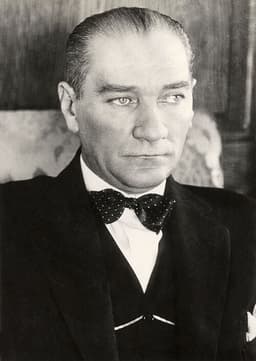
Mustafa Kemal Ataturk
Politician · Modern
80.0Total
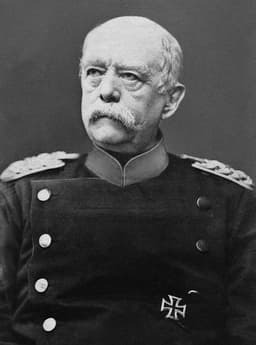
Otto von Bismarck
Politician · Modern
65.8Total
Basic Information
Born
1881
1815
Died
1938
1898
Era
Modern
Modern
Nationality
Turkey
Germany
Occupation
Politician
Politician
Civilization
Middle Eastern
Western
Score Comparison
Military (10%)
75.0
55.0
Political (20%)
85.0
85.0
Influence (20%)
75.0
82.0
Legacy (20%)
90.0
40.0
Leadership (15%)
80.0
80.0
Strategy (15%)
65.0
50.0
TOTAL
80.0
65.8
Mustafa Kemal Ataturk — Complete Timeline
1915 AD
Battle of GallipoliWar
As a colonel, Mustafa Kemal commanded Ottoman forces at Gallipoli, successfully repelling Allied landings. His leadership at critical points like Chunuk Bair made him a national hero and laid the foundation for his political career.
World War IOttoman EmpireMilitary Victory
Impact: regional
1919 AD
Turkish War of IndependenceWar
Kemal organized and led the Turkish National Movement against the Allied occupation of Anatolia and the Treaty of S
Independence WarNational MovementAnkara
Impact: nationalconstructive
1922 AD
Abolition of the SultanatePolitical Action◆ Major
The Grand National Assembly of Turkey, under Kemal's leadership, abolished the Ottoman Sultanate, ending 600 years of imperial rule. This severed the link with the old regime and paved the way for the proclamation of the Republic.
SultanateRepublicPolitical Reform
Impact: nationalprogressive
1923 AD
Proclamation of the Republic of TurkeyPolitical Action
Kemal declared Turkey a republic, becoming its first president. He moved the capital to Ankara and initiated a series of radical reforms to modernize and secularize the state, including the adoption of a new legal code and the Latin alphabet.
RepublicModernizationSecularism
Impact: globalprogressive
1925 AD
Adoption of the Hat LawReform◆ Major
Kemal introduced the Hat Law, banning the fez and encouraging Western-style hats. This was part of his broader cultural revolution to secularize and Westernize Turkish society, symbolizing the break with Ottoman traditions.
Cultural ReformSecularismWesternization
Impact: nationalprogressive
1934 AD
Granting of Women's SuffrageReform◆ Major
Kemal's government granted women the right to vote and stand for election in national elections, ahead of many European countries. This reform was part of his commitment to gender equality and modernization of Turkish society.
Women's RightsSuffrageModernization
Impact: nationalprogressive
Otto von Bismarck — Complete Timeline
1870 AD
Franco-Prussian WarWar
Bismarck provoked France into declaring war by editing the Ems Dispatch to appear insulting. The resulting conflict saw Prussia and its allies decisively defeat France, leading to the fall of Napoleon III, the capture of Paris, and the annexation of Alsace-Lorraine.
WarProvocationAnnexation
Impact: globaldestructive
1871 AD
Unification of Germany ProclaimedPolitical Action
Following the Franco-Prussian War, Bismarck orchestrated the proclamation of the German Empire in the Hall of Mirrors at Versailles. King Wilhelm I of Prussia was declared German Emperor, uniting the German states under Prussian leadership and establishing the Second Reich.
UnificationGerman EmpireNationalism
Impact: globalconstructive
1878 AD
Enactment of the Anti-Socialist LawsPolitical Action◆ Major
After two assassination attempts on Kaiser Wilhelm I, Bismarck pushed through laws banning socialist organizations, publications, and meetings. The laws remained in force until 1890, suppressing the Social Democratic Party while Bismarck simultaneously introduced welfare reforms to undercut its appeal.
RepressionSocialismWelfare State
Impact: nationaldestructive
Congress of BerlinPolitical Action◆ Major
Bismarck hosted the Congress of Berlin to revise the Treaty of San Stefano and resolve the Eastern Crisis. He acted as 'honest broker,' reducing Russian gains, granting independence to Romania, Serbia, and Montenegro, and placing Bosnia-Herzegovina under Austro-Hungarian administration.
DiplomacyBalkansBalance of Power
Impact: global
1883 AD
Establishment of the Welfare StateReform◆ Major
Bismarck introduced the Health Insurance Bill (1883), Accident Insurance Bill (1884), and Old Age and Disability Insurance Bill (1889). These laws created the first modern welfare state, providing workers with social security and aiming to reduce support for socialist movements.
Social ReformWelfareInsurance
Impact: globalprogressive
1890 AD
Dismissal as ChancellorPolitical Action◆ Major
Emperor Wilhelm II forced Bismarck to resign due to policy disagreements, particularly over anti-socialist laws and foreign policy. Bismarck's departure marked the end of an era, leading to a more aggressive German foreign policy and the eventual unraveling of his alliance system.
ResignationWilhelm IIPolicy Shift
Impact: global
Expert Analysis
Otto von Bismarck vs Mustafa Kemal Ataturk
# The Iron Chancellor and the Father of Turks: Two Paths to Modernity
The Hall of Mirrors at Versailles had witnessed the pomp of French kings for two centuries, but on January 18, 1871, it hosted a scene of calculated humiliation. In the very gallery where Louis XIV once held court, a Prussian Junker named Otto von Bismarck stood as the architect of a new German Empire, while the defeated French Emperor Napoleon III languished in captivity. Just over five decades later, on a dusty Anatolian plain, another figure—a war-scarred Ottoman officer named Mustafa Kemal—would stand before a crumbling empire and declare a republic. Both men remade nations, but they did so in profoundly different ways, driven by contrasting visions of what a modern state should be. Why did Bismarck unify through "blood and iron" while Atatürk rebuilt through ink and law? The answer lies in their origins, their times, and the very nature of power itself.
Origins
Otto von Bismarck was born in 1815 into the Prussian Junker class, a landed aristocracy that had served the Hohenzollern monarchy for generations. His father was a conservative estate owner; his mother came from a bourgeois intellectual family, giving Bismarck an unusual blend of aristocratic instinct and sharp pragmatism. He studied law at Göttingen and Berlin, but his real education came in the rough-and-tumble world of Prussian politics, where he learned that power was not given but seized. By contrast, Mustafa Kemal was born in 1881 in Salonika, then a multicultural Ottoman city, to a family of modest means. His father was a minor customs official; his mother, a pious Muslim woman. Young Mustafa attended a modern secular school, then a military academy, where he absorbed the Enlightenment ideas of Rousseau and Voltaire alongside the discipline of a soldier. Where Bismarck inherited a system and learned to manipulate it, Atatürk grew up in an empire in decay, watching it bleed from every border.
Rise to Power
Bismarck’s ascent was a masterclass in opportunism. Appointed Minister President of Prussia in 1862 amid a constitutional crisis, he famously told the Prussian parliament that "the great questions of the day will not be decided by speeches and majority decisions—but by blood and iron." He then engineered three wars—against Denmark in 1864, Austria in 1866, and France in 1870—each carefully provoked to isolate the enemy and expand Prussian power. The Ems Dispatch affair of 1870, where Bismarck edited a telegram from King Wilhelm I to make it seem insulting to the French ambassador, was a stroke of political genius that triggered the Franco-Prussian War and sealed German unification. Atatürk’s rise was forged in fire of a different kind. At Gallipoli in 1915, as a colonel commanding the 19th Division, he issued the order that would define his military career: "I am not ordering you to attack, I am ordering you to die." His leadership turned the tide against the Allied landings, making him a national hero. But it was the collapse of the Ottoman Empire after World War I that created his opportunity. When the Allies occupied Anatolia under the Treaty of Sèvres in 1920, Atatürk abandoned the sultan in Istanbul and organized a resistance in Ankara, launching the Turkish War of Independence. By 1922, his forces had expelled the Greeks and French, and by 1923, he had abolished the sultanate and declared a republic.
Leadership & Governance
As chancellor of the German Empire from 1871 to 1890, Bismarck governed with a cold, calculating realism that came to be called *Realpolitik*. He was no democrat—he despised parliaments and parties—but he was a brilliant administrator. Domestically, he built a welfare state to undercut socialist appeal: health insurance in 1883, accident insurance in 1884, and old-age pensions in 1889. Yet he simultaneously crushed dissent through the Anti-Socialist Laws of 1878, banning socialist organizations after assassination attempts on the Kaiser. His foreign policy was a delicate web of alliances designed to keep France isolated and Germany secure. Atatürk’s governance was revolutionary by design. As president from 1923 until his death in 1938, he dismantled the Islamic caliphate, replaced Sharia law with secular Swiss and Italian codes, and forced through cultural reforms that struck at the heart of Ottoman identity: the Hat Law of 1925 banned the fez, women gained suffrage in 1934, and the Latin alphabet replaced Arabic script. Where Bismarck preserved the Prussian monarchy and aristocracy, Atatürk abolished them. Bismarck reformed to stabilize; Atatürk reformed to transform.
Triumph & Tragedy
Bismarck’s greatest triumph was the unification of Germany in 1871, a feat that reshaped European power. His tragedy came in 1890, when the young Emperor Wilhelm II, eager to rule in his own right, forced him into resignation. Bismarck left behind a Germany that was powerful but brittle, its alliances fraying, its military machine unchecked. Atatürk’s triumph was the survival of Turkey itself: by 1923, he had carved a modern nation from the corpse of an empire. His tragedy was more subtle—the cultural dislocation his reforms caused, the alienation of traditionalists, and the authoritarian methods he used to enforce change. He once said, "I have no religion, and at times I wish all religions at the bottom of the sea," a sentiment that earned him enemies among the pious.
Character & Destiny
Bismarck was a man of immense will and cynicism. He once remarked, "Politics is the art of the possible, the attainable—the art of the next best." He believed in power, not ideals. Atatürk was an idealist who wielded power ruthlessly to realize a vision: "A nation which makes no effort to improve itself will never find its place in the civilized world." Bismarck’s personality was defensive, even paranoid—he feared democracy, socialism, and Catholic influence. Atatürk’s was messianic—he saw himself as the father of a new nation, and he accepted no opposition. Both were authoritarian, but Bismarck sought to manage change, while Atatürk sought to accelerate it.
Legacy
Bismarck is remembered as the Iron Chancellor, the unifier of Germany, and the father of the modern welfare state. Yet his legacy is ambiguous: the militarism he cultivated contributed to two world wars. Atatürk is revered in Turkey as *Atatürk*—"Father of the Turks"—and his image adorns every government building. His secular, Westernizing reforms remain the bedrock of the Turkish Republic, though they are now under strain. Both men shaped their nations indelibly, but Bismarck’s Germany was built on Prussian steel, while Atatürk’s Turkey was carved from Ottoman clay.
Conclusion
Standing at the edge of history, one sees two men who understood that the old world was dying. Bismarck chose to harness its remnants, welding them into a new empire. Atatürk chose to burn them, building a new nation from ashes. Their methods were opposites, but their goal was the same: to create a state that could survive in a modern world that cared nothing for tradition. In the end, Bismarck’s Germany outlasted him by only a few decades before collapsing into ruin; Atatürk’s Turkey endures, though its soul remains contested. Perhaps that is the deepest lesson: revolutions that change everything can last, while reforms that preserve the old may only delay the inevitable.
Rankings
🥇
Mustafa Kemal AtaturkLeader
Mil: 75.0Pol: 85.0Inf: 75.0
80.0
🥈
Otto von Bismarck
Mil: 55.0Pol: 85.0Inf: 82.0
65.8
+14.2 behind
How This Comparison Works
Algorithm
Each figure is scored on 6 dimensions (0—100 scale) based on structured historical data: Military (10%), Political (20%), Influence (20%), Legacy (20%), Leadership (15%), Strategy (15%). The weighted total produces the final ranking.
Data Sources
Scores are computed from structured sub-indicators in the database. Scale factors adjust for era (Ancient ×0.85, Modern ×1.0) and civilization size (Eastern ×1.05, Other ×0.80) to account for differences in population and military scale.
Maximum 3 Figures
Comparisons are limited to 2—3 figures to ensure readability and statistical meaningfulness.
Error Margins
±5 points per dimension — Sub-scores are derived from historical records with inherent uncertainty. Two figures within 5 points on a dimension should be considered roughly equivalent in that area.
Total Score Accuracy
±3 points overall — The weighted combination of 6 dimensions produces a total score with approximately ±3 points of uncertainty. Differences of less than 3 points are not statistically significant— the figures are effectively tied.
Known Limitations
- Historical records are incomplete and uneven across civilizations
- Figures from oral-tradition societies may be underrepresented
- Occupation labels can misclassify multi-role figures
- Scores measure capability and impact, not moral character
- Quantitative scoring is a comparison tool, not absolute truth
Capability Radar
Military (10%) — Battles & Warfare
Battles
85
60
Win Rate
90
70
Expansion
60
80
Political (20%) — Governance & Reform
Reform
98
90
Diplomacy
85
95
Economy
75
80
Influence (20%) — Cultural & Global Reach
Cultural
90
65
Global
80
75
Legacy (20%) — Historical Impact
Historical
95
85
Longevity
85
70
Leadership (15%) — Power & Stability
Tenure
85
85
Stability
70
70
Strategy (15%) — Tactics & Innovation
Strategy
85
85
Tactics
88
55
Reform
80
75
Similar Comparisons
Comments & Discussion
SabreRattler6/16/2026
Bismarck built a nation with steel and blood; Atatürk forged one with ink and reforms. The Iron Chancellor unified Germany through three calculated wars in seven years—1864 against Denmark, 1866 against Austria, and 1870 against France—each a masterstroke of realpolitik. Atatürk, however, fought a war of independence but then imposed a cultural revolution, abolishing the caliphate in 1924 and the fez in 1925. One preserved monarchical power; the other destroyed it. Give me Bismarck's cynicism ov
法典铁锤6/16/2026
数据不说谎——德国统一后,1871年普鲁士人口才2400万,但到1914年已近6800万;土耳其共和国成立时约1300万,1938年才1700万。光凭数字,俾斯麦的“铁血”显然更奏效。但阿塔图尔克的识字率从1923年的约10%飙升至1935年的20%以上,这改革力度能忽略?我喜欢俾斯麦的效率,但数据偏袒土耳其人。
Decipherator6/16/2026
Every historical comparison risks oversimplification. Bismarck was a pragmatist who manipulated nationalism for Prussian ends—his German Empire excluded Austria deliberately. Atatürk was a revolutionary who invented Turkish nationalism from scratch, even creating a new alphabet in 1928 to sever ties with Ottoman past. One built a pyramid with existing stones; the other chiseled new ones from dust. Calling both "nation-builders" hides more than it reveals. I'd rather study their differences than
帝国掘墓人6/16/2026
别跟我提什么“和平改革”——阿塔图尔克在1926年的伊兹密尔阴谋案中一口气绞死了15个反对派,这跟俾斯麦的《反社会主义法》有什么本质区别?无非是一个用民族主义包装,一个用传统掩护。两人都是威权主义者,只不过一个替皇帝卖命,一个自己当神。我不信任何“现代性之父”的浪漫叙事,历史只认权力游戏的结果。