Loading...
This comparison has not been analyzed yet.
One-time AI generation (~1 minute). Scores and timeline are already available below.
Nadmidyn Bayartsaikhan vs Recep Tayyip Erdogan
Recep Tayyip Erdogan leads by 21.2 pts · 2 figures compared
…

Nadmidyn Bayartsaikhan
Politician · Modern
35.5Total
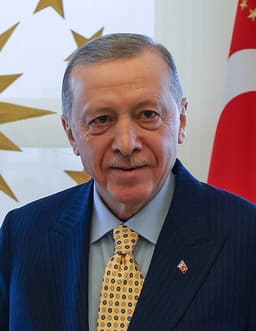
Recep Tayyip Erdogan
Politician · Modern
56.7Total
Basic Information
Born
1962
1954
Died
—
—
Era
Modern
Modern
Nationality
Mongolia
Turkey
Occupation
Politician
Politician
Civilization
Eastern
Middle Eastern
Score Comparison
Military (10%)
13.3
50.0
Political (20%)
26.4
59.3
Influence (20%)
47.1
55.0
Legacy (20%)
36.7
56.0
Leadership (15%)
45.0
72.0
Strategy (15%)
25.6
42.5
TOTAL
35.5
56.7
Nadmidyn Bayartsaikhan — Complete Timeline
1990 AD
Led Trade Union MovementsPolitical Action◆ Major
Bayartsaikhan was a prominent trade unionist during Mongolia's transition from communism. He led labor movements advocating for workers' rights, fair wages, and better working conditions. His activism contributed to the development of independent trade unions in Mongolia.
Trade UnionWorkers' RightsLabor Movement
Impact: nationalconstructive
2008 AD
Elected to ParliamentPolitical Action
Bayartsaikhan was elected to the State Great Khural as a member of the Mongolian People's Party. He served on committees related to labor and social policy, continuing his advocacy for workers' rights and social justice issues within the legislative framework.
ParliamentMongolian People's PartySocial Policy
Impact: nationalconstructive
2012 AD
Appointed Minister of Labour of MongoliaPolitical Action◆ Major
Nadmidyn Bayartsaikhan was appointed Minister of Labour of Mongolia, serving in the government of Prime Minister Norovyn Altankhuyag. His role involved overseeing labor policies, social welfare, and employment programs during a period of economic growth driven by mining.
Labour MinisterSocial WelfareEmployment
Impact: nationalconstructive
Recep Tayyip Erdogan — Complete Timeline
1994 AD
Elected Mayor of IstanbulPolitical Action◆ Major
Erdogan was elected mayor of Istanbul as a candidate of the Welfare Party. His tenure focused on infrastructure projects and improving municipal services, raising his national profile.
MayorIstanbul
Impact: nationalconstructive
1998 AD
Imprisonment for inciting religious hatredPolitical Action
Erdogan was sentenced to 10 months in prison after reciting a poem that a court deemed incited religious hatred. He served four months, which fueled his image as a victim of secularist repression.
ImprisonmentSecularism
Impact: nationaltragic
2001 AD
Founding of AK PartyPolitical Action◆ Major
Erdogan co-founded the Justice and Development Party (AKP) as a conservative democratic party. The AKP won a landslide victory in 2002, ending decades of coalition governments.
Party FoundingAKP
Impact: nationalconstructive
2003 AD
Prime Minister of TurkeyPolitical Action◆ Major
Erdogan became Prime Minister after a constitutional amendment allowed him to hold office. His early years saw economic growth, EU accession talks, and reforms to reduce military influence.
Prime MinisterReforms
Impact: nationalconstructive
2013 AD
Gezi Park protestsPolitical Action◆ Major
A small protest against the redevelopment of Gezi Park in Istanbul escalated into nationwide demonstrations against Erdogan's authoritarian governance. The government's heavy-handed response drew international condemnation.
ProtestsAuthoritarianism
Impact: nationaldestructive
2016 AD
Failed coup attemptWar◆ Major
A faction of the Turkish military attempted a coup against Erdogan's government. The coup was suppressed after Erdogan rallied supporters via social media. Thousands were subsequently purged from state institutions.
Coup AttemptPurge
Impact: nationaldestructive
2017 AD
Presidential system referendumPolitical Action◆ Major
Erdogan narrowly won a referendum that replaced Turkey's parliamentary system with a powerful executive presidency. Critics argued it concentrated power in his hands and weakened democratic checks.
Constitutional ChangePresidential System
Impact: nationaldestructive
This comparison has not been analyzed yet.
One-time AI generation (~1 minute). Scores and timeline are already available below.
Rankings
🥇
Recep Tayyip ErdoganLeader
Mil: 50.0Pol: 59.3Inf: 55.0
56.7
🥈
Nadmidyn Bayartsaikhan
Mil: 13.3Pol: 26.4Inf: 47.1
35.5
+21.2 behind
How This Comparison Works
Algorithm
Each figure is scored on 6 dimensions (0—100 scale) based on structured historical data: Military (10%), Political (20%), Influence (20%), Legacy (20%), Leadership (15%), Strategy (15%). The weighted total produces the final ranking.
Data Sources
Scores are computed from structured sub-indicators in the database. Scale factors adjust for era (Ancient ×0.85, Modern ×1.0) and civilization size (Eastern ×1.05, Other ×0.80) to account for differences in population and military scale.
Maximum 3 Figures
Comparisons are limited to 2—3 figures to ensure readability and statistical meaningfulness.
Error Margins
±5 points per dimension — Sub-scores are derived from historical records with inherent uncertainty. Two figures within 5 points on a dimension should be considered roughly equivalent in that area.
Total Score Accuracy
±3 points overall — The weighted combination of 6 dimensions produces a total score with approximately ±3 points of uncertainty. Differences of less than 3 points are not statistically significant— the figures are effectively tied.
Known Limitations
- Historical records are incomplete and uneven across civilizations
- Figures from oral-tradition societies may be underrepresented
- Occupation labels can misclassify multi-role figures
- Scores measure capability and impact, not moral character
- Quantitative scoring is a comparison tool, not absolute truth
Capability Radar
Military (10%) — Battles & Warfare
Battles
15
24
Win Rate
20
25
Expansion
17
27
Political (20%) — Governance & Reform
Reform
15
65
Diplomacy
15
70
Economy
15
60
Influence (20%) — Cultural & Global Reach
Cultural
10
55
Global
10
65
Legacy (20%) — Historical Impact
Historical
10
60
Longevity
10
50
Leadership (15%) — Power & Stability
Tenure
20
85
Stability
15
40
Strategy (15%) — Tactics & Innovation
Strategy
24
28
Tactics
29
34
Reform
28
34
Similar Comparisons
Comments & Discussion
No comments yet. Be the first to share your thoughts!