Loading...
Napoleon Bonaparte vs Nurhaci
Nurhaci leads by 1.4 pts · 2 figures compared
…
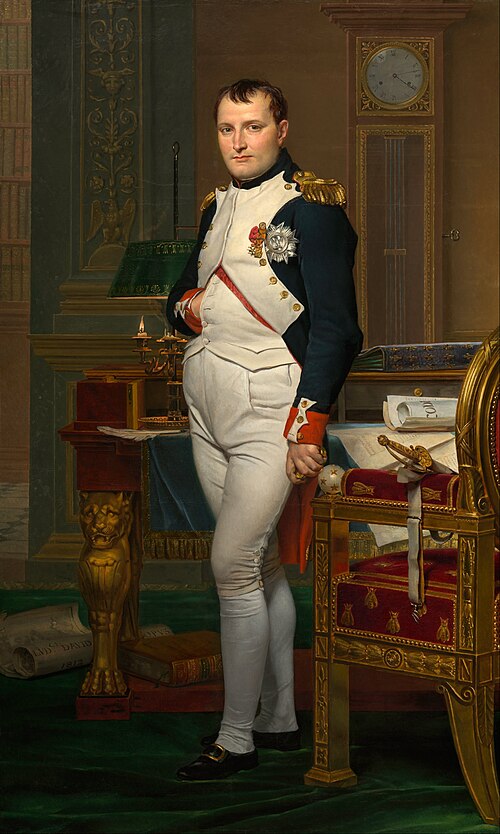
Napoleon Bonaparte
General · Modern
82.4Total
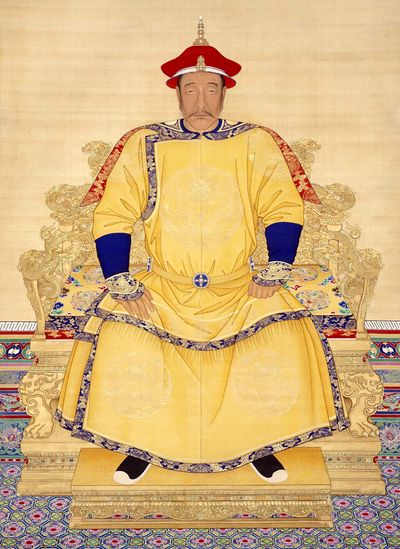
Nurhaci
Emperor · Modern
83.8Total
Basic Information
Born
1769
1559
Died
1821
1626
Era
Modern
Modern
Nationality
France
China
Occupation
General
Emperor
Civilization
Western
Eastern
Score Comparison
Military (10%)
94.0
79.9
Political (20%)
75.0
84.8
Influence (20%)
82.0
84.1
Legacy (20%)
78.0
87.6
Leadership (15%)
80.0
82.1
Strategy (15%)
93.0
81.1
TOTAL
82.4
83.8
Rankings
🥇
NurhaciLeader
Mil: 79.9Pol: 84.8Inf: 84.1
83.8
🥈
Napoleon Bonaparte
Mil: 94.0Pol: 75.0Inf: 82.0
82.4
+1.4 behind
How This Comparison Works
Algorithm
Each figure is scored on 6 dimensions (0—100 scale) based on structured historical data: Military (10%), Political (20%), Influence (20%), Legacy (20%), Leadership (15%), Strategy (15%). The weighted total produces the final ranking.
Data Sources
Scores are computed from structured sub-indicators in the database. Scale factors adjust for era (Ancient ×0.85, Modern ×1.0) and civilization size (Eastern ×1.05, Other ×0.80) to account for differences in population and military scale.
Maximum 3 Figures
Comparisons are limited to 2—3 figures to ensure readability and statistical meaningfulness.
Error Margins
±5 points per dimension — Sub-scores are derived from historical records with inherent uncertainty. Two figures within 5 points on a dimension should be considered roughly equivalent in that area.
Total Score Accuracy
±3 points overall — The weighted combination of 6 dimensions produces a total score with approximately ±3 points of uncertainty. Differences of less than 3 points are not statistically significant— the figures are effectively tied.
Known Limitations
- Historical records are incomplete and uneven across civilizations
- Figures from oral-tradition societies may be underrepresented
- Occupation labels can misclassify multi-role figures
- Scores measure capability and impact, not moral character
- Quantitative scoring is a comparison tool, not absolute truth
Capability Radar
Military (10%) — Battles & Warfare
Battles
95
85
Win Rate
90
90
Expansion
95
88
Political (20%) — Governance & Reform
Reform
95
85
Diplomacy
80
80
Economy
85
70
Influence (20%) — Cultural & Global Reach
Cultural
85
85
Global
90
80
Legacy (20%) — Historical Impact
Historical
95
90
Longevity
90
88
Leadership (15%) — Power & Stability
Tenure
85
75
Stability
70
78
Strategy (15%) — Tactics & Innovation
Strategy
95
85
Tactics
98
88
Reform
92
92
Expert Analysis
napoleon-bonaparte-vs-nurhaci
# The Conqueror and the Unifier: Napoleon and Nurhaci
On a June morning in 1815, Napoleon Bonaparte stood on a muddy ridge near Waterloo, watching his Imperial Guard march to their doom. Half a world away and two centuries earlier, another commander—Nurhaci, a Jurchen chieftain from the frozen forests of Manchuria—had faced his own moment of reckoning outside the walls of Ningyuan. Both men built empires from ambition and blood. One reshaped Europe; the other laid the foundation for China’s last dynasty. Yet their paths, their fates, and their legacies could not have diverged more sharply—a contrast that reveals how geography, timing, and character conspire to write history’s verdict.
Origins
Napoleon was born in 1769 on Corsica, an island of rugged mountains and fierce independence, recently annexed by France. His family was minor nobility, struggling and proud. The French Revolution, erupting when he was twenty, shattered the old order and opened doors that birth alone could never have unlocked. He was a child of the Enlightenment and the cannon’s roar—educated in military academies, steeped in Rousseau and Voltaire, yet forged in the crucible of revolutionary war.
Nurhaci came from a different world entirely. Born in 1559, he was a scion of the Jurchen tribes, nomadic peoples living in what is now northeastern China. His father and grandfather were killed in a Ming Chinese raid when he was a young man—a trauma that shaped his entire life. The Ming dynasty was decaying, its bureaucracy corrupt, its frontier weak. Nurhaci grew up in a world of clan feuds, horse archery, and the constant struggle for survival. He learned to read Chinese military classics, but his true education came from the steppe: how to win loyalty, how to bargain with enemies, how to strike when the iron was hot.
The difference in their origins is not merely cultural—it is existential. Napoleon inherited a revolution that had already broken the chains of tradition. Nurhaci inherited a world where tradition was the only law, and he had to break those chains himself.
Rise to Power
Napoleon’s ascent was meteoric. At twenty-four, he drove the British out of Toulon. At twenty-six, he crushed a royalist uprising in Paris with a “whiff of grapeshot.” By thirty, he was First Consul of France, having conquered Italy and Egypt. His rise was a testament to meritocracy—the right man, in the right place, at the right time. The Revolution had killed the generals of the old regime; Napoleon filled the vacuum with audacity and calculation.
Nurhaci’s rise was slower, more methodical. For decades, he played the Ming off against rival Jurchen tribes, marrying his daughters to allies, executing enemies, and slowly consolidating power. In 1616, at the age of fifty-seven—ancient by the standards of the time—he unified the Jurchen tribes and proclaimed the Later Jin dynasty. His key event was the Battle of Sarhu in 1619, where he defeated a Ming army four times his size by using interior lines and the mobility of his cavalry. It was a stunning victory, but it did not make him emperor of China. It made him a threat.
Napoleon’s path was a sprint; Nurhaci’s was a marathon. Napoleon seized power in a coup; Nurhaci built it with treaties and betrayals over thirty years.
Leadership & Governance
As a ruler, Napoleon was a whirlwind of reform. His Napoleonic Code standardized French law, abolished feudalism, and enshrined equality before the law—at least for men. He built schools, roads, and a centralized bureaucracy. He was a military genius—his strategic score of 93 speaks to his ability to move armies like chess pieces, to win battles like Austerlitz (1805) where he destroyed an Austro-Russian army with perfect timing. But he was also a political opportunist. He crowned himself emperor in 1804, betraying the Revolution’s republican ideals. He made peace with the Church, created a new nobility, and silenced dissent. His leadership score of 80 reflects a man who inspired devotion but demanded absolute obedience.
Nurhaci governed differently. He organized his people into the Eight Banners—a military, social, and administrative system that bound every man to a unit, ready to fight. It was efficient, brutal, and deeply communal. Unlike Napoleon, who ruled through a centralized state, Nurhaci ruled through personal loyalty and clan ties. He issued the Seven Grievances in 1618 as a propaganda masterstroke, painting the Ming as oppressors and himself as a liberator. His political score of 84.8 is higher than Napoleon’s 75—because Nurhaci understood that empire is built not just on conquest but on legitimacy. He claimed the Mandate of Heaven, not as a revolutionary, but as a restorer of ancient order.
Napoleon’s reforms were universal; Nurhaci’s were tribal. Napoleon wanted to transform Europe; Nurhaci wanted to conquer China.
Triumph & Tragedy
Napoleon’s greatest moment was Austerlitz, where he defeated the combined might of Austria and Russia. His worst was the invasion of Russia in 1812—a catastrophic miscalculation that cost half a million men. He was exiled to Elba, returned for a Hundred Days, then crushed at Waterloo in 1815. His tragedy was hubris: he could not stop, could not consolidate, could not accept limits.
Nurhaci’s greatest moment was Sarhu. His tragedy came in 1626, when he was defeated by Ming general Yuan Chonghuan at Ningyuan—a rare failure that wounded him both physically and psychologically. He died later that year, his dream of conquering China unfulfilled. But his son, Hong Taiji, and his grandson, the Shunzhi Emperor, would complete the conquest. Nurhaci’s tragedy was not his own death, but that he did not live to see his vision realized.
Napoleon died in exile on Saint Helena, alone and bitter. Nurhaci died in his own camp, surrounded by his sons, knowing the dynasty would continue.
Character & Destiny
Napoleon was restless, brilliant, and arrogant. He once said, “Impossible is a word to be found only in the dictionary of fools.” He believed he could bend reality to his will. That belief made him great—and destroyed him. He could not delegate, could not trust, could not stop fighting.
Nurhaci was patient, calculating, and ruthless. He said, “If you want to conquer, you must first learn to endure.” He understood that empire is a long game. He built institutions—the Eight Banners, the alliance system, the claim to the Mandate—that outlasted him. Napoleon built a legend; Nurhaci built a foundation.
Legacy
Napoleon’s legacy is a double-edged sword. He spread the ideals of the French Revolution—nationalism, legal equality, secularism—across Europe. The Napoleonic Code influences law from Louisiana to Japan. But he also caused millions of deaths and left France smaller than he found it. His memory is a battlefield: hero to some, tyrant to others.
Nurhaci’s legacy is quieter but more concrete. He is the founding father of the Qing dynasty, which ruled China for 268 years, the last imperial dynasty. The Eight Banners became the backbone of Qing military power. His unification of the Manchu tribes created a people who would conquer China and rule it as foreigners—a paradox that shaped Chinese history for centuries. His legacy score of 87.6 reflects his enduring impact, even if his name is less known in the West.
Conclusion
Napoleon and Nurhaci never met, but they share a strange kinship. Both were outsiders who remade their worlds. Both understood that power is not given—it is taken. Yet their differences are instructive. Napoleon’s empire burned bright and fast, like a comet. Nurhaci’s grew slowly, like a glacier. One sought to change the world; the other sought to inherit it. In the end, the glacier outlasted the comet. But both left marks that time has not erased.
Nurhaci — Complete Timeline
1616 AD
Unified the Jurchen TribesWar
Nurhaci completed the unification of the fragmented Jurchen tribes of Manchuria. He organized them into the Eight Banners system, a military and social structure that became the foundation of his power. He then proclaimed the Later Jin dynasty.
JurchenUnificationEight Banners
Impact: regionalconstructive
Proclaimed the Later Jin DynastyPolitical Action◆ Major
Nurhaci proclaimed the establishment of the Later Jin dynasty in Manchuria, claiming legitimacy as a successor to the Jin dynasty. This act formally declared his independence from the Ming dynasty and established a rival state.
Later JinDynastyFoundation
Impact: regionalconstructive
1618 AD
Issued the Seven GrievancesPolitical Action◆ Major
Nurhaci issued the Seven Grievances, a formal declaration of war against the Ming dynasty. The grievances listed alleged Ming injustices against the Jurchens, including interference in tribal affairs and killing of Jurchen leaders. This justified his invasion of Ming territory.
Ming-Qing TransitionDeclaration of WarPropaganda
Impact: regionaldestructive
1619 AD
Battle of SarhuWar
Nurhaci's forces decisively defeated a large Ming army at the Battle of Sarhu. The Ming sent four separate armies into Manchuria, but Nurhaci used interior lines to defeat them in detail. This victory secured his control over Manchuria.
Ming-Qing TransitionBattleManchuria
Impact: regionalconstructive
1626 AD
Defeated by Yuan Chonghuan at NingyuanWar◆ Major
Nurhaci led an invasion of Ming territory but was defeated at the Battle of Ningyuan by Ming general Yuan Chonghuan. The Ming used European-style cannons to repel the Later Jin forces. Nurhaci was wounded during the battle and died shortly after.
Ming-Qing TransitionBattleDefeat
Impact: regionaltragic
Similar Comparisons
Comments & Discussion
SilverGlobe6/16/2026
I’d rate Nurhaci higher on resilience. Napoleon lost at Waterloo and faded; Nurhaci lost at Sarhu but adapted and won. Strategic survival beats flashy campaigns.
CodexVandal6/16/2026
Napoleon’s real legacy isn’t battles but the Napoleonic Code. Nurhaci left no legal system; he left a clan pact. One built a state, the other a dynasty—different scores for different games.