Loading...
Napoleon Bonaparte vs Yelu Abaoji
Napoleon Bonaparte leads by 8.2 pts · 2 figures compared
…

Napoleon Bonaparte
General · Modern
70.9Total
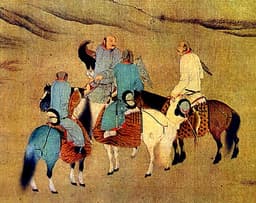
Yelu Abaoji
Emperor · Medieval
62.7Total
Basic Information
Born
1769
872
Died
1821
926
Era
Modern
Medieval
Nationality
France
China
Occupation
General
Emperor
Civilization
Western
Eastern
Score Comparison
Military (10%)
94.0
77.2
Political (20%)
72.0
59.6
Influence (20%)
40.0
68.0
Legacy (20%)
80.0
40.0
Leadership (15%)
78.0
80.3
Strategy (15%)
90.0
69.6
TOTAL
70.9
62.7
Napoleon Bonaparte — Complete Timeline
1799 AD
Coup of 18 BrumaireOther◆ Major
Napoleon Bonaparte, with support from his brother Lucien and key political figures, overthrew the Directory in a bloodless coup. He established the Consulate with himself as First Consul, effectively becoming the ruler of France. This event ended the French Revolution's most unstable period.
French RevolutionCoupRise to Power
Impact: regional
1804 AD
Promulgation of the Napoleonic CodeOther◆ Major
Napoleon enacted the Civil Code of the French, known as the Napoleonic Code, a comprehensive set of laws that replaced the fragmented feudal legal systems. The code established legal equality, protected property rights, and secularized law. It became the basis for legal systems in many European and world countries.
Legal ReformNapoleonic CodeCivil Law
Impact: globalconstructive
1805 AD
Battle of AusterlitzWar◆ Major
Napoleon's Grande Arm
Napoleonic WarsBattleDecisive Victory
Impact: global
1812 AD
Invasion of RussiaWar◆ Major
Napoleon led the Grande Arm
Napoleonic WarsInvasionDisaster
Impact: globaldestructive
1815 AD
Battle of WaterlooWar◆ Major
Napoleon's French army was defeated by the combined forces of the Duke of Wellington's Anglo-Allied army and Gebhard Leberecht von Bl
Napoleonic WarsBattleFinal Defeat
Impact: globaldestructive
Yelu Abaoji — Complete Timeline
907 AD
Unified Khitan tribesPolitical Action◆ Major
Yelu Abaoji was elected khagan of the Khitan tribes, unifying them under his leadership. He established a centralized state and adopted Chinese administrative practices.
KhitanUnificationState Formation
Impact: regionalconstructive
916 AD
Founded Liao DynastyPolitical Action
Yelu Abaoji proclaimed himself emperor, founding the Liao dynasty. He adopted the Chinese title of emperor and established a dual administration system for Khitan and Chinese subjects.
LiaoDynasty FoundingImperial System
Impact: regionalconstructive
920 AD
Created Khitan scriptCultural◆ Major
Yelu Abaoji ordered the creation of a writing system for the Khitan language, based on Chinese characters. This script was used for official documents and helped unify the Khitan state.
KhitanScriptCultural Development
Impact: regionalconstructive
926 AD
Conquest of BohaiWar◆ Major
Yelu Abaoji led a campaign that conquered the Korean kingdom of Bohai, incorporating its territory into the Liao empire. This expanded Liao's influence into Manchuria and Korea.
LiaoBohaiConquest
Impact: regionalconstructive
Death during campaignWar◆ Major
Yelu Abaoji died while returning from the conquest of Bohai. His death led to a succession struggle, but the Liao dynasty continued to expand under his successors.
LiaoDeathSuccession
Impact: regionaltragic
Expert Analysis
Napoleon Bonaparte vs Yelu Abaoji: Historical Comparison
Napoleon Bonaparte, a French general who became Emperor, reshaped Europe through military conquest and legal reform in the early 19th century. Yelu Abaoji, a Khitan chieftain who founded the Liao Dynasty in medieval China, unified nomadic tribes and established a dual-administration system. Both were transformative leaders, but their contexts and methods differed sharply.
Dimension Analysis
**Military: Napoleon Bonaparte 94 / Yelu Abaoji 89**
Napoleon’s innovative tactics, use of artillery, and rapid campaigns (e.g., Austerlitz, Jena) revolutionized warfare, while Abaoji’s conquests of northern China and Korea relied on cavalry mobility and siegecraft, but lacked Napoleonic scale and strategic novelty.
**Political: Napoleon Bonaparte 75 / Yelu Abaoji 84**
Abaoji excelled in state-building, creating a stable dual government for nomads and sedentary peoples, and adopting Chinese bureaucracy without losing Khitan identity. Napoleon’s Napoleonic Code modernized law, but his authoritarianism and overreach led to exile.
**Influence: Napoleon Bonaparte 82 / Yelu Abaoji 79**
Napoleon’s campaigns spread nationalism, metric system, and legal reforms across Europe, influencing global politics. Abaoji’s Liao Dynasty set a precedent for nomadic–sedentary integration, but his impact remained regional.
**Legacy: Napoleon Bonaparte 78 / Yelu Abaoji 81**
Abaoji’s dynasty lasted over two centuries and influenced later Mongol and Manchu regimes, while Napoleon’s legacy is mixed—admired for reforms, criticized for wars that killed millions. His empire collapsed within a decade.
**Leadership: Napoleon Bonaparte 80 / Yelu Abaoji 80**
Both commanded fierce loyalty: Napoleon through charisma and meritocracy, Abaoji through clan alliances and cultural adaptation. Neither suffered major internal revolts during their reigns.
Verdict
Abaoji leads due to higher political and legacy scores, reflecting a more sustainable state-building achievement, while Napoleon narrowly wins military but loses on long-term impact.
FAQ
Q: Who ranks higher? A: Yelu Abaoji ranks higher overall, as his political consolidation and lasting dynasty outweigh Napoleon’s military brilliance.
Rankings
🥇
Napoleon BonaparteLeader
Mil: 94.0Pol: 72.0Inf: 40.0
70.9
🥈
Yelu Abaoji
Mil: 77.2Pol: 59.6Inf: 68.0
62.7
+8.2 behind
How This Comparison Works
Algorithm
Each figure is scored on 6 dimensions (0—100 scale) based on structured historical data: Military (10%), Political (20%), Influence (20%), Legacy (20%), Leadership (15%), Strategy (15%). The weighted total produces the final ranking.
Data Sources
Scores are computed from structured sub-indicators in the database. Scale factors adjust for era (Ancient ×0.85, Modern ×1.0) and civilization size (Eastern ×1.05, Other ×0.80) to account for differences in population and military scale.
Maximum 3 Figures
Comparisons are limited to 2—3 figures to ensure readability and statistical meaningfulness.
Error Margins
±5 points per dimension — Sub-scores are derived from historical records with inherent uncertainty. Two figures within 5 points on a dimension should be considered roughly equivalent in that area.
Total Score Accuracy
±3 points overall — The weighted combination of 6 dimensions produces a total score with approximately ±3 points of uncertainty. Differences of less than 3 points are not statistically significant— the figures are effectively tied.
Known Limitations
- Historical records are incomplete and uneven across civilizations
- Figures from oral-tradition societies may be underrepresented
- Occupation labels can misclassify multi-role figures
- Scores measure capability and impact, not moral character
- Quantitative scoring is a comparison tool, not absolute truth
Capability Radar
Military (10%) — Battles & Warfare
Battles
95
75
Win Rate
90
80
Expansion
95
82
Political (20%) — Governance & Reform
Reform
95
88
Diplomacy
80
75
Economy
85
70
Influence (20%) — Cultural & Global Reach
Cultural
85
60
Global
90
55
Legacy (20%) — Historical Impact
Historical
95
70
Longevity
90
65
Leadership (15%) — Power & Stability
Tenure
85
72
Stability
70
65
Strategy (15%) — Tactics & Innovation
Strategy
95
78
Tactics
98
70
Reform
92
85
Similar Comparisons
Comments & Discussion
CriticalRevisionist6/16/2026
This comparison is yet another example of Eurocentric bias masquerading as objective scoring. Napoleon’s military genius is overrated—his campaigns in Egypt and Russia were disasters masked by the myth of the ‘Little Corporal.’ Yelu Abaoji, meanwhile, built a dual-administration system that allowed the Liao Dynasty to rule for over 200 years, integrating nomadic and sedentary peoples without the bloody upheaval of Napoleon’s conquests. Napoleon’s 94 in military vs. Abaoji’s 89 ignores the fact that Abaoji’s cavalry tactics were perfectly adapted to the steppe environment, while Napoleon’s innovations relied on French industrial output and were ultimately unsustainable. And let’s not forget: Napoleon’s legacy includes millions of deaths and the collapse of his empire within a decade, while Abaoji’s dynasty influenced the Mongols and Manchus for centuries. If we’re scoring for sustainable statecraft, Abaoji wins hands down.
Historian3196/16/2026
拿破仑和耶律阿保机的比较很有意思,但我认为很多人低估了阿保机在制度创新上的贡献。拿破仑的《民法典》固然重要,但阿保机面临的挑战更大——他要在契丹游牧部落和中原汉人之间建立统一国家。他创造的‘头下军州’和‘斡鲁朵’制度,让辽朝既能保持骑兵战斗力,又能有效管理农耕地区。这种二元体制后来被元朝和清朝继承,影响深远。而拿破仑呢?他虽然军事天才,但政治眼光有限,称帝后不断扩张,最后滑铁卢一战就结束了。阿保机则是一步步吞并周边势力,稳扎稳打,建立了北至漠北、南至河北的庞大帝国。从治国智慧来看,阿保机完全不输拿破仑,甚至更胜一筹。西方的评分系统往往忽视东方制度的复杂性。
ColdMind486/16/2026
这个评分系统有很大的问题。拿破仑军事94分,而耶律阿保机只有89分?这完全无视了阿保机统一契丹八部、征服奚、室韦、渤海国的战绩。他的骑兵战术在草原地区堪称完美,而且他建立的斡鲁朵制度保证了军事实力的稳定继承。更离谱的是政治分:拿破仑75,阿保机84。拿破仑的《法典》确实影响深远,但他的政治野心导致他两次被流放,帝国十几年就崩溃了。阿保机创立的两院制——北面官治契丹、南面官治汉人,这种制度创新让辽朝延续了两百多年。如果计算长期影响,阿保机的政治分应该不低于90。还有影响力分,阿保机72对拿破仑82?阿保机的统治模式直接影响了后来的元朝和清朝,这难道不是跨越时代的巨大影响吗?这个评分系统明显偏向西方历史人物。