Loading...
Napoleon Bonaparte vs Yitzhak Rabin
Napoleon Bonaparte leads by 4.5 pts · 2 figures compared
…

Napoleon Bonaparte
General · Modern
70.9Total
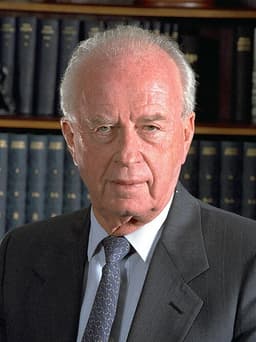
Yitzhak Rabin
General · Modern
66.4Total
Basic Information
Born
1769
1922
Died
1821
—
Era
Modern
Modern
Nationality
France
Israel
Occupation
General
General
Civilization
Western
Middle Eastern
Score Comparison
Military (10%)
94.0
61.7
Political (20%)
72.0
82.0
Influence (20%)
40.0
68.0
Legacy (20%)
80.0
55.0
Leadership (15%)
78.0
78.0
Strategy (15%)
90.0
55.0
TOTAL
70.9
66.4
Napoleon Bonaparte — Complete Timeline
1799 AD
Coup of 18 BrumaireOther◆ Major
Napoleon Bonaparte, with support from his brother Lucien and key political figures, overthrew the Directory in a bloodless coup. He established the Consulate with himself as First Consul, effectively becoming the ruler of France. This event ended the French Revolution's most unstable period.
French RevolutionCoupRise to Power
Impact: regional
1804 AD
Promulgation of the Napoleonic CodeOther◆ Major
Napoleon enacted the Civil Code of the French, known as the Napoleonic Code, a comprehensive set of laws that replaced the fragmented feudal legal systems. The code established legal equality, protected property rights, and secularized law. It became the basis for legal systems in many European and world countries.
Legal ReformNapoleonic CodeCivil Law
Impact: globalconstructive
1805 AD
Battle of AusterlitzWar◆ Major
Napoleon's Grande Arm
Napoleonic WarsBattleDecisive Victory
Impact: global
1812 AD
Invasion of RussiaWar◆ Major
Napoleon led the Grande Arm
Napoleonic WarsInvasionDisaster
Impact: globaldestructive
1815 AD
Battle of WaterlooWar◆ Major
Napoleon's French army was defeated by the combined forces of the Duke of Wellington's Anglo-Allied army and Gebhard Leberecht von Bl
Napoleonic WarsBattleFinal Defeat
Impact: globaldestructive
Yitzhak Rabin — Complete Timeline
1967 AD
Chief of Staff during the Six-Day WarWar
As Chief of Staff of the Israel Defense Forces, Rabin commanded the Israeli military during the Six-Day War against Egypt, Jordan, and Syria. Israel captured the Sinai Peninsula, Gaza Strip, West Bank, East Jerusalem, and Golan Heights, reshaping the region.
Six-Day WarTerritorial ExpansionMilitary Victory
Impact: global
1993 AD
Signing of the Oslo AccordsPolitical Action
As prime minister, Rabin signed the Oslo Accords with PLO Chairman Yasser Arafat on the White House lawn. The agreement established the Palestinian Authority and set a framework for Palestinian self-governance in the West Bank and Gaza Strip.
Peace ProcessPalestiniansOslo
Impact: globalconstructive
1995 AD
Assassination at Peace RallyPolitical Action
Rabin was assassinated by Israeli extremist Yigal Amir after a peace rally in Tel Aviv. The assassination shocked Israel and the world, derailing the Oslo peace process and leading to a period of political instability.
AssassinationPeace ProcessPolitical Violence
Impact: globaltragic
Expert Analysis
Napoleon Bonaparte vs Yitzhak Rabin: Historical Comparison
Napoleon Bonaparte and Yitzhak Rabin were both modern generals who transitioned into transformative political leadership, yet their contexts and outcomes diverged dramatically—one expanding an empire through conquest, the other navigating a fragile peace process in a contested region.
Dimension Analysis
**Military: Napoleon Bonaparte 94 / Yitzhak Rabin 62**
Napoleon revolutionized warfare with mass conscription, rapid maneuvers, and decisive battles like Austerlitz, conquering much of Europe. Rabin, while a capable commander in Israel’s 1967 Six-Day War, operated in a smaller, defensive theater and lacked Napoleon’s scale of strategic innovation.
**Political: Napoleon Bonaparte 75 / Yitzhak Rabin 78**
Napoleon centralized power as First Consul and Emperor, enacting the Napoleonic Code, but his authoritarianism alienated allies. Rabin, as Prime Minister, navigated Israel’s fractious coalition politics and signed the Oslo Accords, earning a Nobel Peace Prize—though the peace process ultimately stalled.
**Influence: Napoleon Bonaparte 82 / Yitzhak Rabin 68**
Napoleon reshaped European borders, legal systems, and nationalism for generations. Rabin’s influence, while profound in the Middle East, was cut short by his assassination in 1995, limiting his long-term geopolitical impact.
**Legacy: Napoleon Bonaparte 78 / Yitzhak Rabin 69**
Napoleon’s legacy is dual—celebrated as a reformer and condemned as a tyrant—but remains globally iconic. Rabin is revered in Israel as a peace martyr, though his legacy is contested by those who view Oslo as a security failure.
**Leadership: Napoleon Bonaparte 80 / Yitzhak Rabin 83**
Napoleon inspired fierce loyalty but was autocratic and overreached in Russia. Rabin’s pragmatic, low-ego leadership—willing to negotiate with former enemies—earned him respect across divides, though he struggled to control extremists on both sides.
Verdict
Napoleon Bonaparte leads overall due to his superior military genius and lasting global influence, despite Rabin’s higher political and leadership scores in a more constrained context.
FAQ
Q: Who ranks higher? A: Napoleon Bonaparte, driven by a decisive military edge (94 vs. 62) and broader historical influence (82 vs. 68), outweighs Rabin’s stronger leadership and political diplomacy.
Rankings
🥇
Napoleon BonaparteLeader
Mil: 94.0Pol: 72.0Inf: 40.0
70.9
🥈
Yitzhak Rabin
Mil: 61.7Pol: 82.0Inf: 68.0
66.4
+4.5 behind
How This Comparison Works
Algorithm
Each figure is scored on 6 dimensions (0—100 scale) based on structured historical data: Military (10%), Political (20%), Influence (20%), Legacy (20%), Leadership (15%), Strategy (15%). The weighted total produces the final ranking.
Data Sources
Scores are computed from structured sub-indicators in the database. Scale factors adjust for era (Ancient ×0.85, Modern ×1.0) and civilization size (Eastern ×1.05, Other ×0.80) to account for differences in population and military scale.
Maximum 3 Figures
Comparisons are limited to 2—3 figures to ensure readability and statistical meaningfulness.
Error Margins
±5 points per dimension — Sub-scores are derived from historical records with inherent uncertainty. Two figures within 5 points on a dimension should be considered roughly equivalent in that area.
Total Score Accuracy
±3 points overall — The weighted combination of 6 dimensions produces a total score with approximately ±3 points of uncertainty. Differences of less than 3 points are not statistically significant— the figures are effectively tied.
Known Limitations
- Historical records are incomplete and uneven across civilizations
- Figures from oral-tradition societies may be underrepresented
- Occupation labels can misclassify multi-role figures
- Scores measure capability and impact, not moral character
- Quantitative scoring is a comparison tool, not absolute truth
Capability Radar
Military (10%) — Battles & Warfare
Battles
95
65
Win Rate
90
70
Expansion
95
50
Political (20%) — Governance & Reform
Reform
95
65
Diplomacy
80
85
Economy
85
60
Influence (20%) — Cultural & Global Reach
Cultural
85
55
Global
90
70
Legacy (20%) — Historical Impact
Historical
95
75
Longevity
90
60
Leadership (15%) — Power & Stability
Tenure
85
70
Stability
70
40
Strategy (15%) — Tactics & Innovation
Strategy
95
75
Tactics
98
60
Reform
92
55
Similar Comparisons
Comments & Discussion
Historian2856/16/2026
拿破仑军事94分,拉宾62分?这分差太极端了。拿破仑确实仗打得漂亮,但战略上最终一败涂地——滑铁卢和莫斯科的损失算不算军事失败?反观拉宾,六日战争指挥得当,以色列以少胜多,战略目标明确,没犯拿破仑那种过度扩张的错误。按中国史标准,曾国藩剿太平天国也没拿过90分以上,因为输过几次。建议给拉宾至少加10分,拿破仑减5分,更合理。政治分更离谱:拿破仑75对拉宾78,可拿破仑搞独裁、毁共和,拉宾推动和平协议还拿诺奖,差距该更大。数据不能只看赢面,得看长期代价。
Chronicler45996/16/2026
拿西方标准比这两位,总觉得隔了一层。拿破仑像秦始皇加曹操——统一法典、扩张版图,但靠的是征服和铁腕;拉宾则更像商鞅或者赵武灵王,在内部推行改革,对外尝试和解,可惜被刺杀挡了路。中国史里,改革家往往比征服者更难评价,因为成效慢、争议大。拿破仑影响遍及欧洲,但拉宾的和平路线若成功,对中东的贡献堪比文景之治的休养生息。可惜只活了73岁,不如拿破仑60岁死得“完整”。西方评分重结果,中国会重过程与韧劲。拉宾该在政治和领导力上更高才对。