Loading...
This comparison has not been analyzed yet.
One-time AI generation (~1 minute). Scores and timeline are already available below.
Neferneferuaten vs Shepseskaf
Neferneferuaten leads by 2.8 pts · 2 figures compared
…
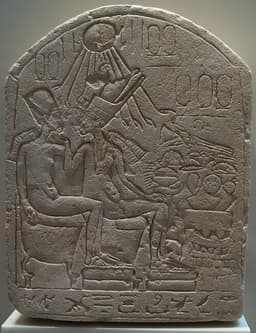
Neferneferuaten
Emperor · Ancient
41.8Total
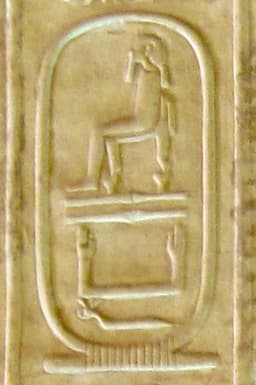
Shepseskaf
Emperor · Ancient
39.0Total
Basic Information
Born
-1335
-2470
Died
-1333
-2460
Era
Ancient
Ancient
Nationality
New Kingdom Egypt
Old Kingdom Egypt
Occupation
Emperor
Emperor
Civilization
Middle Eastern
Middle Eastern
Score Comparison
Military (10%)
39.6
30.2
Political (20%)
27.9
35.0
Influence (20%)
45.5
43.2
Legacy (20%)
36.7
34.2
Leadership (15%)
49.9
39.0
Strategy (15%)
56.3
55.0
TOTAL
41.8
39.0
Neferneferuaten — Complete Timeline
1336 BC
Possible Co-regency with AkhenatenPolitical Action
Neferneferuaten may have served as co-regent with Akhenaten in the final years of his reign. Inscriptions from Amarna show a female figure with royal titles alongside Akhenaten. This co-regency, if historical, would have been a unique arrangement, possibly to stabilize the succession after Akhenaten's death.
Co-regencyAmarnaSuccession
Impact: national
1335 BC
Reign as Female Amarna PharaohPolitical Action◆ Major
Neferneferuaten ruled as a female pharaoh during the late Amarna period, possibly as the successor to Akhenaten. She adopted the throne name Ankhkheperure and was depicted with both male and female attributes. Her identity is debated, with many scholars identifying her as Nefertiti ruling under a new name.
Female PharaohAmarnaNefertiti
Impact: national
1334 BC
Attempted Religious ReconciliationReform◆ Major
Neferneferuaten may have initiated a gradual return to traditional Egyptian religion, reversing Akhenaten's exclusive worship of Aten. Evidence from inscriptions shows her making offerings to Amun and other gods, suggesting a policy of reconciliation to ease tensions caused by the Amarna religious revolution.
ReligionReformAmarna
Impact: nationalconstructive
Shepseskaf — Complete Timeline
2470 BC
Construction of the mastaba at SaqqaraOther◆ Major
Shepseskaf built a large mastaba tomb at Saqqara, known as the Mastabat el-Fara'un. This rectangular structure, measuring about 100 by 75 meters, was built of limestone and mudbrick. It represents a departure from the pyramid tradition of the Fourth Dynasty, possibly due to economic or religious reasons.
Tomb ConstructionSaqqaraMastaba
Impact: national
2460 BC
End of the Fourth DynastyPolitical Action◆ Major
Shepseskaf's death marked the end of the Fourth Dynasty. His reign was short, and his successor Userkaf founded the Fifth Dynasty. The transition may have involved a change in royal family or a shift in power, possibly related to the growing influence of the sun cult.
Dynastic ChangeFourth DynastySuccession
Impact: national
This comparison has not been analyzed yet.
One-time AI generation (~1 minute). Scores and timeline are already available below.
Rankings
🥇
NeferneferuatenLeader
Mil: 39.6Pol: 27.9Inf: 45.5
41.8
🥈
Shepseskaf
Mil: 30.2Pol: 35.0Inf: 43.2
39.0
+2.8 behind
How This Comparison Works
Algorithm
Each figure is scored on 6 dimensions (0—100 scale) based on structured historical data: Military (10%), Political (20%), Influence (20%), Legacy (20%), Leadership (15%), Strategy (15%). The weighted total produces the final ranking.
Data Sources
Scores are computed from structured sub-indicators in the database. Scale factors adjust for era (Ancient ×0.85, Modern ×1.0) and civilization size (Eastern ×1.05, Other ×0.80) to account for differences in population and military scale.
Maximum 3 Figures
Comparisons are limited to 2—3 figures to ensure readability and statistical meaningfulness.
Error Margins
±5 points per dimension — Sub-scores are derived from historical records with inherent uncertainty. Two figures within 5 points on a dimension should be considered roughly equivalent in that area.
Total Score Accuracy
±3 points overall — The weighted combination of 6 dimensions produces a total score with approximately ±3 points of uncertainty. Differences of less than 3 points are not statistically significant— the figures are effectively tied.
Known Limitations
- Historical records are incomplete and uneven across civilizations
- Figures from oral-tradition societies may be underrepresented
- Occupation labels can misclassify multi-role figures
- Scores measure capability and impact, not moral character
- Quantitative scoring is a comparison tool, not absolute truth
Capability Radar
Military (10%) — Battles & Warfare
Battles
36
35
Win Rate
43
41
Expansion
46
44
Political (20%) — Governance & Reform
Reform
20
5
Diplomacy
15
5
Economy
10
5
Influence (20%) — Cultural & Global Reach
Cultural
20
10
Global
10
5
Legacy (20%) — Historical Impact
Historical
25
10
Longevity
15
5
Leadership (15%) — Power & Stability
Tenure
10
10
Stability
5
15
Strategy (15%) — Tactics & Innovation
Strategy
46
49
Tactics
48
50
Reform
54
51
Similar Comparisons
Comments & Discussion
No comments yet. Be the first to share your thoughts!