Loading...
This comparison has not been analyzed yet.
One-time AI generation (~1 minute). Scores and timeline are already available below.
Ngolo Diarra vs Umaid Singh of Jodhpur
Ngolo Diarra leads by 10.5 pts · 2 figures compared
…

Ngolo Diarra
Emperor · Modern
53.5Total
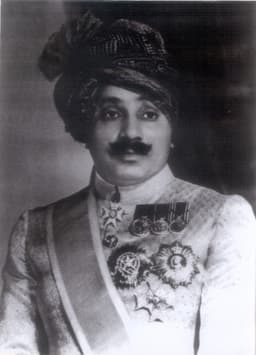
Umaid Singh of Jodhpur
Emperor · Modern
43.0Total
Basic Information
Born
1700
1903
Died
1790
1947
Era
Modern
Modern
Nationality
Bamana Empire
India
Occupation
Emperor
Emperor
Civilization
Other
Indian
Score Comparison
Military (10%)
50.0
15.3
Political (20%)
68.0
35.1
Influence (20%)
54.1
50.2
Legacy (20%)
43.3
39.2
Leadership (15%)
53.2
67.0
Strategy (15%)
60.0
37.9
TOTAL
53.5
43.0
Ngolo Diarra — Complete Timeline
1766 AD
Conquest of SegouWar
Ngolo Diarra, a former slave, led a successful military campaign to capture the city of Segou from the ruling Coulibaly dynasty. This victory established him as the new faama (king) of the Bamana Empire, marking the beginning of his reign.
ConquestBamana EmpireSegou
Impact: regional
Establishment of Segou as CapitalPolitical Action◆ Major
After his conquest, Ngolo Diarra made Segou the permanent capital of the Bamana Empire. He initiated a building program that included the construction of a royal palace and fortifications, transforming the city into a major political and economic center.
CapitalUrban DevelopmentSegou
Impact: nationalconstructive
1770 AD
Expansion of the Bamana EmpireWar◆ Major
Ngolo Diarra launched military campaigns that expanded Bamana control over the Niger River valley, including the conquest of the important trading city of Djenn
ExpansionTradeNiger River
Impact: regional
1775 AD
Reorganization of the Bamana ArmyReform◆ Major
Ngolo Diarra restructured the Bamana military, creating a professional standing army with a core of slave soldiers loyal directly to him. This reform reduced the power of traditional nobles and increased the central authority of the faama.
Military ReformCentralizationSlave Soldiers
Impact: nationalconstructive
Umaid Singh of Jodhpur — Complete Timeline
1918 AD
Accession to the throne of JodhpurPolitical Action◆ Major
Umaid Singh succeeded his father Maharaja Sir Pratap Singh as the Maharaja of Jodhpur. His reign saw modernization efforts and the construction of the Umaid Bhawan Palace. He ruled until his death in 1947.
SuccessionRoyal Rule
Impact: regional
1943 AD
Construction of Umaid Bhawan PalaceCultural◆ Major
Umaid Singh commissioned the Umaid Bhawan Palace in Jodhpur, designed by architect Henry Lanchester. The palace was built as a famine relief project, providing employment during a drought. It became one of the world's largest private residences and a symbol of Jodhpur's heritage.
ArchitectureFamine ReliefRoyal Palace
Impact: regionalconstructive
1947 AD
Integration of Jodhpur into IndiaPolitical Action◆ Major
Umaid Singh signed the Instrument of Accession, integrating Jodhpur into the Dominion of India after Indian independence. This decision ended Jodhpur's princely sovereignty and aligned the state with the newly independent nation.
Indian IndependencePrincely StatesAccession
Impact: national
This comparison has not been analyzed yet.
One-time AI generation (~1 minute). Scores and timeline are already available below.
Rankings
🥇
Ngolo DiarraLeader
Mil: 50.0Pol: 68.0Inf: 54.1
53.5
🥈
Umaid Singh of Jodhpur
Mil: 15.3Pol: 35.1Inf: 50.2
43.0
+10.5 behind
How This Comparison Works
Algorithm
Each figure is scored on 6 dimensions (0—100 scale) based on structured historical data: Military (10%), Political (20%), Influence (20%), Legacy (20%), Leadership (15%), Strategy (15%). The weighted total produces the final ranking.
Data Sources
Scores are computed from structured sub-indicators in the database. Scale factors adjust for era (Ancient ×0.85, Modern ×1.0) and civilization size (Eastern ×1.05, Other ×0.80) to account for differences in population and military scale.
Maximum 3 Figures
Comparisons are limited to 2—3 figures to ensure readability and statistical meaningfulness.
Error Margins
±5 points per dimension — Sub-scores are derived from historical records with inherent uncertainty. Two figures within 5 points on a dimension should be considered roughly equivalent in that area.
Total Score Accuracy
±3 points overall — The weighted combination of 6 dimensions produces a total score with approximately ±3 points of uncertainty. Differences of less than 3 points are not statistically significant— the figures are effectively tied.
Known Limitations
- Historical records are incomplete and uneven across civilizations
- Figures from oral-tradition societies may be underrepresented
- Occupation labels can misclassify multi-role figures
- Scores measure capability and impact, not moral character
- Quantitative scoring is a comparison tool, not absolute truth
Capability Radar
Military (10%) — Battles & Warfare
Battles
45
6
Win Rate
50
13
Expansion
55
11
Political (20%) — Governance & Reform
Reform
55
20
Diplomacy
45
25
Economy
50
30
Influence (20%) — Cultural & Global Reach
Cultural
40
30
Global
25
10
Legacy (20%) — Historical Impact
Historical
40
25
Longevity
30
20
Leadership (15%) — Power & Stability
Tenure
50
30
Stability
50
40
Strategy (15%) — Tactics & Innovation
Strategy
45
16
Tactics
40
22
Reform
50
24
Similar Comparisons
Comments & Discussion
No comments yet. Be the first to share your thoughts!