Loading...
This comparison has not been analyzed yet.
One-time AI generation (~1 minute). Scores and timeline are already available below.
Nguyen Van Linh vs Yemi Osinbajo
Nguyen Van Linh leads by 12.5 pts · 2 figures compared
…
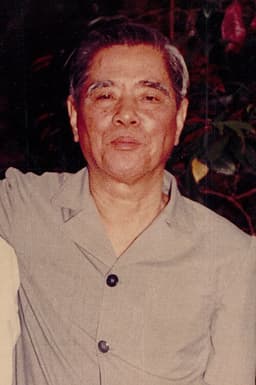
Nguyen Van Linh
Politician · Modern
61.1Total

Yemi Osinbajo
Politician · Modern
48.6Total
Basic Information
Born
1915
1957
Died
1998
—
Era
Modern
Modern
Nationality
Vietnam
Nigeria
Occupation
Politician
Politician
Civilization
Eastern
Other
Score Comparison
Military (10%)
47.6
50.0
Political (20%)
82.0
45.1
Influence (20%)
59.0
51.0
Legacy (20%)
56.0
39.2
Leadership (15%)
72.0
67.0
Strategy (15%)
45.3
41.9
TOTAL
61.1
48.6
Nguyen Van Linh — Complete Timeline
1986 AD
Launched Doi Moi ReformsReform
Linh launched the Doi Moi reforms at the 6th National Party Congress, introducing market mechanisms, private enterprise, and foreign investment while maintaining communist party control. The reforms spurred economic growth, reduced poverty, and integrated Vietnam into the global economy.
Doi MoiEconomic ReformVietnam
Impact: globalconstructive
Appointed General Secretary of the Communist Party of VietnamPolitical Action
Nguyen Van Linh was appointed General Secretary of the Communist Party of Vietnam in December 1986, succeeding Truong Chinh. He became the leading reformer, initiating the Doi Moi (Renovation) policy to transition Vietnam from a centrally planned economy to a socialist-oriented market economy.
General SecretaryDoi MoiReform
Impact: globalconstructive
1989 AD
Oversaw Withdrawal from CambodiaPolitical Action◆ Major
Under Linh's leadership, Vietnam completed the withdrawal of its troops from Cambodia in September 1989, ending a decade-long occupation. The move improved Vietnam's international relations and facilitated normalization with China and ASEAN countries.
CambodiaWithdrawalForeign Policy
Impact: regionalconstructive
1991 AD
Normalized Relations with ChinaPolitical Action◆ Major
Linh's government normalized diplomatic relations with China in November 1991, ending a decade of hostility following the Sino-Vietnamese War. The normalization opened trade and reduced tensions, though border disputes remained unresolved.
ChinaNormalizationDiplomacy
Impact: regionalconstructive
Yemi Osinbajo — Complete Timeline
2015 AD
Appointed Vice President of NigeriaPolitical Action◆ Major
Yemi Osinbajo was elected Vice President under President Muhammadu Buhari on the All Progressives Congress (APC) platform. He served two terms from 2015 to 2023, acting as president during Buhari's medical absences.
Nigerian PoliticsVice PresidencyBuhari Administration
Impact: nationalconstructive
2016 AD
Launched the National Social Investment ProgramReform◆ Major
Osinbajo oversaw the launch of Nigeria's National Social Investment Program (NSIP), including conditional cash transfers, school feeding, and job creation schemes. The program aimed to reduce poverty and support vulnerable populations.
Social PolicyPoverty ReductionNigerian Government
Impact: nationalconstructive
2017 AD
Acting President During Buhari's Medical LeavePolitical Action◆ Major
Osinbajo served as Acting President for several months in 2017 while President Buhari received medical treatment in the UK. He oversaw the government and made key appointments during this period.
Nigerian PoliticsActing PresidentBuhari Health
Impact: national
This comparison has not been analyzed yet.
One-time AI generation (~1 minute). Scores and timeline are already available below.
Rankings
🥇
Nguyen Van LinhLeader
Mil: 47.6Pol: 82.0Inf: 59.0
61.1
🥈
Yemi Osinbajo
Mil: 50.0Pol: 45.1Inf: 51.0
48.6
+12.5 behind
How This Comparison Works
Algorithm
Each figure is scored on 6 dimensions (0—100 scale) based on structured historical data: Military (10%), Political (20%), Influence (20%), Legacy (20%), Leadership (15%), Strategy (15%). The weighted total produces the final ranking.
Data Sources
Scores are computed from structured sub-indicators in the database. Scale factors adjust for era (Ancient ×0.85, Modern ×1.0) and civilization size (Eastern ×1.05, Other ×0.80) to account for differences in population and military scale.
Maximum 3 Figures
Comparisons are limited to 2—3 figures to ensure readability and statistical meaningfulness.
Error Margins
±5 points per dimension — Sub-scores are derived from historical records with inherent uncertainty. Two figures within 5 points on a dimension should be considered roughly equivalent in that area.
Total Score Accuracy
±3 points overall — The weighted combination of 6 dimensions produces a total score with approximately ±3 points of uncertainty. Differences of less than 3 points are not statistically significant— the figures are effectively tied.
Known Limitations
- Historical records are incomplete and uneven across civilizations
- Figures from oral-tradition societies may be underrepresented
- Occupation labels can misclassify multi-role figures
- Scores measure capability and impact, not moral character
- Quantitative scoring is a comparison tool, not absolute truth
Capability Radar
Military (10%) — Battles & Warfare
Battles
33
21
Win Rate
36
27
Expansion
41
29
Political (20%) — Governance & Reform
Reform
85
35
Diplomacy
70
40
Economy
80
35
Influence (20%) — Cultural & Global Reach
Cultural
40
20
Global
55
25
Legacy (20%) — Historical Impact
Historical
65
20
Longevity
55
15
Leadership (15%) — Power & Stability
Tenure
60
40
Stability
65
30
Strategy (15%) — Tactics & Innovation
Strategy
42
29
Tactics
44
35
Reform
49
37
Similar Comparisons
Comments & Discussion
No comments yet. Be the first to share your thoughts!