Loading...
This comparison has not been analyzed yet.
One-time AI generation (~1 minute). Scores and timeline are already available below.
Nur Muhammad Taraki vs Rene Levesque
Rene Levesque leads by 19.6 pts · 2 figures compared
…
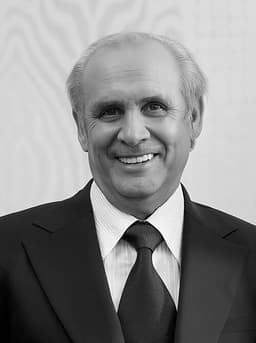
Nur Muhammad Taraki
Politician · Modern
37.7Total

Rene Levesque
Politician · Modern
57.3Total
Basic Information
Born
1917
1922
Died
1979
—
Era
Modern
Modern
Nationality
Afghanistan
Canada
Occupation
Politician
Politician
Civilization
Middle Eastern
Western
Score Comparison
Military (10%)
46.1
50.0
Political (20%)
26.4
72.0
Influence (20%)
45.5
58.3
Legacy (20%)
35.8
52.0
Leadership (15%)
31.2
66.0
Strategy (15%)
41.1
40.7
TOTAL
37.7
57.3
Nur Muhammad Taraki — Complete Timeline
1978 AD
Presidency of Afghanistan (1978-1979)Political Action◆ Major
Nur Muhammad Taraki became President of Afghanistan in April 1978 after the Saur Revolution, which brought the People's Democratic Party to power. He implemented radical Marxist reforms, including land redistribution and women's rights, which sparked widespread resistance and civil war.
Saur RevolutionCommunist ReformsCivil War
Impact: national
1979 AD
Murdered by Hafizullah Amin (1979)Political Action◆ Major
Taraki was murdered on September 14, 1979, on the orders of his rival Hafizullah Amin. Amin's supporters suffocated Taraki with a pillow in his palace. This event deepened the crisis within the communist government and accelerated Soviet plans for intervention.
CoupAssassinationPower Struggle
Impact: nationaltragic
Rene Levesque — Complete Timeline
1968 AD
Founded the Parti QuébécoisPolitical Action
Lévesque merged his Mouvement Souveraineté-Association with other separatist groups to form the Parti Québécois, a sovereignist political party. The PQ aimed to achieve Quebec's independence from Canada through democratic means, becoming a major force in Quebec politics.
Quebec SovereigntyParti QuébécoisSeparatism
Impact: regionalconstructive
1976 AD
Elected Premier of QuebecPolitical Action
Lévesque led the Parti Québécois to victory in the Quebec general election, winning 71 seats and forming the first sovereignist government in the province's history. His election marked a seismic shift in Canadian politics and triggered debates about national unity.
ElectionQuebecSovereignty
Impact: regionalconstructive
1977 AD
Passed Bill 101 (Charter of the French Language)Reform◆ Major
Lévesque's government enacted Bill 101, making French the sole official language of Quebec in government, education, and business. The law restricted English-language schooling and signage, aiming to protect and promote the French language in Quebec.
LanguageQuebecBill 101
Impact: regionalconstructive
1980 AD
Held the 1980 Quebec Referendum on SovereigntyPolitical Action
Lévesque's government held a referendum on a mandate to negotiate 'sovereignty-association' with Canada. The 'No' side won with 59.6% of the vote, defeating the sovereignty proposal. Lévesque accepted the result and continued as premier.
ReferendumQuebecSovereignty
Impact: regional
1985 AD
Resigned as Premier and PQ LeaderPolitical Action◆ Major
Lévesque resigned as premier and leader of the Parti Québécois after internal party divisions over the sovereignty strategy and declining popularity. He was succeeded by Pierre-Marc Johnson. Lévesque's legacy as a champion of Quebec nationalism remained strong.
ResignationQuebecParti Québécois
Impact: regional
This comparison has not been analyzed yet.
One-time AI generation (~1 minute). Scores and timeline are already available below.
Rankings
🥇
Rene LevesqueLeader
Mil: 50.0Pol: 72.0Inf: 58.3
57.3
🥈
Nur Muhammad Taraki
Mil: 46.1Pol: 26.4Inf: 45.5
37.7
+19.6 behind
How This Comparison Works
Algorithm
Each figure is scored on 6 dimensions (0—100 scale) based on structured historical data: Military (10%), Political (20%), Influence (20%), Legacy (20%), Leadership (15%), Strategy (15%). The weighted total produces the final ranking.
Data Sources
Scores are computed from structured sub-indicators in the database. Scale factors adjust for era (Ancient ×0.85, Modern ×1.0) and civilization size (Eastern ×1.05, Other ×0.80) to account for differences in population and military scale.
Maximum 3 Figures
Comparisons are limited to 2—3 figures to ensure readability and statistical meaningfulness.
Error Margins
±5 points per dimension — Sub-scores are derived from historical records with inherent uncertainty. Two figures within 5 points on a dimension should be considered roughly equivalent in that area.
Total Score Accuracy
±3 points overall — The weighted combination of 6 dimensions produces a total score with approximately ±3 points of uncertainty. Differences of less than 3 points are not statistically significant— the figures are effectively tied.
Known Limitations
- Historical records are incomplete and uneven across civilizations
- Figures from oral-tradition societies may be underrepresented
- Occupation labels can misclassify multi-role figures
- Scores measure capability and impact, not moral character
- Quantitative scoring is a comparison tool, not absolute truth
Capability Radar
Military (10%) — Battles & Warfare
Battles
20
31
Win Rate
24
30
Expansion
30
32
Political (20%) — Governance & Reform
Reform
20
75
Diplomacy
10
60
Economy
5
55
Influence (20%) — Cultural & Global Reach
Cultural
5
65
Global
5
55
Legacy (20%) — Historical Impact
Historical
10
70
Longevity
5
60
Leadership (15%) — Power & Stability
Tenure
10
65
Stability
5
50
Strategy (15%) — Tactics & Innovation
Strategy
32
37
Tactics
32
38
Reform
39
42
Similar Comparisons
Comments & Discussion
No comments yet. Be the first to share your thoughts!