Loading...
This comparison has not been analyzed yet.
One-time AI generation (~1 minute). Scores and timeline are already available below.
Octar vs Sekhemkhet
Sekhemkhet leads by 2.2 pts · 2 figures compared
…

Octar
Emperor · Ancient
38.2Total
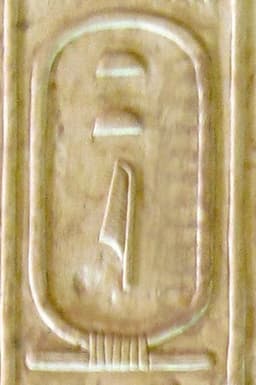
Sekhemkhet
Emperor · Ancient
40.4Total
Basic Information
Born
390
-2640
Died
430
-2630
Era
Ancient
Ancient
Nationality
Hunnic Empire
Old Kingdom Egypt
Occupation
Emperor
Emperor
Civilization
Western
Middle Eastern
Score Comparison
Military (10%)
50.0
42.6
Political (20%)
33.6
32.1
Influence (20%)
40.9
43.2
Legacy (20%)
32.5
33.3
Leadership (15%)
39.0
44.5
Strategy (15%)
39.6
55.2
TOTAL
38.2
40.4
Octar — Complete Timeline
420 AD
Co-rulership with RugilaPolitical Action◆ Major
Octar ruled the Huns jointly with his brother Rugila, sharing leadership of the Hun confederation. This co-rulership helped consolidate Hun power and laid the groundwork for the later unification under Rugila's sole rule.
HunsCo-rulershipRugila
Impact: regional
430 AD
Campaign against the BurgundiansWar◆ Major
Octar led a Hun campaign against the Burgundians, a Germanic tribe on the Rhine. The campaign resulted in a Hun victory, weakening the Burgundians and expanding Hun influence into the region. This event is sometimes linked to the later Nibelungenlied legends.
HunsBurgundiansCampaignVictory
Impact: regionaldestructive
Death during campaignOther
Octar died during the campaign against the Burgundians, reportedly from overeating or gluttony. His death left Rugila as the sole ruler of the Huns, allowing Rugila to further unify and strengthen the Hun confederation.
HunsDeathCampaign
Impact: regional
Sekhemkhet — Complete Timeline
2640 BC
Initiation of the Buried Pyramid constructionOther◆ Major
Sekhemkhet began construction of a step pyramid at Saqqara, now known as the Buried Pyramid. The pyramid was planned to be larger than Djoser's step pyramid but was left unfinished, with only the base and lower courses completed. The site includes a surrounding enclosure wall and subsidiary tombs.
Pyramid ConstructionSaqqaraUnfinished
Impact: national
2630 BC
Discovery of the Buried Pyramid's burial chamberOther
The burial chamber of Sekhemkhet's pyramid was found empty, with an alabaster sarcophagus still sealed but containing no remains. This suggests the pharaoh may not have been buried there, or the tomb was robbed in antiquity. The discovery provided insights into early pyramid building techniques.
ArchaeologyBurial ChamberSarcophagus
This comparison has not been analyzed yet.
One-time AI generation (~1 minute). Scores and timeline are already available below.
Rankings
🥇
SekhemkhetLeader
Mil: 42.6Pol: 32.1Inf: 43.2
40.4
🥈
Octar
Mil: 50.0Pol: 33.6Inf: 40.9
38.2
+2.2 behind
How This Comparison Works
Algorithm
Each figure is scored on 6 dimensions (0—100 scale) based on structured historical data: Military (10%), Political (20%), Influence (20%), Legacy (20%), Leadership (15%), Strategy (15%). The weighted total produces the final ranking.
Data Sources
Scores are computed from structured sub-indicators in the database. Scale factors adjust for era (Ancient ×0.85, Modern ×1.0) and civilization size (Eastern ×1.05, Other ×0.80) to account for differences in population and military scale.
Maximum 3 Figures
Comparisons are limited to 2—3 figures to ensure readability and statistical meaningfulness.
Error Margins
±5 points per dimension — Sub-scores are derived from historical records with inherent uncertainty. Two figures within 5 points on a dimension should be considered roughly equivalent in that area.
Total Score Accuracy
±3 points overall — The weighted combination of 6 dimensions produces a total score with approximately ±3 points of uncertainty. Differences of less than 3 points are not statistically significant— the figures are effectively tied.
Known Limitations
- Historical records are incomplete and uneven across civilizations
- Figures from oral-tradition societies may be underrepresented
- Occupation labels can misclassify multi-role figures
- Scores measure capability and impact, not moral character
- Quantitative scoring is a comparison tool, not absolute truth
Capability Radar
Military (10%) — Battles & Warfare
Battles
10
39
Win Rate
10
41
Expansion
15
46
Political (20%) — Governance & Reform
Reform
5
10
Diplomacy
15
10
Economy
5
10
Influence (20%) — Cultural & Global Reach
Cultural
5
10
Global
5
5
Legacy (20%) — Historical Impact
Historical
10
10
Longevity
5
10
Leadership (15%) — Power & Stability
Tenure
15
10
Stability
10
10
Strategy (15%) — Tactics & Innovation
Strategy
10
50
Tactics
10
50
Reform
5
50
Similar Comparisons
Comments & Discussion
No comments yet. Be the first to share your thoughts!