Loading...
Odaenathus vs Wang Jian
Odaenathus leads by 9.4 pts · 2 figures compared
…

Odaenathus
General · Ancient
64.1Total
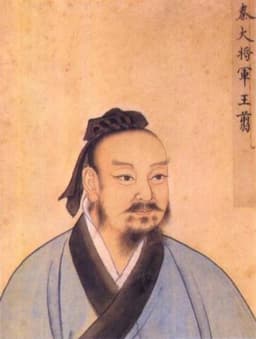
Wang Jian
General · Ancient
54.7Total
Basic Information
Born
220
-260
Died
267
-210
Era
Ancient
Ancient
Nationality
Palmyrene Empire
China
Occupation
General
General
Civilization
Middle Eastern
Eastern
Score Comparison
Military (10%)
75.0
88.0
Political (20%)
68.0
33.6
Influence (20%)
58.0
56.4
Legacy (20%)
49.2
56.0
Leadership (15%)
80.0
36.9
Strategy (15%)
76.0
72.0
TOTAL
64.1
54.7
Odaenathus — Complete Timeline
260 AD
Defense of the Roman East against the SassanidsWar◆ Major
Odaenathus, king of Palmyra, organized a successful defense of the Roman eastern provinces after Emperor Valerian was captured by the Sassanid king Shapur I. He defeated the Sassanid forces, drove them back across the Euphrates, and restored Roman authority in Syria and Mesopotamia.
PalmyraSassanid EmpireRoman Empire
Impact: regionalconstructive
262 AD
Campaign against the SassanidsWar◆ Major
Odaenathus launched a major campaign against the Sassanid Empire, recapturing the cities of Nisibis and Carrhae. He besieged the Sassanid capital of Ctesiphon but was unable to take it. His victories secured the Roman eastern frontier and earned him the title of Corrector Totius Orientis.
PalmyraSassanid EmpireCampaign
Impact: regionalconstructive
267 AD
AssassinationPolitical Action◆ Major
Odaenathus was assassinated along with his eldest son Herodianus at Emesa, allegedly on the orders of his wife Zenobia or his nephew Maeonius. His death created a power vacuum that allowed Zenobia to take control of Palmyra and expand the Palmyrene Empire.
AssassinationPalmyraZenobia
Impact: regionaltragic
Wang Jian — Complete Timeline
228 BC
Conquest of ZhaoWar◆ Major
Wang Jian led the Qin army to conquer the state of Zhao, capturing King Qian of Zhao. This victory eliminated one of the last major obstacles to Qin unification of China.
ConquestQin StateZhao State
Impact: regionaldestructive
223 BC
Conquest of ChuWar◆ Major
Wang Jian led a Qin army of 600,000 men to conquer the state of Chu. He defeated the Chu general Xiang Yan and captured King Fuchu of Chu, annexing Chu territory into Qin.
ConquestQin StateChu State
Impact: regionaldestructive
222 BC
Conquest of YanWar
Wang Jian led the Qin army to conquer the state of Yan, capturing King Xi of Yan. This victory further consolidated Qin control over northern China.
ConquestQin StateYan State
Impact: regionaldestructive
210 BC
Retirement and DeathOther
After the conquest of Chu, Wang Jian retired from military service. He died in 210 BC, having played a crucial role in the unification of China under Qin Shi Huang.
RetirementQin StateUnification
Impact: national
Expert Analysis
Origins
Odaenathus was born around 220 CE into a noble Palmyrene family. Palmyra, an oasis city in the Syrian desert, was a wealthy trading hub under Roman influence. His father, Septimius Hairan, was a Roman senator. Odaenathus inherited the title of exarch (ruler) of Palmyra and was granted Roman citizenship. Little is known of his early life, but he likely received military training and gained administrative experience managing caravans and local affairs.
Wang Jian was born in the state of Qin during the Warring States period, around 280 BCE. His family were minor military officials. He rose through the ranks based on merit, as Qin's legalist system rewarded performance. He learned warfare under the tutelage of Bai Qi, a famous Qin general. His early career involved leading small campaigns against neighboring states, demonstrating tactical competence.
Rise to Power
Odaenathus rose to prominence during the Crisis of the Third Century. In 260 CE, Roman Emperor Valerian was captured by the Sassanid king Shapur I. The Roman eastern provinces were left vulnerable. Odaenathus, already a loyal Roman ally, mobilized Palmyrene forces. He intercepted and defeated Shapur's army at the Battle of Edessa (260 CE), driving the Sassanids back across the Euphrates. This victory earned him recognition from Roman Emperor Gallienus, who granted him the titles of corrector totius orientis (governor of the East) and imperator (commander). By 262 CE, Odaenathus controlled the Roman East from Syria to Cappadocia.
Wang Jian's rise was gradual. He served under King Ying Zheng of Qin (later Qin Shi Huang). His first major opportunity came in 236 BCE when he led a campaign against the state of Zhao. He captured several cities, but the campaign stalled. He later advised the king to avoid a costly siege of Handan. His patience paid off when he was given command of the final conquest of Zhao in 228 BCE, defeating the Zhao army and capturing King Qian. This victory made him the leading general of Qin.
Leadership & Governance
Odaenathus ruled as a client king under Roman suzerainty, but effectively governed the East autonomously. He maintained Roman administrative structures while integrating Palmyrene elites. His leadership style was collaborative: he relied on local nobles and his wife Zenobia. Militarily, he used mobile cavalry and swift strikes, typical of Palmyrene warfare. He avoided direct confrontation with the main Sassanid army, instead harassing supply lines and recapturing key cities like Nisibis and Carrhae. He besieged Ctesiphon in 263 CE but withdrew without taking the capital, possibly due to logistical constraints.
Wang Jian was a methodical commander. He preferred overwhelming force and careful planning. For the conquest of Chu, he demanded 600,000 troops, a huge force, and used a strategy of attrition, building fortifications and avoiding pitched battles until the Chu army was exhausted. He then launched a decisive assault. His governance style was purely military; he did not engage in political reforms. He retired after the Chu campaign, avoiding the political intrigues of the Qin court.
Triumph & Tragedy
Odaenathus's greatest success was saving the Roman East from Sassanid conquest. He recaptured all lost territories and restored Roman prestige. His military scores reflect this: Military 75.0, Strategy 76.0. However, his assassination in 267 CE by a relative (possibly his nephew Maeonius) cut short his reign. His tragic flaw was his inability to secure a stable succession. His death left Palmyra in the hands of Zenobia, who later rebelled against Rome, leading to the destruction of Palmyra.
Wang Jian's triumph was the conquest of Chu, the largest and most powerful of the remaining states. His military score is 88.0, the highest among our metrics. He also conquered Zhao and Yan. His tragedy was his involvement in the brutal unification of China, which caused immense suffering. He retired in obscurity, and his legacy was overshadowed by Qin Shi Huang. His political score is low (33.6) because he never held high office or shaped policy.
Character & Destiny
Odaenathus was pragmatic and loyal to Rome, but ambitious. He maintained a delicate balance between Roman authority and Palmyrene independence. His character was cautious: he did not claim the imperial title despite having the power. His assassination was a result of family intrigue, a common fate for Eastern rulers. His leadership score is 80.0, reflecting his ability to inspire loyalty and command respect.
Wang Jian was disciplined and patient. He avoided political entanglements, which allowed him to die of natural causes at an old age. His low political score (33.6) indicates his lack of influence beyond the battlefield. He was a tool of the Qin state, not a shaper of destiny. His strategy score is 72.0, showing he was competent but not innovative.
Legacy
Odaenathus's legacy is mixed. He is remembered as a defender of Roman civilization against the Sassanids. His reign established Palmyra as a major power, but his death led to its downfall. He influenced later Byzantine frontier policies. His legacy score is 49.2, reflecting his short-lived impact. He is largely forgotten outside specialist circles.
Wang Jian's legacy is more enduring. He was instrumental in the unification of China, a pivotal event in world history. His methods influenced later Chinese military strategy. His influence score is 56.4, and legacy score is 56.0. He is remembered as one of the great generals of the Warring States period, but his role is often eclipsed by Qin Shi Huang.
Conclusion
While Odaenathus achieved a higher total score (64.1 vs 54.7), Wang Jian had a greater historical impact. Wang Jian's conquests directly enabled the creation of the first unified Chinese empire, which shaped East Asian civilization for millennia. Odaenathus's defense of the Roman East was crucial but temporary; Palmyra fell within a decade of his death. Wang Jian's military score (88.0) far exceeds Odaenathus's (75.0), and his strategic accomplishments altered the course of history. Therefore, Wang Jian is the more significant figure.
Rankings
🥇
OdaenathusLeader
Mil: 75.0Pol: 68.0Inf: 58.0
64.1
🥈
Wang Jian
Mil: 88.0Pol: 33.6Inf: 56.4
54.7
+9.4 behind
How This Comparison Works
Algorithm
Each figure is scored on 6 dimensions (0—100 scale) based on structured historical data: Military (10%), Political (20%), Influence (20%), Legacy (20%), Leadership (15%), Strategy (15%). The weighted total produces the final ranking.
Data Sources
Scores are computed from structured sub-indicators in the database. Scale factors adjust for era (Ancient ×0.85, Modern ×1.0) and civilization size (Eastern ×1.05, Other ×0.80) to account for differences in population and military scale.
Maximum 3 Figures
Comparisons are limited to 2—3 figures to ensure readability and statistical meaningfulness.
Error Margins
±5 points per dimension — Sub-scores are derived from historical records with inherent uncertainty. Two figures within 5 points on a dimension should be considered roughly equivalent in that area.
Total Score Accuracy
±3 points overall — The weighted combination of 6 dimensions produces a total score with approximately ±3 points of uncertainty. Differences of less than 3 points are not statistically significant— the figures are effectively tied.
Known Limitations
- Historical records are incomplete and uneven across civilizations
- Figures from oral-tradition societies may be underrepresented
- Occupation labels can misclassify multi-role figures
- Scores measure capability and impact, not moral character
- Quantitative scoring is a comparison tool, not absolute truth
Capability Radar
Military (10%) — Battles & Warfare
Battles
75
85
Win Rate
80
90
Expansion
70
90
Political (20%) — Governance & Reform
Reform
55
20
Diplomacy
80
30
Economy
60
20
Influence (20%) — Cultural & Global Reach
Cultural
45
40
Global
45
50
Legacy (20%) — Historical Impact
Historical
55
70
Longevity
40
60
Leadership (15%) — Power & Stability
Tenure
65
40
Stability
70
30
Strategy (15%) — Tactics & Innovation
Strategy
82
85
Tactics
78
80
Reform
60
60
Similar Comparisons
Comments & Discussion
No comments yet. Be the first to share your thoughts!