Loading...
Odoacer vs Wei Yan
Odoacer leads by 4.5 pts · 2 figures compared
…
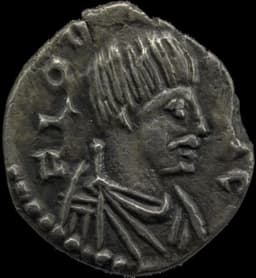
Odoacer
General · Ancient
49.7Total
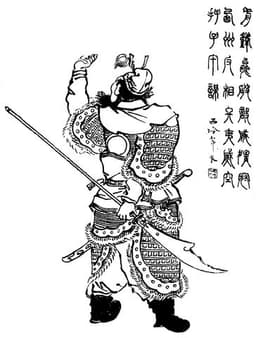
Wei Yan
General · Ancient
45.2Total
Basic Information
Born
433
175
Died
493
234
Era
Ancient
Ancient
Nationality
Italy
China
Occupation
General
General
Civilization
Western
Eastern
Score Comparison
Military (10%)
70.0
52.5
Political (20%)
29.3
35.0
Influence (20%)
54.1
48.6
Legacy (20%)
46.7
42.5
Leadership (15%)
47.3
46.3
Strategy (15%)
60.0
50.0
TOTAL
49.7
45.2
Odoacer — Complete Timeline
476 AD
Deposition of Romulus AugustulusPolitical Action
Odoacer, leading a revolt of Germanic foederati, deposed the Western Roman Emperor Romulus Augustulus. He sent the imperial regalia to the Eastern Roman Emperor Zeno, effectively ending the Western Roman Empire.
Fall of Western Roman EmpireEnd of Antiquity
Impact: global
Proclamation as King of ItalyPolitical Action◆ Major
After deposing Romulus Augustulus, Odoacer was proclaimed King of Italy by his troops. He ruled Italy autonomously while nominally recognizing the authority of the Eastern Roman Emperor, establishing a new political order.
Kingdom of ItalyGermanic RulePost-Roman
Impact: regional
489 AD
War with the OstrogothsWar◆ Major
The Eastern Roman Emperor Zeno sent the Ostrogothic king Theodoric the Great to invade Italy and overthrow Odoacer. Odoacer's forces were defeated at the battles of Isonzo and Verona, leading to a prolonged siege of Ravenna.
Ostrogothic InvasionItaly War
Impact: regionaldestructive
493 AD
Siege of Ravenna and DeathWar◆ Major
Odoacer surrendered Ravenna to Theodoric after a three-year siege. Under a truce, Theodoric invited Odoacer to a banquet and killed him with his own hands, ending Odoacer's rule and establishing the Ostrogothic Kingdom of Italy.
AssassinationOstrogothic KingdomEnd of Rule
Impact: regionaltragic
Wei Yan — Complete Timeline
219 AD
Wei Yan's Appointment as Governor of HanzhongPolitical Action◆ Major
After Liu Bei conquered Hanzhong, he appointed Wei Yan as the governor of this strategic region, bypassing the more senior Zhang Fei. Wei Yan successfully defended Hanzhong against Wei attacks for years, proving his competence.
AppointmentDefenseHanzhong
Impact: regionalconstructive
228 AD
Wei Yan's Northern Expeditions under Zhuge LiangWar◆ Major
Wei Yan served as a frontline commander in Zhuge Liang's Northern Expeditions against Wei. He proposed the risky 'Ziwu Valley' plan to attack Chang'an directly, but Zhuge Liang rejected it. Wei Yan's forces achieved several tactical victories.
ExpeditionMilitary CampaignStrategy
Impact: regional
234 AD
Wei Yan's Rebellion and DeathPolitical Action◆ Major
After Zhuge Liang's death, Wei Yan clashed with the chief of staff Yang Yi over command. Wei Yan burned the retreat route and was accused of rebellion. He was defeated, captured, and executed by Ma Dai. The historical accuracy of his 'rebellion' is debated.
RebellionExecutionPower Struggle
Impact: nationaltragic
Expert Analysis
Origins
Odoacer was born around 433 AD, likely in Pannonia (modern Hungary), into a Germanic tribe, possibly the Scirii or Rugii. His father was Edeko, a Hun commander under Attila. Odoacer grew up among the chaos of the collapsing Western Roman Empire, serving as a foederatus (mercenary) in the Roman army. His early life was marked by the disintegration of Roman authority, providing a backdrop for his ambition.
Wei Yan was born around 175 AD in Yiyang, Nanyang Commandery (modern Henan, China). Little is known of his early life, but he emerged as a military officer under the warlord Liu Bei during the late Eastern Han dynasty. Wei Yan's formative years were spent in the turbulent Three Kingdoms period, where loyalty and military prowess were paramount.
Rise to Power
Odoacer rose to power by leading a revolt of Germanic foederati in 476 AD. The Western Roman army, composed largely of barbarian mercenaries, demanded land in Italy. When Emperor Romulus Augustulus refused, Odoacer's forces deposed him, sending the imperial regalia to Constantinople. Odoacer was proclaimed King of Italy by his troops, a position he held for 13 years, nominally recognizing the Eastern Emperor Zeno.
Wei Yan rose to prominence by being appointed Governor of Hanzhong in 219 AD by Liu Bei, bypassing the more senior Zhang Fei. This was a turning point, as Hanzhong was a strategic gateway to northern China. Wei Yan successfully defended the region for years, earning trust. He later served as a frontline commander in Zhuge Liang's Northern Expeditions from 228 to 234 AD.
Leadership & Governance
Odoacer ruled Italy pragmatically, maintaining Roman administrative structures and cooperating with the Senate. He distributed land to his followers but avoided widespread confiscation. His governance score of 29.3 reflects limited political innovation; he focused on stability. For instance, he appointed Roman aristocrats to key posts, such as Liberius as Praetorian Prefect.
Wei Yan's leadership was more military-focused. He was known for his strict discipline and defensive prowess. However, his political score of 35.0 indicates poor interpersonal skills. He clashed with colleagues like Yang Yi and Liu Yan, undermining his authority. His strategy score of 50.0 matches Odoacer's 60.0, but his military score of 52.5 is lower than Odoacer's 70.0.
Triumph & Tragedy
Odoacer's greatest triumph was deposing the last Western Roman emperor, ending the empire's line. He then ruled Italy for 13 years, achieving a degree of stability. His tragedy came in 493 AD when the Ostrogothic king Theodoric the Great, sent by Emperor Zeno, besieged Ravenna. Odoacer surrendered after three years, only to be killed by Theodoric at a banquet. His rule ended in treachery.
Wei Yan's triumph was his successful defense of Hanzhong and his role in Zhuge Liang's campaigns. He proposed the risky Ziwu Valley plan to attack Chang'an, which was rejected. His tragedy was his rebellion after Zhuge Liang's death in 234 AD. Clashing with Yang Yi, Wei Yan burned the retreat route and was accused of treason. He was killed, and his family was executed. The rebellion's authenticity remains debated.
Character & Destiny
Odoacer was pragmatic and ambitious, but his trust in Theodoric's truce proved fatal. His character score of 47.3 reflects decisiveness but also naivety. He ruled effectively but failed to secure his position against external threats.
Wei Yan was proud and stubborn, with a leadership score of 46.3. His conflict with Yang Yi stemmed from personal animosity. His military talent was overshadowed by his inability to navigate court politics. His destiny was sealed by his rebellion, whether justified or not.
Legacy
Odoacer's legacy is as the man who ended the Western Roman Empire, scoring 46.7 in legacy. His rule set a precedent for barbarian kingdoms in Italy. However, his influence (54.1) is limited as his kingdom was soon replaced by the Ostrogoths.
Wei Yan's legacy (42.5) is more controversial. In Chinese historical records, he is often depicted as a rebel, but some scholars argue he was a victim of factional strife. His defensive strategies at Hanzhong influenced later military thinking. His influence score of 48.6 is slightly lower than Odoacer's.
Conclusion
Odoacer had a greater impact, with a total score of 49.7 vs Wei Yan's 45.2. Odoacer's deposition of Romulus Augustulus was a watershed event, marking the end of antiquity. Wei Yan's rebellion, while significant in Shu Han, did not alter the course of Chinese history as dramatically. Odoacer's actions directly led to the fall of the Western Roman Empire, whereas Wei Yan's death was a footnote in the Three Kingdoms. Thus, Odoacer's impact on world history is more profound.
Rankings
🥇
OdoacerLeader
Mil: 70.0Pol: 29.3Inf: 54.1
49.7
🥈
Wei Yan
Mil: 52.5Pol: 35.0Inf: 48.6
45.2
+4.5 behind
How This Comparison Works
Algorithm
Each figure is scored on 6 dimensions (0—100 scale) based on structured historical data: Military (10%), Political (20%), Influence (20%), Legacy (20%), Leadership (15%), Strategy (15%). The weighted total produces the final ranking.
Data Sources
Scores are computed from structured sub-indicators in the database. Scale factors adjust for era (Ancient ×0.85, Modern ×1.0) and civilization size (Eastern ×1.05, Other ×0.80) to account for differences in population and military scale.
Maximum 3 Figures
Comparisons are limited to 2—3 figures to ensure readability and statistical meaningfulness.
Error Margins
±5 points per dimension — Sub-scores are derived from historical records with inherent uncertainty. Two figures within 5 points on a dimension should be considered roughly equivalent in that area.
Total Score Accuracy
±3 points overall — The weighted combination of 6 dimensions produces a total score with approximately ±3 points of uncertainty. Differences of less than 3 points are not statistically significant— the figures are effectively tied.
Known Limitations
- Historical records are incomplete and uneven across civilizations
- Figures from oral-tradition societies may be underrepresented
- Occupation labels can misclassify multi-role figures
- Scores measure capability and impact, not moral character
- Quantitative scoring is a comparison tool, not absolute truth
Capability Radar
Military (10%) — Battles & Warfare
Battles
45
45
Win Rate
50
40
Expansion
40
30
Political (20%) — Governance & Reform
Reform
30
10
Diplomacy
50
20
Economy
35
10
Influence (20%) — Cultural & Global Reach
Cultural
30
30
Global
35
10
Legacy (20%) — Historical Impact
Historical
50
35
Longevity
40
30
Leadership (15%) — Power & Stability
Tenure
55
30
Stability
30
15
Strategy (15%) — Tactics & Innovation
Strategy
45
50
Tactics
40
55
Reform
20
20
Similar Comparisons
Comments & Discussion
No comments yet. Be the first to share your thoughts!