Loading...
Odoacer vs Zhao Yun
Zhao Yun leads by 4.9 pts · 2 figures compared
…
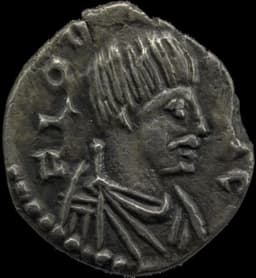
Odoacer
General · Ancient
49.7Total

Zhao Yun
General · Ancient
54.6Total
Basic Information
Born
433
168
Died
493
229
Era
Ancient
Ancient
Nationality
Italy
China
Occupation
General
General
Civilization
Western
Eastern
Score Comparison
Military (10%)
70.0
60.0
Political (20%)
29.3
35.0
Influence (20%)
54.1
60.0
Legacy (20%)
46.7
52.0
Leadership (15%)
47.3
62.6
Strategy (15%)
60.0
60.0
TOTAL
49.7
54.6
Odoacer — Complete Timeline
476 AD
Deposition of Romulus AugustulusPolitical Action
Odoacer, leading a revolt of Germanic foederati, deposed the Western Roman Emperor Romulus Augustulus. He sent the imperial regalia to the Eastern Roman Emperor Zeno, effectively ending the Western Roman Empire.
Fall of Western Roman EmpireEnd of Antiquity
Impact: global
Proclamation as King of ItalyPolitical Action◆ Major
After deposing Romulus Augustulus, Odoacer was proclaimed King of Italy by his troops. He ruled Italy autonomously while nominally recognizing the authority of the Eastern Roman Emperor, establishing a new political order.
Kingdom of ItalyGermanic RulePost-Roman
Impact: regional
489 AD
War with the OstrogothsWar◆ Major
The Eastern Roman Emperor Zeno sent the Ostrogothic king Theodoric the Great to invade Italy and overthrow Odoacer. Odoacer's forces were defeated at the battles of Isonzo and Verona, leading to a prolonged siege of Ravenna.
Ostrogothic InvasionItaly War
Impact: regionaldestructive
493 AD
Siege of Ravenna and DeathWar◆ Major
Odoacer surrendered Ravenna to Theodoric after a three-year siege. Under a truce, Theodoric invited Odoacer to a banquet and killed him with his own hands, ending Odoacer's rule and establishing the Ostrogothic Kingdom of Italy.
AssassinationOstrogothic KingdomEnd of Rule
Impact: regionaltragic
Zhao Yun — Complete Timeline
208 AD
Zhao Yun's Rescue of Liu Shan at ChangbanWar◆ Major
During Cao Cao's pursuit at Changban, Zhao Yun rode back into the enemy lines to find Liu Bei's family. He rescued the infant Liu Shan (later Emperor Liu Shan) and Lady Gan, fighting through Cao Cao's cavalry and returning safely to Liu Bei.
RescueHeroic ActLiu Shan
Impact: regional
214 AD
Zhao Yun's Role in the Conquest of Yi ProvinceWar
Zhao Yun served as a key commander in Liu Bei's campaign to conquer Yi Province. He led troops in several battles and was instrumental in securing the province. After the conquest, he was appointed General of the Standard.
ConquestYi ProvinceMilitary Service
Impact: regionalconstructive
221 AD
Zhao Yun's Protest Against Liu Bei's Wu CampaignPolitical Action◆ Major
Zhao Yun advised Liu Bei against launching a punitive expedition against Sun Quan for Guan Yu's death, arguing that the primary enemy was Wei, not Wu. Liu Bei ignored his counsel, and the campaign ended in disaster at the Battle of Xiaoting.
AdvicePolitical CounselStrategic Disagreement
Impact: national
Expert Analysis
Origins
Odoacer (c. 433-493) was likely of Scirian or Hun descent, born in Pannonia. He rose through the ranks of the Roman military, becoming a leader of Germanic foederati. His early life is obscure, but he was a seasoned warrior by the time he entered Roman service.
Zhao Yun (c. 168-229) was born in Zhending, Changshan commandery, during the Eastern Han dynasty. He initially served under Gongsun Zan before joining Liu Bei. His early career was marked by loyalty and bravery, which earned him a reputation as a capable commander.
Rise to Power
Odoacer's rise culminated in 476 when he led a revolt of foederati against the Western Roman Emperor Romulus Augustulus. He deposed the boy emperor, sending the imperial regalia to Constantinople, and was proclaimed King of Italy by his troops. This event effectively ended the Western Roman Empire.
Zhao Yun's rise was more gradual. He joined Liu Bei during his wanderings and participated in key campaigns. His defining moment came in 208 at the Battle of Changban, where he rescued Liu Bei's infant son, Liu Shan, from Cao Cao's forces. This act cemented his reputation for loyalty and courage.
Leadership & Governance
Odoacer ruled Italy pragmatically, maintaining Roman administrative structures while accommodating Germanic warriors. He balanced diplomacy with the Eastern Empire, but his rule was marked by conflict with the Ostrogoths. His leadership score of 47.3 reflects his ability to hold power but his ultimate failure to secure lasting rule.
Zhao Yun's leadership style was principled and cautious. He advised Liu Bei against the ill-fated campaign against Wu after Guan Yu's death, showing strategic foresight. His leadership score of 62.6 highlights his reliability and ethical approach, though he never held supreme command.
Triumph & Tragedy
Odoacer's greatest triumph was ending the Western Roman Empire and ruling Italy for 13 years. His tragedy was his betrayal and murder by Theodoric the Great after the Siege of Ravenna (493). He scored 70.0 in military but only 29.3 in political, indicating his weakness in long-term statecraft.
Zhao Yun's triumph was his heroic rescue at Changban and his role in conquering Yi Province. His tragedy was his failure to prevent Liu Bei's disastrous Wu campaign, which weakened Shu Han. He scored 60.0 in military and 62.6 in leadership, showing competence but not brilliance.
Character & Destiny
Odoacer was ambitious and ruthless, but his trust in Theodoric led to his death. His character was shaped by the chaotic transition from Roman to barbarian rule. Zhao Yun was known for his loyalty, humility, and strategic advice. His destiny was to be remembered as an ideal general, but not a ruler.
Legacy
Odoacer's legacy is as the man who ended the Western Roman Empire, a turning point in history. However, his rule was ephemeral, and he is often overshadowed by Theodoric. His influence score of 54.1 reflects this mixed impact.
Zhao Yun's legacy endures in Chinese culture as a symbol of loyalty and bravery. He is a central figure in the novel 'Romance of the Three Kingdoms' and remains popular in modern media. His legacy score of 52.0 is comparable to Odoacer's, but his cultural impact is broader.
Conclusion
While Zhao Yun has a higher total score (54.6 vs. 49.7), Odoacer's historical impact was more significant. Ending the Western Roman Empire changed the course of European history, whereas Zhao Yun's actions, though heroic, did not alter the trajectory of Chinese history as dramatically. Odoacer's military and political actions had continent-wide consequences, making him the more impactful figure despite his lower score.
Rankings
🥇
Zhao YunLeader
Mil: 60.0Pol: 35.0Inf: 60.0
54.6
🥈
Odoacer
Mil: 70.0Pol: 29.3Inf: 54.1
49.7
+4.9 behind
How This Comparison Works
Algorithm
Each figure is scored on 6 dimensions (0—100 scale) based on structured historical data: Military (10%), Political (20%), Influence (20%), Legacy (20%), Leadership (15%), Strategy (15%). The weighted total produces the final ranking.
Data Sources
Scores are computed from structured sub-indicators in the database. Scale factors adjust for era (Ancient ×0.85, Modern ×1.0) and civilization size (Eastern ×1.05, Other ×0.80) to account for differences in population and military scale.
Maximum 3 Figures
Comparisons are limited to 2—3 figures to ensure readability and statistical meaningfulness.
Error Margins
±5 points per dimension — Sub-scores are derived from historical records with inherent uncertainty. Two figures within 5 points on a dimension should be considered roughly equivalent in that area.
Total Score Accuracy
±3 points overall — The weighted combination of 6 dimensions produces a total score with approximately ±3 points of uncertainty. Differences of less than 3 points are not statistically significant— the figures are effectively tied.
Known Limitations
- Historical records are incomplete and uneven across civilizations
- Figures from oral-tradition societies may be underrepresented
- Occupation labels can misclassify multi-role figures
- Scores measure capability and impact, not moral character
- Quantitative scoring is a comparison tool, not absolute truth
Capability Radar
Military (10%) — Battles & Warfare
Battles
45
45
Win Rate
50
55
Expansion
40
20
Political (20%) — Governance & Reform
Reform
30
5
Diplomacy
50
15
Economy
35
5
Influence (20%) — Cultural & Global Reach
Cultural
30
70
Global
35
40
Legacy (20%) — Historical Impact
Historical
50
65
Longevity
40
75
Leadership (15%) — Power & Stability
Tenure
55
20
Stability
30
10
Strategy (15%) — Tactics & Innovation
Strategy
45
40
Tactics
40
60
Reform
20
10
Similar Comparisons
Comments & Discussion
No comments yet. Be the first to share your thoughts!