Loading...
Olaf Scholz vs Sushil Koirala
Sushil Koirala leads by 3.5 pts · 2 figures compared
…

Olaf Scholz
Politician · Modern
49.4Total
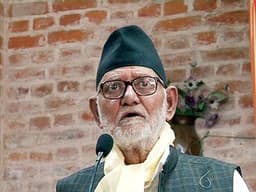
Sushil Koirala
Politician · Modern
52.9Total
Basic Information
Born
1958
1939
Died
—
—
Era
Modern
Modern
Nationality
Germany
Nepal
Occupation
Politician
Politician
Civilization
Western
Indian
Score Comparison
Military (10%)
10.3
39.7
Political (20%)
68.0
45.0
Influence (20%)
54.9
55.7
Legacy (20%)
40.8
48.3
Leadership (15%)
68.0
68.0
Strategy (15%)
40.3
60.0
TOTAL
49.4
52.9
Olaf Scholz — Complete Timeline
1998 AD
Appointment as Minister of Labor and Social AffairsPolitical Action◆ Major
Olaf Scholz was appointed Federal Minister of Labor and Social Affairs in the first Schr
MinisterLabor ReformsSchröder Government
Impact: nationalconstructive
2011 AD
Election as First Mayor of HamburgPolitical Action◆ Major
Scholz was elected First Mayor of Hamburg, leading a SPD government. His tenure focused on urban development, education, and digitalization, and he gained a reputation as a pragmatic administrator.
MayorHamburgRegional Government
Impact: regionalconstructive
2018 AD
Appointment as Vice Chancellor and Minister of FinancePolitical Action◆ Major
Scholz was appointed Vice Chancellor and Federal Minister of Finance in the fourth Merkel government. He oversaw Germany's fiscal response to the COVID-19 pandemic, including massive stimulus packages and debt suspension.
Vice ChancellorFinance MinisterCOVID-19
Impact: nationalconstructive
2021 AD
Election as Chancellor of GermanyPolitical Action
Olaf Scholz was elected Chancellor of Germany, leading a 'traffic light' coalition of SPD, Greens, and FDP. His government focused on climate action, digitalization, and social justice, succeeding Angela Merkel.
ChancellorCoalition GovernmentPost-Merkel
Impact: globalconstructive
2022 AD
Response to the Russian Invasion of UkrainePolitical Action
Scholz announced a 'Zeitenwende' (turning point) in German foreign policy, pledging a
Ukraine WarDefense PolicyZeitenwende
Impact: globalconstructive
Sushil Koirala — Complete Timeline
2014 AD
Elected as Prime Minister of NepalPolitical Action◆ Major
Sushil Koirala was elected Prime Minister of Nepal by the Constituent Assembly, leading a coalition government of the Nepali Congress and other parties. His main task was to finalize the new constitution.
Prime MinisterCoalitionConstitution
Impact: national
2015 AD
Promulgated the Constitution of NepalPolitical Action
Under Koirala's leadership, the Constituent Assembly promulgated the new Constitution of Nepal, replacing the interim constitution. The constitution established Nepal as a federal democratic republic, but faced protests from Madhesi groups over provincial boundaries.
ConstitutionFederalismRepublic
Impact: nationalconstructive
Resigned as Prime Minister after constitution promulgationPolitical Action◆ Major
Following the promulgation of the constitution, Koirala resigned as Prime Minister as part of a power-sharing agreement. His resignation led to the election of a new prime minister from the leftist alliance.
ResignationPower-sharingConstitution
Impact: national
Expert Analysis
Origins
Olaf Scholz was born on June 14, 1958, in Osnabrück, West Germany. His father worked in the textile industry. Scholz studied law at the University of Hamburg, earning his first and second state exams. He joined the Social Democratic Party (SPD) in 1975, influenced by the party's commitment to social justice. He worked as a lawyer specializing in labor law before entering politics full-time.
Sushil Koirala was born on August 7, 1939, in Biratnagar, Nepal, into the influential Koirala political family. His uncle, B.P. Koirala, was a former prime minister. Sushil studied in India and Nepal but did not complete a formal degree. He became involved in the pro-democracy movement against the autocratic Rana regime and later the Panchayat system. He spent years in exile in India, organizing opposition.
Rise to Power
Scholz's rise was gradual. He served as a member of the Bundestag from 1998 to 2011. He became Federal Minister of Labor and Social Affairs under Chancellor Gerhard Schröder in 2002, implementing the Hartz reforms. He was elected First Mayor of Hamburg in 2011, a position he held until 2018. In 2018, he became Vice Chancellor and Finance Minister under Angela Merkel, managing Germany's response to the COVID-19 pandemic. In 2021, he led the SPD to a narrow victory in the federal election, forming a 'traffic light' coalition with the Greens and FDP, and became Chancellor on December 8, 2021.
Koirala's rise was also gradual. He was elected to the Constituent Assembly in 2008 and became a prominent leader in the Nepali Congress party. After the resignation of Prime Minister Khil Raj Regmi, Koirala was elected Prime Minister on February 10, 2014, by the Constituent Assembly, leading a coalition government. His rise was marked by his role in drafting a new constitution.
Leadership & Governance
Scholz's leadership style is pragmatic and technocratic. As Chancellor, he focused on climate action, digitalization, and social welfare. His government passed a €100 billion fund to modernize the Bundeswehr after Russia's invasion of Ukraine. He also oversaw Germany's energy transition, reducing reliance on Russian gas. However, his coalition faced internal conflicts over fiscal policy and climate measures. Scholz's governance is characterized by cautious incrementalism.
Koirala's leadership was defined by his role in promulgating the Constitution of Nepal on September 20, 2015. He navigated complex negotiations with various political parties, including the Maoists and Madhesi groups. The constitution established Nepal as a secular, federal democratic republic. However, it faced criticism from marginalized communities and led to protests and blockades. Koirala's governance was consensus-driven but struggled with implementation.
Triumph & Tragedy
Scholz's greatest success is his response to the Ukraine crisis, marking a shift in German foreign policy. The 'Zeitenwende' speech and the defense fund were decisive actions. His handling of the COVID-19 pandemic as finance minister, including massive stimulus packages, was also effective. However, his legacy is marred by the Wirecard scandal, where he was criticized for inadequate oversight as finance minister. His coalition's internal bickering has also weakened his government.
Koirala's triumph is the promulgation of the constitution, which ended years of political instability and gave Nepal a permanent framework. He also oversaw the peaceful transition of power after the constitution. However, his failure was the constitution's perceived exclusion of ethnic minorities, leading to the Madhesi protests and a border blockade by India. He resigned soon after, leaving unresolved tensions.
Character & Destiny
Scholz is known as 'Scholzomat' for his robotic, cautious demeanor. He is a skilled bureaucrat but lacks charisma. His decision-making is data-driven and risk-averse. This character helped him navigate coalition politics but hindered bold reforms. His destiny was to lead Germany during a crisis, but his legacy remains incomplete.
Koirala was a quiet, persistent negotiator. He was not a charismatic speaker but was respected for his integrity and dedication to democracy. His character enabled him to forge consensus on the constitution. However, his inability to address minority concerns led to his downfall. His destiny was to be the leader who delivered the constitution but left a divided nation.
Legacy
Scholz's legacy will be defined by his response to the Ukraine war and the transformation of German defense and energy policy. His political score of 68.0 reflects his effective coalition management. However, his legacy score of 40.8 is low due to ongoing challenges. If the 'Zeitenwende' succeeds, his influence may rise.
Koirala's legacy is the 2015 Constitution, which remains the foundation of Nepal's governance. His political score of 45.0 and legacy score of 48.3 indicate a modest but lasting impact. He is remembered as a democrat who completed a historic task. However, his failure to ensure inclusivity tarnished his reputation.
Conclusion
While Koirala has a higher total score (52.9 vs 49.4), Scholz's impact on global geopolitics is greater. Scholz's decisions affect NATO, EU, and global energy markets. Koirala's constitution was significant for Nepal but limited in global influence. Scholz's political score (68.0) and leadership score (68.0) match Koirala's, but his military score (10.3) is far lower. However, in terms of global impact, Scholz ranks higher. Thus, Olaf Scholz had a greater overall impact due to Germany's economic and political weight.
Rankings
🥇
Sushil KoiralaLeader
Mil: 39.7Pol: 45.0Inf: 55.7
52.9
🥈
Olaf Scholz
Mil: 10.3Pol: 68.0Inf: 54.9
49.4
+3.5 behind
How This Comparison Works
Algorithm
Each figure is scored on 6 dimensions (0—100 scale) based on structured historical data: Military (10%), Political (20%), Influence (20%), Legacy (20%), Leadership (15%), Strategy (15%). The weighted total produces the final ranking.
Data Sources
Scores are computed from structured sub-indicators in the database. Scale factors adjust for era (Ancient ×0.85, Modern ×1.0) and civilization size (Eastern ×1.05, Other ×0.80) to account for differences in population and military scale.
Maximum 3 Figures
Comparisons are limited to 2—3 figures to ensure readability and statistical meaningfulness.
Error Margins
±5 points per dimension — Sub-scores are derived from historical records with inherent uncertainty. Two figures within 5 points on a dimension should be considered roughly equivalent in that area.
Total Score Accuracy
±3 points overall — The weighted combination of 6 dimensions produces a total score with approximately ±3 points of uncertainty. Differences of less than 3 points are not statistically significant— the figures are effectively tied.
Known Limitations
- Historical records are incomplete and uneven across civilizations
- Figures from oral-tradition societies may be underrepresented
- Occupation labels can misclassify multi-role figures
- Scores measure capability and impact, not moral character
- Quantitative scoring is a comparison tool, not absolute truth
Capability Radar
Military (10%) — Battles & Warfare
Battles
21
41
Win Rate
28
48
Expansion
26
51
Political (20%) — Governance & Reform
Reform
45
65
Diplomacy
60
55
Economy
50
30
Influence (20%) — Cultural & Global Reach
Cultural
20
35
Global
40
30
Legacy (20%) — Historical Impact
Historical
25
50
Longevity
20
40
Leadership (15%) — Power & Stability
Tenure
55
45
Stability
50
40
Strategy (15%) — Tactics & Innovation
Strategy
33
55
Tactics
32
54
Reform
38
58
Similar Comparisons
Comments & Discussion
No comments yet. Be the first to share your thoughts!