Loading...
Oliver Cromwell vs Suharto
Oliver Cromwell leads by 14.6 pts · 2 figures compared
…
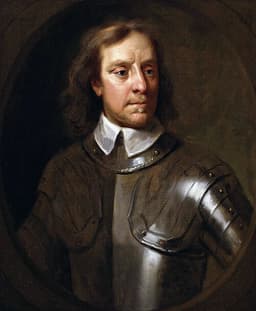
Oliver Cromwell
General · Modern
71.8Total
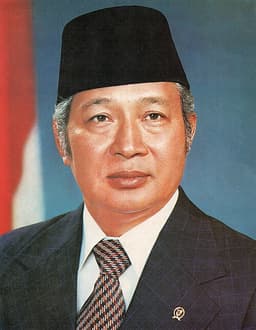
Suharto
General · Modern
57.2Total
Basic Information
Born
1599
1921
Died
1658
—
Era
Modern
Modern
Nationality
England
Indonesia
Occupation
General
General
Civilization
Western
Eastern
Score Comparison
Military (10%)
82.0
20.0
Political (20%)
55.0
59.3
Influence (20%)
82.0
60.0
Legacy (20%)
72.0
52.0
Leadership (15%)
62.0
82.0
Strategy (15%)
75.0
60.0
TOTAL
71.8
57.2
Oliver Cromwell — Complete Timeline
1644 AD
Battle of Marston MoorWar◆ Major
Cromwell, as a cavalry commander in the Parliamentarian army, played a key role in the decisive victory over Royalist forces at Marston Moor. This battle secured Parliament's control of northern England and boosted Cromwell's military reputation.
English Civil WarParliamentarianCavalry
Impact: national
1645 AD
Battle of NasebyWar
Cromwell led the New Model Army to a decisive victory over King Charles I's forces at Naseby. This battle effectively ended the First English Civil War, leading to the capture of the king and Parliament's supremacy.
English Civil WarNew Model ArmyRoyalist Defeat
Impact: national
1649 AD
Cromwellian Conquest of IrelandWar◆ Major
Cromwell led a brutal military campaign in Ireland to suppress the Irish Confederacy and Royalist alliance. His forces massacred garrisons at Drogheda and Wexford, resulting in widespread death and land confiscation, cementing English Protestant dominance.
IrelandConquestMassacre
Impact: regionaldestructive
Execution of King Charles IPolitical Action
Cromwell was a leading figure in the trial and execution of King Charles I for treason. This unprecedented act abolished the monarchy and established the Commonwealth of England, a republican government.
RegicideCommonwealthRepublic
Impact: globaldestructive
1653 AD
Appointment as Lord ProtectorPolitical Action◆ Major
Cromwell was installed as Lord Protector of the Commonwealth of England, Scotland, and Ireland, effectively becoming head of state. He ruled as a military dictator, dissolving parliaments and imposing Puritan moral laws.
Lord ProtectorCommonwealthDictatorship
Impact: national
Suharto — Complete Timeline
1966 AD
Supersemar and Transfer of PowerPolitical Action
President Sukarno signed the Supersemar order, delegating authority to General Suharto to restore order after the 30 September Movement. Suharto used this to ban the Communist Party, purge leftists, and gradually assume executive power, effectively beginning his New Order regime.
SupersemarNew OrderIndonesia
Impact: nationaldestructive
1967 AD
New Order Economic DevelopmentReform◆ Major
Suharto implemented the New Order's economic policies, focusing on foreign investment, agricultural self-sufficiency, and industrialization. The government achieved high growth rates, reduced poverty, and stabilized the economy, but also fostered crony capitalism and corruption.
Economic GrowthDevelopmentIndonesia
Impact: nationalconstructive
1975 AD
Invasion of East TimorWar◆ Major
Suharto ordered the invasion of East Timor after Portugal withdrew. Indonesian forces occupied the territory, leading to a 24-year occupation marked by widespread human rights abuses, including massacres and forced displacement, resulting in an estimated 100,000-200,000 deaths.
East TimorOccupationHuman Rights
Impact: regionaldestructive
1998 AD
Asian Financial Crisis and Fall from PowerPolitical Action
The Asian Financial Crisis devastated Indonesia's economy, leading to massive unemployment and food shortages. Widespread protests and riots forced Suharto to resign in May 1998 after 31 years in power, ending his authoritarian rule and ushering in the Reformasi era.
Financial CrisisResignationReformasi
Impact: nationaltragic
Expert Analysis
Oliver Cromwell vs Suharto
### The Puritan and the General: Cromwell, Suharto, and the Paradox of Power
On a January morning in 1649, Oliver Cromwell watched as King Charles I stepped onto a scaffold outside the Banqueting House in London. The axe fell, and with it, the ancient doctrine of divine right. Nearly three centuries later, on a humid night in Jakarta in 1965, a different kind of drama unfolded. General Suharto, a man of few words and patient ambition, waited as tanks rolled through the capital, and by dawn, the fate of Indonesia had shifted forever. Both men were generals who seized power, yet their paths, their eras, and their legacies could not be more different. Why did one become a symbol of republican liberty and the other an emblem of authoritarian stability? The answer lies in the soil of their origins, the crucible of their times, and the shape of their souls.
### Origins
Oliver Cromwell was born in 1599 into the English gentry, a class of rural landowners who believed in order but resented tyranny. His world was one of Puritan piety, where God’s will was sought in every sermon and every battle. The England of his youth was a kingdom torn between a stubborn king and a Parliament hungry for power. Cromwell was not a natural soldier; he was a farmer and a devout man who, in his forties, found himself drawn into a civil war that would consume his country. His faith was absolute: he saw himself as an instrument of divine providence, a man chosen to purge the land of corruption.
Suharto, born in 1921 in the Dutch East Indies, grew up in a very different world. He was a Javanese peasant’s son, raised in a culture of hierarchy, deference, and mystical authority. The Indonesia of his youth was a colony, and his early life was shaped by the struggle against Dutch rule and, later, the chaos of Japanese occupation. Unlike Cromwell, Suharto was not driven by religious fervor; his worldview was pragmatic, shaped by the Javanese concept of *halus*—calm, controlled, and indirect power. He learned to wait, to observe, and to strike only when the moment was perfect.
### Rise to Power
Cromwell’s rise came through war. In 1644, at the Battle of Marston Moor, he emerged as a brilliant cavalry commander, a man who could inspire raw farmers to fight like veterans. His New Model Army, forged in 1645, was a revolutionary force: disciplined, meritocratic, and infused with Puritan zeal. At Naseby that same year, he crushed the king’s army, and the war was effectively won. But victory did not bring peace. Cromwell became the driving force behind the trial and execution of Charles I in 1649—an act so radical it still echoes. He did not seek the throne; he sought God’s kingdom on earth, and he believed the king’s blood was the necessary price.
Suharto’s rise was quieter, more cunning. He was a competent but not spectacular officer in the Indonesian army during the struggle for independence. His moment came in 1965, after a failed coup blamed on the Communist Party. The country teetered on chaos. President Sukarno, the charismatic founding father, was losing control. Suharto, then a general, played his hand masterfully. In 1966, he secured the Supersemar order—a single piece of paper that transferred authority from Sukarno to himself. There was no trial, no public execution. Just a quiet, deadly shift of power. While Cromwell had beheaded a king, Suharto simply made his president irrelevant.
### Leadership & Governance
As Lord Protector from 1653, Cromwell ruled England as a military dictator in all but name. He was a reformer—promoting religious toleration for Protestants, purging corrupt judges, and trying to build a godly commonwealth. But his military genius could not translate into political stability. He refused the crown, yet he ruled without Parliament, suppressing radicals and Royalists alike. His conquest of Ireland in 1649 was brutal beyond measure, a scar that still bleeds. Cromwell’s leadership was a paradox: a man who fought for liberty but governed with an iron fist.
Suharto’s New Order, launched in 1967, was a more systematic machine. He focused on economic development, opening Indonesia to foreign investment, achieving rice self-sufficiency, and delivering decades of growth. His political wisdom lay in control: he built a network of patronage, suppressed dissent with ruthless efficiency, and created a stable, predictable regime. But stability came at a cost. The invasion of East Timor in 1975 was a brutal act of expansion, and his rule was marked by corruption, nepotism, and the stifling of all political life. Where Cromwell was driven by ideology, Suharto was driven by order.
### Triumph & Tragedy
Cromwell’s greatest moment was the victory at Naseby, where he proved that a citizen army could defeat a king. His greatest tragedy was the failure of the Protectorate. He died in 1658, still believing he had served God’s will, yet his republic collapsed within two years. The monarchy was restored, and his body was dug up and hanged—a final humiliation for a man who had tried to remake England.
Suharto’s triumph was the transformation of Indonesia from a chaotic, impoverished nation into a rising Asian economy. His tragedy was the Asian Financial Crisis of 1998. The economy collapsed, unemployment soared, and the people who had endured his rule for three decades rose up. He was forced to resign, a broken man, and died in obscurity. Unlike Cromwell, he left no ideology, only a system that crumbled without him.
### Character & Destiny
Cromwell was a man of fire. His personality was shaped by an unshakable certainty that he was doing God’s work. This made him decisive in war but rigid in peace. He could not compromise, and he could not share power. His destiny was to destroy an old order but fail to build a new one.
Suharto was a man of ice. He was patient, calculating, and utterly opaque. He never revealed his inner thoughts, and he ruled through silence and fear. His destiny was to create order, but order without justice is a prison. Both men were generals who became rulers, but Cromwell’s tragedy was that he believed too much, while Suharto’s was that he believed in nothing at all.
### Legacy
Cromwell is remembered as both a hero of liberty and a war criminal. His statue stands outside the British Parliament, yet his name is cursed in Ireland. He shaped the English-speaking world’s distrust of absolute monarchy and planted seeds of republicanism that would flower in America a century later. His legacy is contested, alive, and still debated.
Suharto’s legacy is quieter but equally complex. He is credited with modernizing Indonesia, yet his regime’s corruption and human rights abuses remain unpunished. Many Indonesians remember the stability he brought, but young people see him as a symbol of an era they would rather forget. His legacy is a monument to the seduction of stability over freedom.
### Conclusion
Standing at the edge of history, we see two generals who seized power in times of crisis. One believed he was doing God’s will; the other believed he was doing what was necessary. One cut off a king’s head; the other gently pushed a president aside. Both brought order, and both brought blood. In the end, Cromwell’s republic lasted a decade; Suharto’s New Order lasted three decades. Yet both fell, because power built on a sword—whether Puritan or Javanese—cannot build a home for the human spirit. The lesson is not that one was better than the other. The lesson is that the same ambition, dressed in different clothes, leads to the same lonely end.
Rankings
🥇
Oliver CromwellLeader
Mil: 82.0Pol: 55.0Inf: 82.0
71.8
🥈
Suharto
Mil: 20.0Pol: 59.3Inf: 60.0
57.2
+14.6 behind
How This Comparison Works
Algorithm
Each figure is scored on 6 dimensions (0—100 scale) based on structured historical data: Military (10%), Political (20%), Influence (20%), Legacy (20%), Leadership (15%), Strategy (15%). The weighted total produces the final ranking.
Data Sources
Scores are computed from structured sub-indicators in the database. Scale factors adjust for era (Ancient ×0.85, Modern ×1.0) and civilization size (Eastern ×1.05, Other ×0.80) to account for differences in population and military scale.
Maximum 3 Figures
Comparisons are limited to 2—3 figures to ensure readability and statistical meaningfulness.
Error Margins
±5 points per dimension — Sub-scores are derived from historical records with inherent uncertainty. Two figures within 5 points on a dimension should be considered roughly equivalent in that area.
Total Score Accuracy
±3 points overall — The weighted combination of 6 dimensions produces a total score with approximately ±3 points of uncertainty. Differences of less than 3 points are not statistically significant— the figures are effectively tied.
Known Limitations
- Historical records are incomplete and uneven across civilizations
- Figures from oral-tradition societies may be underrepresented
- Occupation labels can misclassify multi-role figures
- Scores measure capability and impact, not moral character
- Quantitative scoring is a comparison tool, not absolute truth
Capability Radar
Military (10%) — Battles & Warfare
Battles
75
40
Win Rate
80
45
Expansion
60
30
Political (20%) — Governance & Reform
Reform
75
55
Diplomacy
60
60
Economy
65
65
Influence (20%) — Cultural & Global Reach
Cultural
65
40
Global
65
50
Legacy (20%) — Historical Impact
Historical
80
55
Longevity
70
45
Leadership (15%) — Power & Stability
Tenure
70
85
Stability
55
50
Strategy (15%) — Tactics & Innovation
Strategy
82
40
Tactics
78
35
Reform
85
50
Similar Comparisons
Comments & Discussion
CROMWELL'S BRUTAL REALIST6/16/2026
Comparing Cromwell to Suharto is an insult to the complexity of the Levellers' moment. Cromwell wasn't just a general-turned-dictator; he was a radical religious millenarian who literally believed he was God's instrument to smash monarchy. Suharto had no ideology beyond power and golf. The difference is fundamental: one man overthrew a king to establish a republic his followers would have killed for; the other staged a coup in a country that never had a real democracy to lose.
铁血史官6/16/2026
把克伦威尔和苏哈托并列,简直就是对英国革命的侮辱。克伦威尔至少真正相信清教使命,他拒绝称王的姿态在17世纪是革命性的。苏哈托呢?一个腐败的军阀,靠屠杀五十万印尼人上位。数据上更荒唐:克伦威尔统治下英格兰GDP是增长的,苏哈托却让印尼外债爆炸。别拿虔诚的屠夫和纯粹的贪官相提并论。
THE SCEPTICAL COUNTER6/16/2026
The data comparison is shallow. You can't compare GDP per capita across 300 years without adjusting for massive structural changes. Suharto's Indonesia had a GDP growth averaging 7% for decades—that's objectively impressive, whatever you think of his brutality. Cromwell's England had negative economic mobility for the poor. The irony is that both men were essentially oligarchs maintaining elite privilege, but Suharto at least industrialized a country. Cromwell just made everyone pray harder.
自由宪政派6/16/2026
问题不在谁更血腥,而在宪政后果。克伦威尔的护国公制保持了议会传统,为1688年光荣革命埋下种子。苏哈托的新秩序彻底摧毁了印尼的民主萌芽,建立了持续32年的军事官僚独裁。看数据:印尼1965年后没有一次自由选举,而英格兰1653年的《政府约法》至少尝试了成文宪法。一个走向权利法案,一个走向腐败王朝。高下立判。