Loading...
Ooka Tadasuke vs Zenko Suzuki
Ooka Tadasuke leads by 7.3 pts · 2 figures compared
…
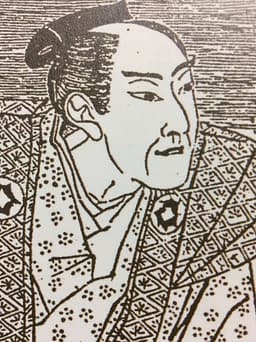
Ooka Tadasuke
Politician · Modern
49.3Total

Zenko Suzuki
Politician · Modern
42.0Total
Basic Information
Born
1677
1911
Died
1752
2004
Era
Modern
Modern
Nationality
Japan
Japan
Occupation
Politician
Politician
Civilization
Eastern
Eastern
Score Comparison
Military (10%)
13.3
28.9
Political (20%)
68.0
30.8
Influence (20%)
57.2
49.4
Legacy (20%)
49.2
37.5
Leadership (15%)
53.2
45.0
Strategy (15%)
31.9
60.0
TOTAL
49.3
42.0
Ooka Tadasuke — Complete Timeline
1717 AD
Appointment as Edo Magistrate (Machibugyo)Political Action◆ Major
Ooka Tadasuke was appointed as one of the two Edo machibugyo, the chief magistrates of the shogun's capital. This position gave him authority over civil and criminal justice in Edo, where he became known for fair and wise judgments.
AppointmentEdo magistrateJustice
Impact: nationalconstructive
1720 AD
Judgment in the 'Ooka and the Stolen Child' CasePolitical Action
Ooka presided over a famous case where he used a psychological trick to determine a child's true mother, ordering the child to be pulled between two claimants. The real mother released her grip to avoid hurting the child, revealing the truth. This case became legendary in Japanese folklore.
FolkloreWise judgeChild custody
constructive
1725 AD
Implementation of the 'Ooka's Reforms' in Criminal JusticeReform◆ Major
Ooka introduced reforms to reduce torture and ensure fair trials, emphasizing evidence and witness testimony over forced confessions. He also established procedures for appeals and review of death sentences, improving the shogunate's legal system.
Legal reformTorture reductionCriminal justice
Impact: nationalprogressive
1736 AD
Promotion to Senior Councilor (Roju)Political Action◆ Major
Ooka was promoted to roju, becoming one of the highest-ranking officials in the shogunate under Shogun Tokugawa Yoshimune. In this role, he continued to influence legal and administrative policies until his retirement.
PromotionRojuTokugawa Yoshimune
Impact: nationalconstructive
Zenko Suzuki — Complete Timeline
1980 AD
Appointed Prime Minister of JapanPolitical Action◆ Major
Zenko Suzuki became Prime Minister of Japan on July 17, 1980, succeeding Masayoshi Ohira after his death. His appointment followed the Liberal Democratic Party's landslide victory in the 1980 general election. Suzuki's tenure focused on fiscal austerity and administrative reform.
Prime MinisterLDPJapan
Impact: national
1981 AD
Announced Fiscal Austerity PolicyReform
Suzuki declared a policy of fiscal austerity to reduce Japan's growing budget deficit. He aimed to achieve a balanced budget without tax increases, but the policy faced criticism for slowing economic growth and was only partially successful.
Economic PolicyFiscal ReformBudget
Impact: national
1982 AD
Resigned as Prime MinisterPolitical Action◆ Major
Suzuki resigned as Prime Minister in November 1982, citing the need for a new leader to tackle ongoing economic challenges. His resignation came after declining approval ratings and internal LDP criticism over his handling of the economy and foreign policy.
ResignationLDPJapan
Impact: national
Expert Analysis
Origins
Ooka Tadasuke was born in 1677 into a samurai family serving the Tokugawa shogunate. His father was a low-ranking retainer, but Ooka rose through the bureaucracy due to his intelligence and legal acumen. He studied Confucian classics and law, which shaped his later reforms. Zenko Suzuki was born in 1911 in Iwate Prefecture to a farming family. He studied fisheries and entered politics after World War II, joining the Liberal Democratic Party (LDP). His rural roots influenced his focus on agricultural and economic issues.
Rise to Power
Ooka's rise began when he was appointed as an Edo Machibugyo (city magistrate) in 1717 by Shogun Tokugawa Yoshimune. This position gave him authority over civil and criminal cases in the capital. His reputation for fairness and shrewd judgment led to his promotion to Senior Councilor (Roju) in 1736, making him one of the highest officials in the shogunate. Zenko Suzuki rose through the LDP ranks, serving as Minister of Agriculture and later as Chief Cabinet Secretary. In 1980, after Prime Minister Masayoshi Ohira's sudden death, Suzuki was chosen as a compromise candidate to lead the party and become prime minister on July 17, 1980.
Leadership & Governance
Ooka's leadership focused on judicial reform. He reduced torture by emphasizing evidence and witness testimony, and established a system for appeals. His governance style was hands-on, often personally hearing cases. In contrast, Suzuki's leadership was reactive. As prime minister from 1980 to 1982, he faced economic challenges and declared a policy of fiscal austerity to reduce the budget deficit. However, his lack of decisive action and poor communication led to declining approval ratings. Ooka scored 53.2 in leadership, while Suzuki scored 45.0.
Triumph & Tragedy
Ooka's greatest triumph was his reform of criminal justice, making trials fairer and more humane. The famous 'Stolen Child' case showcased his psychological insight. His tragedy was that many of his reforms were reversed after his death, as the shogunate returned to harsher methods. Suzuki's triumph was maintaining LDP unity after Ohira's death and steering Japan through economic difficulties. His tragedy was his inability to implement significant reforms, leading to his resignation in 1982 after only two years. Suzuki's political score of 30.8 reflects his limited achievements.
Character & Destiny
Ooka was known for his wisdom, patience, and empathy. He believed in the power of reason and evidence, which set him apart from his contemporaries. His character shaped his destiny as a legendary figure in Japanese folklore. Suzuki was cautious and consensus-driven, but lacked the charisma or vision to lead effectively. His destiny was to be a caretaker prime minister, remembered for little. Historians often rank Suzuki as one of Japan's least effective post-war leaders.
Legacy
Ooka's legacy endures in Japanese culture as a symbol of justice and wisdom. His reforms influenced later legal systems, and his stories are still taught in schools. His legacy score is 49.2. Suzuki's legacy is more modest; his fiscal austerity policies had limited impact, and he is largely forgotten. His legacy score is 37.5. Ooka's influence extends beyond his era, while Suzuki's is confined to a brief period.
Conclusion
Ooka Tadasuke had a greater impact than Zenko Suzuki. Despite his lower military score (13.3 vs 28.9), Ooka's political and influence scores (68.0 and 57.2) far surpass Suzuki's (30.8 and 49.4). Ooka's reforms in criminal justice were ahead of their time and left a lasting cultural legacy. Suzuki, while serving as prime minister, achieved little of lasting significance. Ooka's total score of 49.3 versus Suzuki's 42.0 reflects his superior historical importance. Therefore, Ooka Tadasuke stands as the more influential figure.
Rankings
🥇
Ooka TadasukeLeader
Mil: 13.3Pol: 68.0Inf: 57.2
49.3
🥈
Zenko Suzuki
Mil: 28.9Pol: 30.8Inf: 49.4
42.0
+7.3 behind
How This Comparison Works
Algorithm
Each figure is scored on 6 dimensions (0—100 scale) based on structured historical data: Military (10%), Political (20%), Influence (20%), Legacy (20%), Leadership (15%), Strategy (15%). The weighted total produces the final ranking.
Data Sources
Scores are computed from structured sub-indicators in the database. Scale factors adjust for era (Ancient ×0.85, Modern ×1.0) and civilization size (Eastern ×1.05, Other ×0.80) to account for differences in population and military scale.
Maximum 3 Figures
Comparisons are limited to 2—3 figures to ensure readability and statistical meaningfulness.
Error Margins
±5 points per dimension — Sub-scores are derived from historical records with inherent uncertainty. Two figures within 5 points on a dimension should be considered roughly equivalent in that area.
Total Score Accuracy
±3 points overall — The weighted combination of 6 dimensions produces a total score with approximately ±3 points of uncertainty. Differences of less than 3 points are not statistically significant— the figures are effectively tied.
Known Limitations
- Historical records are incomplete and uneven across civilizations
- Figures from oral-tradition societies may be underrepresented
- Occupation labels can misclassify multi-role figures
- Scores measure capability and impact, not moral character
- Quantitative scoring is a comparison tool, not absolute truth
Capability Radar
Military (10%) — Battles & Warfare
Battles
12
55
Win Rate
20
54
Expansion
20
55
Political (20%) — Governance & Reform
Reform
45
15
Diplomacy
50
25
Economy
55
20
Influence (20%) — Cultural & Global Reach
Cultural
55
10
Global
20
15
Legacy (20%) — Historical Impact
Historical
50
15
Longevity
45
10
Leadership (15%) — Power & Stability
Tenure
40
20
Stability
60
15
Strategy (15%) — Tactics & Innovation
Strategy
22
59
Tactics
25
63
Reform
32
64
Similar Comparisons
Comments & Discussion
No comments yet. Be the first to share your thoughts!