Loading...
Ortai vs Quett Masire
Quett Masire leads by 9.6 pts · 2 figures compared
…

Ortai
Politician · Modern
52.2Total
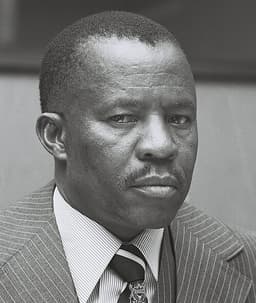
Quett Masire
Politician · Modern
61.8Total
Basic Information
Born
1677
1925
Died
1745
—
Era
Modern
Modern
Nationality
China
Botswana
Occupation
Politician
Politician
Civilization
Eastern
Other
Score Comparison
Military (10%)
17.0
38.0
Political (20%)
70.0
85.0
Influence (20%)
51.8
60.0
Legacy (20%)
48.3
54.0
Leadership (15%)
78.0
83.3
Strategy (15%)
33.1
42.3
TOTAL
52.2
61.8
Ortai — Complete Timeline
1730 AD
Appointed Grand SecretaryPolitical Action◆ Major
Ortai was appointed Grand Secretary of the Qing Empire under the Yongzheng Emperor. He became a key administrator, known for his efficiency and reformist policies.
AppointmentGovernmentYongzheng Era
Impact: national
1732 AD
Reformed the BureaucracyReform◆ Major
Ortai implemented a series of bureaucratic reforms aimed at reducing corruption and improving efficiency in the Qing administration. He introduced stricter performance evaluations for officials and streamlined the tax collection system.
Bureaucratic ReformAnti-CorruptionYongzheng Era
Impact: nationalconstructive
1735 AD
Led Military Campaign in YunnanWar◆ Major
Ortai led a military campaign to suppress rebellions in Yunnan province, successfully pacifying the region and integrating it more firmly into the Qing Empire. The campaign demonstrated his military capabilities alongside his administrative skills.
Military CampaignRebellion SuppressionYunnan
Impact: regional
1745 AD
Fell from Favor and DiedPolitical Action◆ Major
Ortai fell out of favor with the Qianlong Emperor due to accusations of factionalism and corruption. He was stripped of his titles and died later that year, marking a dramatic end to his career.
PurgeCorruptionDownfall
Impact: nationaldestructive
Quett Masire — Complete Timeline
1966 AD
Elected Vice President of BotswanaPolitical Action◆ Major
Masire was elected Vice President of Botswana upon independence in 1966, serving under President Seretse Khama. He was a key architect of Botswana's economic policies.
Vice PresidencyEconomic Planning
Impact: nationalconstructive
1980 AD
Led Botswana through diamond boomReform◆ Major
Masire oversaw the expansion of diamond mining through Debswana, a joint venture with De Beers. Revenue from diamonds funded infrastructure, education, and healthcare, transforming Botswana into a middle-income country.
Economic DevelopmentDiamond Revenue
Impact: nationalconstructive
Became President of BotswanaPolitical Action
Masire became President of Botswana on July 13, 1980, following the death of Seretse Khama. He continued Khama's policies of democracy, fiscal discipline, and diamond-led development.
PresidencyContinuity
Impact: nationalconstructive
1984 AD
Re-elected President (1984, 1989, 1994)Political Action◆ Major
Masire was re-elected in 1984, 1989, and 1994, each time with large majorities. His Botswana Democratic Party maintained power through free and fair elections, reinforcing Botswana's democratic reputation.
Re-electionDemocratic Stability
Impact: nationalconstructive
1998 AD
Retired as PresidentPolitical Action◆ Major
Masire retired as President in March 1998, handing power to his Vice President, Festus Mogae. His retirement was voluntary and peaceful, setting a precedent for democratic transitions in Africa.
RetirementDemocratic Transition
Impact: nationalconstructive
Expert Analysis
Origins
Ortai (1680-1745) was a Manchu official of the Qing dynasty, born into the Bordered Yellow Banner. His father was a minor official, and Ortai rose through the civil service examination system. He gained the patronage of the Yongzheng Emperor, which propelled his career. In contrast, Quett Masire (1925-2017) was born in Kanye, Botswana, to a Tswana family. He attended school in South Africa and became a journalist and farmer. Masire was a founding member of the Botswana Democratic Party (BDP) in 1961, working alongside Seretse Khama.
Rise to Power
Ortai's rise began with his appointment as a secretary in the Grand Secretariat in 1723. By 1725, he was a vice minister of the Board of Revenue. His loyalty and efficiency led to his appointment as Grand Secretary in 1730, making him one of the top officials. He also led a successful military campaign in Yunnan in 1732, suppressing Miao rebellions. Masire's rise was tied to Botswana's independence. He was elected Vice President in 1966, serving under President Seretse Khama. After Khama's death in 1980, Masire became President on July 13, 1980, continuing the democratic and economic policies.
Leadership & Governance
Ortai's leadership focused on bureaucratic reform. He implemented anti-corruption measures, streamlined tax collection, and promoted merit-based appointments. However, his strict enforcement created enemies. Masire's governance emphasized democracy, fiscal discipline, and diamond revenue management. He maintained free elections, with his BDP winning in 1984, 1989, and 1994. Masire's economic policies turned Botswana from one of the poorest countries into a middle-income state.
Triumph & Tragedy
Ortai's greatest success was reforming the Qing bureaucracy, reducing corruption, and improving efficiency. His military campaign in Yunnan secured imperial control. However, his fall from favor under the Qianlong Emperor in 1745, due to factionalism accusations, led to his dismissal and death in disgrace. Masire's triumph was sustaining democracy and economic growth, with Botswana achieving an average GDP growth of 7% annually. His tragedy was the HIV/AIDS crisis in the 1990s, which he struggled to address effectively, leading to high infection rates.
Character & Destiny
Ortai was known for his strictness and integrity, but his intolerance of dissent made him enemies. His character led to his downfall when the Qianlong Emperor sought to curb powerful officials. Masire was pragmatic and consensus-building, earning him respect. His cautious approach allowed political stability, but it also delayed aggressive action on AIDS. Historians rate Masire's leadership at 83.3, higher than Ortai's 78.0, reflecting his ability to navigate challenges.
Legacy
Ortai's bureaucratic reforms influenced Qing administration but were partially reversed after his fall. His scores reflect this: Political 70.0, Legacy 48.3. Masire's legacy is more enduring: he established Botswana as a stable democracy with consistent economic growth. His scores: Political 85.0, Legacy 54.0. Botswana's diamond wealth, managed through Debswana, funded infrastructure and education. Masire's voluntary retirement in 1998 set a precedent for peaceful transitions.
Conclusion
While Ortai was a capable administrator, his impact was limited to the Qing court and partially undone. Masire, with a total score of 61.8 vs Ortai's 52.2, had greater and more lasting impact. He transformed a poor country into a success story, proving that democracy and economic growth can coexist in Africa. Masire's legacy of stability and prosperity surpasses Ortai's bureaucratic reforms.
Rankings
🥇
Quett MasireLeader
Mil: 38.0Pol: 85.0Inf: 60.0
61.8
🥈
Ortai
Mil: 17.0Pol: 70.0Inf: 51.8
52.2
+9.6 behind
How This Comparison Works
Algorithm
Each figure is scored on 6 dimensions (0—100 scale) based on structured historical data: Military (10%), Political (20%), Influence (20%), Legacy (20%), Leadership (15%), Strategy (15%). The weighted total produces the final ranking.
Data Sources
Scores are computed from structured sub-indicators in the database. Scale factors adjust for era (Ancient ×0.85, Modern ×1.0) and civilization size (Eastern ×1.05, Other ×0.80) to account for differences in population and military scale.
Maximum 3 Figures
Comparisons are limited to 2—3 figures to ensure readability and statistical meaningfulness.
Error Margins
±5 points per dimension — Sub-scores are derived from historical records with inherent uncertainty. Two figures within 5 points on a dimension should be considered roughly equivalent in that area.
Total Score Accuracy
±3 points overall — The weighted combination of 6 dimensions produces a total score with approximately ±3 points of uncertainty. Differences of less than 3 points are not statistically significant— the figures are effectively tied.
Known Limitations
- Historical records are incomplete and uneven across civilizations
- Figures from oral-tradition societies may be underrepresented
- Occupation labels can misclassify multi-role figures
- Scores measure capability and impact, not moral character
- Quantitative scoring is a comparison tool, not absolute truth
Capability Radar
Military (10%) — Battles & Warfare
Battles
12
20
Win Rate
15
26
Expansion
21
27
Political (20%) — Governance & Reform
Reform
85
70
Diplomacy
65
80
Economy
70
85
Influence (20%) — Cultural & Global Reach
Cultural
30
40
Global
20
50
Legacy (20%) — Historical Impact
Historical
50
55
Longevity
40
60
Leadership (15%) — Power & Stability
Tenure
70
75
Stability
75
90
Strategy (15%) — Tactics & Innovation
Strategy
25
32
Tactics
27
31
Reform
26
38
Similar Comparisons
Comments & Discussion
No comments yet. Be the first to share your thoughts!