Loading...
This comparison has not been analyzed yet.
One-time AI generation (~1 minute). Scores and timeline are already available below.
Osei Kofi Tutu I vs Yeongjo of Joseon
Osei Kofi Tutu I leads by 4.6 pts · 2 figures compared
…

Osei Kofi Tutu I
Emperor · Modern
62.6Total
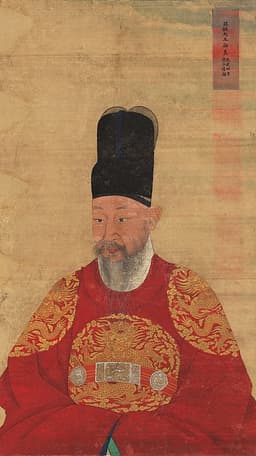
Yeongjo of Joseon
Emperor · Modern
58.0Total
Basic Information
Born
1660
1694
Died
1717
1776
Era
Modern
Modern
Nationality
Ashanti Empire
Korea
Occupation
Emperor
Emperor
Civilization
Other
Eastern
Score Comparison
Military (10%)
74.7
21.2
Political (20%)
62.7
82.0
Influence (20%)
72.0
61.0
Legacy (20%)
40.0
56.0
Leadership (15%)
78.0
75.0
Strategy (15%)
60.7
30.3
TOTAL
62.6
58.0
Osei Kofi Tutu I — Complete Timeline
1701 AD
Battle of FeyiaseWar◆ Major
Osei Tutu I led Ashanti forces to victory against the Denkyira kingdom at the Battle of Feyiase. This defeat of Denkyira, the dominant regional power, established Ashanti as the leading state in the region and marked the beginning of Ashanti expansion.
BattleAshanti ExpansionDenkyira
Impact: regionalconstructive
Formation of the Ashanti UnionPolitical Action◆ Major
Osei Tutu I, with the help of his priest Okomfo Anokye, united several Akan states into the Ashanti Union. This political consolidation created a powerful centralized kingdom under the Golden Stool as a symbol of unity and authority.
UnificationAshanti EmpireGolden Stool
Impact: regionalconstructive
Introduction of the Golden StoolCultural◆ Major
Okomfo Anokye, under Osei Tutu's direction, presented the Golden Stool as the divine symbol of the Ashanti nation. The stool was said to have descended from the sky, representing the soul of the Ashanti people and legitimizing Osei Tutu's rule.
Golden StoolSymbolismAshanti Nation
Impact: nationalconstructive
1717 AD
Death at the Battle of AkyemWar◆ Major
Osei Tutu I was killed in battle while fighting against the Akyem people. His death was a significant loss for the Ashanti, but his legacy as the founder of the empire endured.
Death in BattleAkyemAshanti
Impact: nationaltragic
Yeongjo of Joseon — Complete Timeline
1725 AD
Tangpyeong Policy (Impartiality Policy)Reform◆ Major
Yeongjo implemented the Tangpyeong policy to reduce factional strife by appointing officials from all factions. He banned factional labels and promoted merit-based appointments. This stabilized the court but did not eliminate factionalism entirely.
Political ReformFactionalismAdministration
Impact: nationalconstructive
1750 AD
Tax Reform: Gyunyeokbeop (Equal Service Law)Reform◆ Major
Yeongjo introduced the Gyunyeokbeop, a uniform military tax that replaced various service obligations with a cloth tax. This reduced the burden on commoners and increased state revenue, though it faced opposition from the aristocracy.
Tax ReformMilitaryEconomy
Impact: nationalconstructive
1762 AD
Imprisonment of Crown Prince Sado in a Rice ChestPolitical Action
King Yeongjo ordered his son Crown Prince Sado to be locked inside a rice chest for eight days, leading to his death by starvation. Sado had been accused of mental illness and violent behavior. This event traumatized the court and led to Jeongjo's later reforms.
Royal FamilyTragedySuccession
Impact: nationaltragic
1776 AD
Longest Reign in Joseon HistoryOther◆ Major
Yeongjo reigned for 52 years (1724-1776), the longest of any Joseon king. His reign saw cultural flourishing, economic stability, and political reforms, but also the tragic death of his son. He died at age 81, leaving a mixed legacy.
LongevityLegacyReign
Impact: national
This comparison has not been analyzed yet.
One-time AI generation (~1 minute). Scores and timeline are already available below.
Rankings
🥇
Osei Kofi Tutu ILeader
Mil: 74.7Pol: 62.7Inf: 72.0
62.6
🥈
Yeongjo of Joseon
Mil: 21.2Pol: 82.0Inf: 61.0
58.0
+4.6 behind
How This Comparison Works
Algorithm
Each figure is scored on 6 dimensions (0—100 scale) based on structured historical data: Military (10%), Political (20%), Influence (20%), Legacy (20%), Leadership (15%), Strategy (15%). The weighted total produces the final ranking.
Data Sources
Scores are computed from structured sub-indicators in the database. Scale factors adjust for era (Ancient ×0.85, Modern ×1.0) and civilization size (Eastern ×1.05, Other ×0.80) to account for differences in population and military scale.
Maximum 3 Figures
Comparisons are limited to 2—3 figures to ensure readability and statistical meaningfulness.
Error Margins
±5 points per dimension — Sub-scores are derived from historical records with inherent uncertainty. Two figures within 5 points on a dimension should be considered roughly equivalent in that area.
Total Score Accuracy
±3 points overall — The weighted combination of 6 dimensions produces a total score with approximately ±3 points of uncertainty. Differences of less than 3 points are not statistically significant— the figures are effectively tied.
Known Limitations
- Historical records are incomplete and uneven across civilizations
- Figures from oral-tradition societies may be underrepresented
- Occupation labels can misclassify multi-role figures
- Scores measure capability and impact, not moral character
- Quantitative scoring is a comparison tool, not absolute truth
Capability Radar
Military (10%) — Battles & Warfare
Battles
70
10
Win Rate
75
10
Expansion
75
10
Political (20%) — Governance & Reform
Reform
80
85
Diplomacy
75
70
Economy
65
80
Influence (20%) — Cultural & Global Reach
Cultural
75
65
Global
60
40
Legacy (20%) — Historical Impact
Historical
80
70
Longevity
75
60
Leadership (15%) — Power & Stability
Tenure
70
90
Stability
70
75
Strategy (15%) — Tactics & Innovation
Strategy
70
10
Tactics
65
10
Reform
60
20
Similar Comparisons
Comments & Discussion
No comments yet. Be the first to share your thoughts!