Loading...
Pang Tong vs Sang Hongyang
Sang Hongyang leads by 13.6 pts · 2 figures compared
…
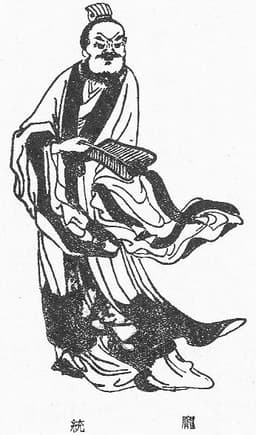
Pang Tong
Politician · Ancient
47.2Total

Sang Hongyang
Politician · Ancient
60.8Total
Basic Information
Born
179
-152
Died
214
-80
Era
Ancient
Ancient
Nationality
China
China
Occupation
Politician
Politician
Civilization
Eastern
Eastern
Score Comparison
Military (10%)
38.3
30.2
Political (20%)
35.1
72.0
Influence (20%)
54.9
61.0
Legacy (20%)
49.2
55.0
Leadership (15%)
51.9
79.8
Strategy (15%)
43.3
60.0
TOTAL
47.2
60.8
Pang Tong — Complete Timeline
209 AD
Joined Liu Bei's servicePolitical Action◆ Major
Pang Tong left Zhou Yu's service and joined Liu Bei as a county magistrate. Liu Bei initially undervalued him, but after an interview with Lu Su and Zhuge Liang, Liu Bei promoted him to a key advisory role.
Liu BeiAllegiance ChangeAdvisor
Impact: regionalconstructive
211 AD
Proposed the strategy to capture Yi ProvinceWar
Pang Tong presented three strategies to Liu Bei for taking Yi Province from Liu Zhang: a direct attack, a feigned retreat to lure Liu Zhang's forces, or a slow consolidation. Liu Bei chose the middle strategy, leading to the eventual conquest of Yi.
Yi Province CampaignLiu BeiMilitary Strategy
Impact: regionalconstructive
214 AD
Killed in action at the Siege of Luo CountyWar◆ Major
During the siege of Luo County in Yi Province, Pang Tong was struck by an arrow and died. His death was a significant loss for Liu Bei, who mourned him deeply and later appointed his father to a post.
Yi Province CampaignLiu BeiDeath in Battle
Impact: regionaltragic
Sang Hongyang — Complete Timeline
110 BC
Created State Monopolies on Salt and IronReform
Sang Hongyang established government monopolies over the production and sale of salt and iron. These monopolies generated substantial revenue for the Han treasury, enabling Emperor Wu's expansionist policies, but also faced criticism for stifling private enterprise.
Han DynastyEconomic ReformMonopoly
Impact: national
Implemented the Equalization and Standardization SystemReform◆ Major
Sang Hongyang introduced the 'equalization and standardization' (junshu) system to stabilize prices and transport goods. The government bought surplus goods in regions of abundance and sold them in areas of scarcity, controlling commerce and increasing state revenue.
Han DynastyEconomic ReformPrice Control
Impact: national
Appointed as Superintendent of AgriculturePolitical Action◆ Major
Sang Hongyang was appointed as Superintendent of Agriculture (Da Sinong) under Emperor Wu of Han. He became the chief financial officer responsible for implementing state monopolies on salt, iron, and liquor to fund military campaigns.
Han DynastyFinanceState Monopoly
Impact: national
80 BC
Executed for Alleged TreasonPolitical Action◆ Major
After Emperor Wu's death, Sang Hongyang was accused of conspiring with the regent Huo Guang's rivals. He was executed along with his family, ending his economic reforms temporarily, though many were later reinstated.
Han DynastyExecutionPolitical Purge
Impact: nationaltragic
Expert Analysis
Origins
Pang Tong (179-214) was born in Xiangyang, Jing Province, into a prominent local family. His uncle Pang Degong was a famous scholar. Pang Tong was known as the "Fledgling Phoenix" and studied strategy and governance. He initially served as a county official under Zhou Yu in the south.
Sang Hongyang (152-80 BC) was born in Luoyang, the Han capital, to a merchant family. His father was a wealthy businessman. Sang Hongyang studied mathematics and economics, and at a young age entered the imperial bureaucracy under Emperor Wu. His commercial background shaped his later financial policies.
Rise to Power
Pang Tong rose to prominence after joining Liu Bei's service around 209 AD. Initially undervalued as a county magistrate, he was recommended by Lu Su and Zhuge Liang. In 211, Liu Bei invited Pang Tong to discuss strategy for taking Yi Province. Pang Tong presented three plans: a direct attack, a feigned retreat, and a cautious advance. Liu Bei chose the middle course. Pang Tong's score of 43.3 in strategy reflects his tactical acumen but also his limited time to execute grand designs.
Sang Hongyang's rise was more systematic. He entered the Han bureaucracy as a young clerk in the Ministry of Revenue. His talent for fiscal matters caught the attention of Emperor Wu, who appointed him as Superintendent of Agriculture (Da Sinong) around 115 BC. He implemented the state monopolies on salt and iron, which generated massive revenue for the Han state. His political score of 72.0 and leadership score of 79.8 indicate his effectiveness in bureaucratic management.
Leadership & Governance
Pang Tong's leadership was advisory. He counseled Liu Bei on military and political matters. During the Yi Province campaign, he advocated for a swift, decisive attack against Liu Zhang. His approach was pragmatic but risk-taking. He lacked administrative experience, as his career was cut short. His political score of 35.1 reflects his limited governance role.
Sang Hongyang was a hands-on administrator. He created the Equalization and Standardization System (junshu), where the government bought surplus goods from regions and sold them in areas of shortage, stabilizing prices and increasing state revenue. He also introduced a system of government loans to farmers. His policies were controversial: they enriched the state but burdened merchants and peasants. His leadership score of 79.8 is among the highest of Han officials.
Triumph & Tragedy
Pang Tong's greatest triumph was his role in the conquest of Yi Province. His three-pronged strategy allowed Liu Bei to capture the region with minimal bloodshed. His tragedy was his death at the Siege of Luo County in 214, struck by an arrow. He was only 36. His death deprived Liu Bei of a key strategist before the campaign was complete. His legacy score of 49.2 reflects his incomplete potential.
Sang Hongyang's triumph was the creation of state monopolies that funded Emperor Wu's wars against the Xiongnu and expanded Han territory. His fiscal reforms increased state revenue by an estimated 300% over a decade. His tragedy was his execution in 80 BC, accused of treason after Emperor Wu's death. He was implicated in a power struggle with regent Huo Guang. His death was a political purge, not a judgment on his policies. His total score of 60.8 is higher than Pang Tong's 47.2.
Character & Destiny
Pang Tong was known for his boldness and strategic insight. He was called "Fledgling Phoenix" for his potential. His character was that of a risk-taker: he advocated for aggressive moves. His destiny was cut short by war, a common fate for strategists of the Three Kingdoms era.
Sang Hongyang was meticulous and authoritarian. He believed in strong state control over the economy. His character was uncompromising, which made him enemies among the merchant class and Confucian officials. His destiny was to be scapegoated after the emperor's death, as his policies were blamed for social unrest. His influence score of 61.0 shows his lasting impact on Chinese fiscal policy.
Legacy
Pang Tong is remembered as a brilliant but unfulfilled strategist. He appears in the historical novel "Romance of the Three Kingdoms" as a key figure. His legacy is primarily literary and cultural, with his name symbolizing lost potential. He scored 49.2 in legacy.
Sang Hongyang's legacy is concrete: his state monopolies on salt and iron lasted for centuries, becoming a pillar of Chinese imperial finance. The Equalization System influenced later grain storage policies. His ideas were debated in the famous Discourses on Salt and Iron (81 BC). He is considered a founder of Chinese economic statism. His legacy score of 55.0 is higher than Pang Tong's.
Conclusion
Sang Hongyang had greater impact than Pang Tong. His total score of 60.8 versus 47.2 reflects this. While Pang Tong was a capable strategist, his contributions were limited to a single campaign and his death cut short his influence. Sang Hongyang's policies shaped the Han economy and influenced Chinese governance for millennia. His state monopolies directly funded the expansion of the Han empire, while Pang Tong's strategies, though effective, were part of a larger effort. Therefore, Sang Hongyang is the more significant historical figure.
Rankings
🥇
Sang HongyangLeader
Mil: 30.2Pol: 72.0Inf: 61.0
60.8
🥈
Pang Tong
Mil: 38.3Pol: 35.1Inf: 54.9
47.2
+13.6 behind
How This Comparison Works
Algorithm
Each figure is scored on 6 dimensions (0—100 scale) based on structured historical data: Military (10%), Political (20%), Influence (20%), Legacy (20%), Leadership (15%), Strategy (15%). The weighted total produces the final ranking.
Data Sources
Scores are computed from structured sub-indicators in the database. Scale factors adjust for era (Ancient ×0.85, Modern ×1.0) and civilization size (Eastern ×1.05, Other ×0.80) to account for differences in population and military scale.
Maximum 3 Figures
Comparisons are limited to 2—3 figures to ensure readability and statistical meaningfulness.
Error Margins
±5 points per dimension — Sub-scores are derived from historical records with inherent uncertainty. Two figures within 5 points on a dimension should be considered roughly equivalent in that area.
Total Score Accuracy
±3 points overall — The weighted combination of 6 dimensions produces a total score with approximately ±3 points of uncertainty. Differences of less than 3 points are not statistically significant— the figures are effectively tied.
Known Limitations
- Historical records are incomplete and uneven across civilizations
- Figures from oral-tradition societies may be underrepresented
- Occupation labels can misclassify multi-role figures
- Scores measure capability and impact, not moral character
- Quantitative scoring is a comparison tool, not absolute truth
Capability Radar
Military (10%) — Battles & Warfare
Battles
30
38
Win Rate
35
43
Expansion
55
44
Political (20%) — Governance & Reform
Reform
15
85
Diplomacy
40
50
Economy
20
90
Influence (20%) — Cultural & Global Reach
Cultural
40
40
Global
20
55
Legacy (20%) — Historical Impact
Historical
45
75
Longevity
40
70
Leadership (15%) — Power & Stability
Tenure
20
60
Stability
25
70
Strategy (15%) — Tactics & Innovation
Strategy
60
53
Tactics
65
55
Reform
10
53
Similar Comparisons
Comments & Discussion
No comments yet. Be the first to share your thoughts!